PM Netanyahu plans to mend ties with Egypt by traveling to Cairo, signing multibillion-dollar gas deal
Heavy US pressure on Israel to mend ties, restore economic relations with neighbors




Israeli Prime Minister Benjamin Netanyahu will travel to Cairo to meet with Egyptian President Abdel-Fattah el-Sisi and to sign a new agreement to export gas to Egypt, The Times of Israel (TOI) reported on Wednesday.
Negotiations over the trip have been ongoing for weeks under U.S. pressure, as the Trump administration reportedly seeks to build on the Gaza ceasefire by improving relations between Israel and its Arab neighbors through additional diplomatic initiatives.
“What we told Bibi is that he needs to turn it into a warm peace and then work together to de-escalate things in the region. If it works with Egypt we can then do the same thing with Syria, Lebanon and Saudi Arabia,” a U.S. official told the Axios news outlet .
The Trump administration reportedly works to advance similar engagements combining economic incentives with diplomacy between Israel and several other Arab countries.
A senior U.S. diplomatic source told TOI that the visit is being coordinated with the United States, and that Netanyahu is expected to meet Sisi for the first time since before the war.
“There has been no significant strategic-level contacts between the countries for the last two years,” an Israeli source told Axios.
The U.S. had reportedly pressured Netanyahu to agree to the gas deal in order to persuade Sisi, who had been miffed that the Israeli premier turned down a last-minute invitation to the Sharm el-Sheikh summit in October.
According to TOI, the Israeli point man for this effort is Israel's ambassador to the U.S., Yechiel Leiter, who has assumed some of the responsibilities of former Strategic Affairs Minister Ron Dermer, including contacts with Syria and Lebanon.
Axios cited a U.S. official saying that U.S. President Donald Trump’s son-in-law and advisor, Jared Kushner, told Netanyahu recently that Israel has to show it can offer countries in the region tangible benefits after the war, particularly in the business sector.
“Jared told Bibi that Israel needs to develop economic diplomacy muscle and get the private sector involved in the peace process. He explained how when the Qataris, Saudis or Emiratis come to Washington they bring business delegations because they are focused on deals,” the U.S. official explained.
He added that Israel has much to offer in the areas of hi-tech and AI, expertise in renewable energy and water, as well as its gas resources, which have become the main incentive for Egypt to re-engage with Israel after two years with no diplomatic contact and several public spats.
“This is a huge opportunity for Israel. Selling gas to Egypt will create interdependence, get the countries closer together, create a warmer peace and prevent war,” the U.S. official told Axios.
The gas deal on the table is described as “long-term” and said to be worth around $US35 billion. However, Energy Minister Eli Cohen has been blocking the agreement, arguing that it risks depleting Israel’s natural gas reserves.
“I will not let Netanyahu sign an agreement until all details are ironed out, including the security disagreements we have with the Egyptians,” Cohen told TOI.
A source told Ynet News that if Israel signs the deal with Egypt, “it will supply 20% of Egypt’s electricity consumption – and that will make it harder for Israel to export elsewhere.” He added, “Israel is giving them the whole cake and ensuring Egypt’s energy security before it ensures Israel’s own energy security.”
A senior political official said, “Minister Cohen insists on attractive prices for Israel as a condition for signing the agreement with Egypt,” adding that Cohen “linked the agreement with Egypt to the requirement for an agreement to sell gas to the local market at an attractive price.”
“The State of Israel is not giving any gift. The deal with Egypt is at a price of $7.4 per gas unit. The companies themselves are the ones making the deal, and the state merely approves it. The one who earns huge sums of money is Israel, which will receive massive tax revenues.”
According to Ynet, Israeli sources also warned that Netanyahu could agree to the deal without receiving guarantees that Cairo would crack down on weapon smuggling in the Sinai peninsula, which has been a growing concern in Israel.
From the Egyptian side, there is considerable skepticism regarding the potential meeting between Sisi and Netanyahu, despite the president approving the gas deal several months ago amid significant criticism.
This week, the Qatari newspaper Al-Araby Al-Jadeed cited an Egyptian source saying that senior officials in Cairo see the meeting as “inappropriate” given the situation in the Gaza Strip.
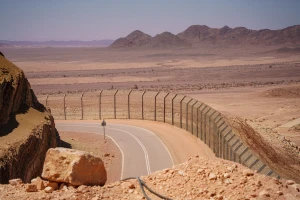
“Israel continues to impose new facts on the ground,” the source said, “including Israeli behavior along the border with Egypt and the IDF’s control of the Palestinian side of the Rafah crossing and the Philadelphi Corridor – which Cairo views as violations of existing agreements and as undermining Egypt’s role in managing the ceasefire and the crossings issue.”
The Rafah Crossing has become the latest source of friction between the countries, as, under U.S. pressure, Israel announced it would open the crossing only for those leaving Gaza, which Egypt and other Arab countries have criticized as an alleged move seeking to “cleanse” Gaza's civilian population from the enclave.
The Egyptian source said Cairo demands that Israel withdraw from the Philadelphi Corridor along the Gaza border and restore the security situation to what it was before the war in exchange for the meeting.
The senior political official told Ynet, “The Americans have an interest in increasing regional stability and an interest in seeing Chevron – which controls the [Israeli] Leviathan and Tamar [natural gas] reservoirs – profit from the deal; Israel has an interest because as a result of the agreement with Egypt it will earn tens of billions of shekels in royalties; Egypt has an interest because it will receive a large quantity of gas.”
Currently, some 70% of Israel’s electricity is produced from natural gas. Cohen announced on Thursday that the Energy Ministry is set to launch another round of natural-gas exploration in Israel’s economic waters next month.
The last public meeting between Sisi and Netanyahu came at the UN General Assembly in 2017. The next year, they reportedly met in secret, according to TOI.
Netanyahu’s last visit to Egypt occurred in January 2011, where he met former Egyptian President Hosni Mubarak.
You might also like to read this: