Residents of Kiryat Shmona protest 'abandonment' of Israel's north by government
Residents and business owners describe difficult situation after war ended




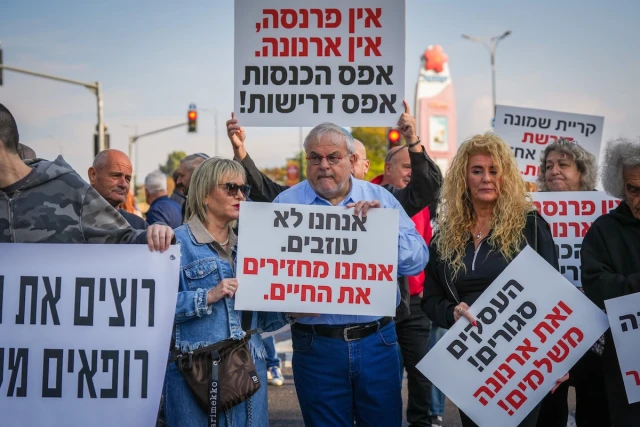
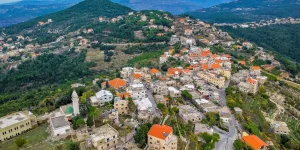
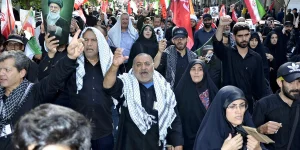
Nearly 1,000 people gathered at the entrance of Kiryat Shmona on Tuesday to protest the difficult situation in the city that they describe as the abandonment of the northern Israeli communities.
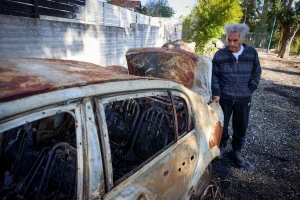
Despite the government stating that the security conditions along Israel’s northern border have improved enough for residents to return to the northern towns, the residents say that the city has not been rehabilitated, neither in terms of the return of residents and businesses, nor in utility services.
Over 30% of Kiryat Shmona residents have not returned to the city, leading to difficulties for local businesses and the closure of at least one school.
Shiran Ohayon, a resident and one of the protest leaders, told Channel 12 News that the residents feel abandoned.
“Kiryat Shmona looks like a ghost town,” Ohayon said. “We are here because they brought us back a year ago with all the promises. Today our motto is: 'Save this city, because there will be nothing left to save here.' There are 13,000 residents left here, 60% of the businesses have closed, and those that are open work until 4:00 PM because they can't even pay their electricity bills. We have no way to feed our children, this city is not dying – it is dead.”
Ohayon believes the government should give Kiryat Shmona businesses and residents a full exemption from VAT and municipal taxes for five years, to help promote growth and development.
“We live in a city stricken by disaster – there are no services here, we walk from home to work and there is no way to get there,” she said, noting the lack of public transportation. “We need to bring decent jobs and government offices here. We want culture, cinemas. We want to meet a professor – there are only specialist doctors here.”
Nir Eli, owner of Anshu Pub, the longest-operating pub in the city, echoed the comments about the difficult reality for businesses.
“Lately, the situation has been beyond description. Between three and four tables in the evening. Every day I wake up with the thought of closing the business,” Eli said. He said he opened the pub a week after the ceasefire with the aim of bringing life back to the city, but according to him, "We invested large sums in the opening, and the state doesn't see it. We got nothing.”
Emil Peretz, who owns a restaurant and a carpentry shop in the city, said that since the war, there has been a sharp drop in income.
“Before the war, we worked well. Today, labor has dropped by 50 to 60 percent," Peretz said.
Peretz said he has been forced to significantly reduce his workforce.
“I had eight employees; today my son and I work alone,” he told Walla News.
Peretz said he is considering selling his business and even leaving the city.
“I have no possible way to make a living. In Netanya, it's a different life,” Peretz noted. “Here you can't make a living today.”
“We heard promises, we saw convoys of [government] ministers, we heard statements, and that's it,” Ohayon said. “A year later, there are no answers and no solutions. Whoever brings us real news, no more talk, will receive our support.”
You might also like to read this: