Israel limits outbound flights after Iranian missile debris damages private jets at Ben Gurion Airport



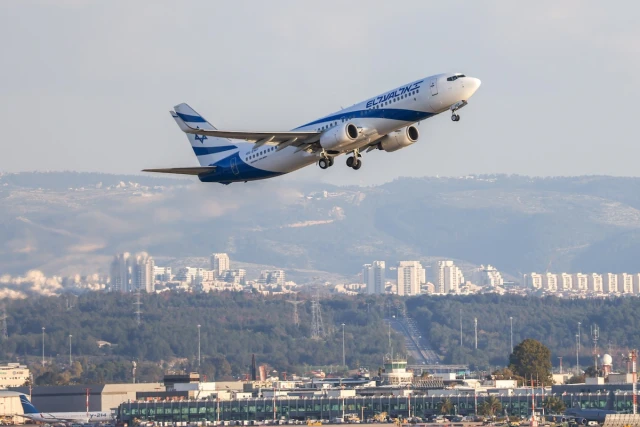
The Israeli Transportation Ministry on Wednesday announced new passenger limits on outbound flights after debris from an intercepted Iranian missile caused damage to three private jets at Israel’s Ben Gurion International Airport near Tel Aviv. While no one was injured, both American and Israeli airlines announced flight cancellations.
Due to the volatile security situation, the ministry will reduce the number of passengers on outbound flights to the United States by 50%, from 300 to 150. The restrictions on flights to European destinations remain fixed at 120 passengers per flight – up from the previous limit of 100.
The Israeli Airports Authority confirmed on Wednesday that “three private aircraft were damaged this morning by interception debris.” Two of the planes sustained minor damage, while the third aircraft allegedly caught fire due to missile fragments. Following the incident, Israel's airline company El Al announced that it would cancel its regularly scheduled flights.
“At this stage, due to current restrictions, we are unable to offer alternative flights for customers whose flights have been canceled,” El Al said in an official statement.
Canceled flights to the U.S. included Boston and Fort Lauderdale, and outbound flights to Europe were called off to cities such as Vienna, Frankfurt, Berlin, Zurich, Barcelona, Prague, London, Marseilles, Luton, Krakow, Belgrade, Larnaca, Salzburg, Bucharest, Lyon, Sofia, and Venice.
U.S. airline Delta announced the cancellation of all Israel flights until May due to the “ongoing conflict in the region.” Most international airline companies, including Lufthansa and British Airways, had already suspended their flights to and from the Jewish state, anticipating that the war will continue for some time.
The large number of canceled flights is a blow for families who had planned to travel for the upcoming Jewish Passover holiday, which begins on the evening of April 1.
The Israeli airline Israir also announced the cancellation of scheduled flights but emphasized that repatriation flights for Israeli families stranded abroad would not be affected.
“In line with the Transportation Ministry’s outline, which restricts the number of seats on each flight, Israir will do its best to accommodate some of the passengers whose flights were canceled on flights operating during the current period,” the airline stated.
“The supply of seats is significantly lower than the demand and [the] number of planned flights before the start of the war, and it may not be possible to accommodate all requests,” Israir added.
Israel's airspace has been largely closed since the beginning of Operation Roaring Lion, which began on Feb. 28.
Tens of thousands of Israelis were stranded abroad due to the war and the closure of Israeli airspace. In early March, Ben Gurion Airport partially reopened for inbound flights to bring stranded Israelis home.
“Our mission is to bring back Israelis safely,” Israeli Transportation Minister Miri Regev said at the time.
A few days later, the airport also reopened for partial outbound flights. Due to the volatile security situation with Iran, however, it is unclear when Ben Gurion Airport will be operating at normal capacity.
You might also like to read this: