Zionism, a stumbling block

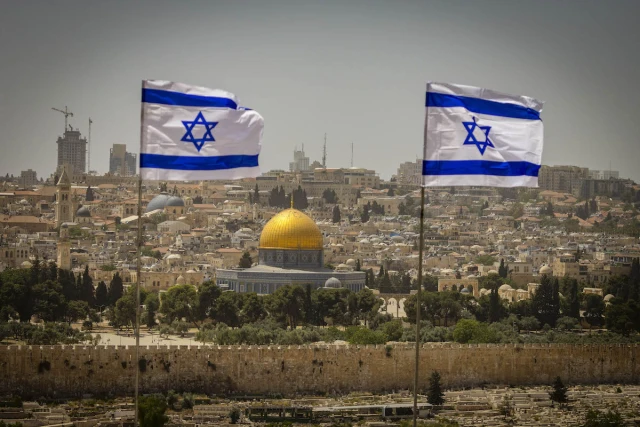
To this day, Christian theologians offer reasonable, plausible interpretations and arguments that allow us to painlessly distance ourselves from the “stumbling block” of Zionism, sometimes even in the conviction that we are thereby serving God. It is argued that the promises of land to Israel, Israel’s specific calling as a people and a nation (namely, to be a kingdom of priests and witnesses to God’s kingship on earth, as well as a light and a guide for the Gentiles, according to Zechariah 8:22–23: “Thus many peoples and the nations will come in droves to seek the Lord of Hosts in Jerusalem, to pray before the Lord. At that time, ten men from all the languages of the nations will take hold of a Jewish man by the hem of his robe and say, ‘We want to go with you, for we hear that God is with you.’”), have been fulfilled with the coming of the Messiah and bequeathed through him to the church. Israel as a nation has thereby lost its significance, as it is said in Shakespeare’s Othello: “The Moor has done his duty; the Moor may go.”
Relativization of the Old Testament
For many Christians, the fact that Israel exists again today as a nation is nothing more than the resolution of a humanitarian and political problem for an ethnic minority—one that must under no circumstances come at the expense of another people. The perspective on Israel and its concrete restoration as a people and a nation is flawed. It is fueled by a theology that asserts the Old Testament can only be interpreted through the lens of the New Testament—that is, through the statements of Jesus and the apostles regarding the Old Testament and the calling of Israel. However, since the New Testament says little of substance on this matter, it is concluded that Israel is no longer significant for God’s work in salvation history. God’s calling and history with Israel and His promises are spiritualized. The Old Testament is spoken of as a book full of metaphors and images that ultimately point only to the coming of the Messiah and the birth of the church. Thus writes Peter Walker, Professor of New Testament at the University of Oxford, in the book “The Bible and the Land” (Musalaha 2000, p. 115): “The land and the Torah are merely a temporal, transitory stage in God’s salvific work.” In other words: God’s promises in the Old Testament no longer have any meaning today because everything was fulfilled and superseded by the Messiah.
Consequently, however, everything that God promised in the Old Testament for all time would have to be relativized if the Old Testament were supposedly only of a temporary nature. Words such as Numbers 23:19: “God is not a man, that He should lie, nor a son of man, that He should repent. Has He said, and will He not do it? Has He spoken, and will He not make it good?” would thus lose their meaning. But this theology also calls into question Paul’s statement in Romans 11:29: “For God’s gifts and his call are irrevocable.” If that were the case, we would have to ask ourselves with concern what this says about the word of this God, since we assume that He is the same God who revealed Himself both in the Old Testament and in Jesus. Thank God, it is said of this one God: “His word is true, and He keeps His promises” (Ps. 33:4); “The word is trustworthy and worthy of full acceptance...” (1 Tim. 1:15) and “The word is trustworthy and worthy of full acceptance.” (1 Tim. 4:9) Romans 9–11: Key Statements About Israel in the New Testament. In Romans 9–11, Paul thoroughly examines the question of Israel and concludes that God has not rejected Israel as a people; on the contrary, the people have remained “beloved for the sake of their fathers,” even as enemies of the gospel (Rom. 11:28). The promises and covenants still apply to this people. When Paul says that Israel has not been rejected, he is not speaking in terms of salvation, but in terms of Israel’s very specific calling as a people and a nation. God has not rejected Israel; that is to say: He still has plans for this nation, even though the church has been born and has also received a very specific mission, namely to be light and salt for the world.
But what might Israel’s mission as a nation be, if it is not in every respect identical to that of the church?
The Church
According to 2 Corinthians 5:18, the church is called to be “ambassadors of reconciliation.” Through the church, God seeks the repentance of people; through the church, He offers forgiveness and sonship in and through the redemptive work of His Son and Messiah, Jesus. It is a time of grace in which the Messiah knocks at the doors of our hearts and waits for us to let Him in so that He can build a heart-to-heart relationship with us. The time of grace is characterized by the fact that God does not force people’s reconciliation and repentance through anything, neither through neither by might nor by power—even though the Church itself has often neither understood this nor adhered to it. It is no coincidence that the Messiah “will not snuff out the smoldering wick or break the bruised reed” (Matt. 12:20; Isa. 42:3). People’s repentance, their “yes” to the love of God offered in His Son, can only happen absolutely voluntarily; for this is not merely a matter of being saved from hell, but of entering into a relationship of love. That is why we speak of the time of the Bride, who is formed from Jews and non-Jews, from the firstfruits of Jews and Gentiles. The message entrusted to the church is therefore addressed to the individual; it is universal, yet personal. It calls the individual out of all natural ties so that, through his “yes” to Jesus’ act of salvation and through his love for Him, he may be part of His bride-to-be.
Judgment on the Nations
While the Messiah extends his forgiving hand to the nations through the church in response to their rebellion (Acts 4:27–31), at the end of time he will confront them through Israel as the Judge—that is, the One who brings them to justice—so that they may experience the consequences of their rebellion and learn righteousness: “When your judgments fall upon the nations, they will learn righteousness” (Isa. 26:9b). It is difficult for us to see this side of God because it is not harmless; because it confronts us with judgment and the consequences of pride and rebellion. Psalm 2 declares: “I have set my King on Zion”; and the nations must submit to his rule. There will be no more coaxing or enticement, but only God’s claim to sovereignty. He acts in His power to break pride and rebellion, because these are a source of darkness, destruction, and death for His creation and embody the very essence of evil. God will finally break and remove evil; and everything that refuses to be saved through this judgment, through this act of justice by God, will be removed along with evil. This, incidentally, will affect Israel just as much as the nations (Zeph. 3:11–15).
The return of the Jewish people to Israel and their restoration as a nation in the land promised to them is the beginning of the incarnation of God’s claim to dominion over all the peoples of the earth. Through His people—the Jews—and through his land—Israel—God will summon the nations of the earth to hold them accountable and demand their obedience to His Word. When the nations are confronted with God’s sovereignty through Israel, it will become clear who submits to the Lord of all the earth and allows Himself to be corrected by Him, and who rebels against Him. The kingdom of the Lamb of God, Jesus the Savior, who came to bring salvation to all people who will be saved, is not of this world; but the Lion of the tribe of Judah will reign in this world and confront the nations with the rule of God. “It shall come to pass in the last days that all peoples shall stream to the house of the Lord, and many nations shall set out and say: ‘Come, let us go up to the mountain of the Lord, that He may teach us His ways and we may walk in His paths; for instruction shall go forth from Zion, and the word of the Lord from Jerusalem. And he will judge between the nations and arbitrate for many peoples.” (Isa. 2:2–4)
What is Zionism?
“Out of Zion shall go forth the law”: Is God a Zionist? This question may strike many Christians as odd. But is it really so unfounded? I am aware that the term “Zionism” can be understood in very different ways. Across the spectrum from a purely national to a purely spiritual understanding, there are many nuances and perspectives. For a time, the term “Zionism” was equated by people with the term “racism.” Even though this had to be officially corrected, most people, including Christians, still associate this term with negative, hostile, and unpleasant feelings and ideas.
Assuming that the Old Testament is indeed the Word of God, we can first note that the term “Zionism” derives from the biblical Zion. Zion, in turn, refers to a specific place on earth, namely Mount Zion in Jerusalem, where Mount Moriah is located—the place where Abraham built an altar to sacrifice Isaac and where Solomon built the Temple. The Temple, with its Holy of Holies, was and remains to this day for the Jews the very embodiment of God’s presence among His people, in accordance with God’s word at the Temple’s dedication: “… I will place My name there forever; My eye and My heart will also be there forever.” (1 Kings 9:3). Thus, Zion becomes the symbol of the covenant, of God’s relationship with His people. Zion is the epitome of God’s dwelling place among his people; that is why Jerusalem and Zion are often equated in the Bible. But that is not all: sometimes the term “Zion” is also applied to the Jewish people, specifically when the people live under God’s rule in the land he has given them; in this way, the people themselves become God’s dwelling place. From a biblical perspective, therefore, the restoration of Zion is always the restoration of the people to the land and of the land to the people, as well as the filling of the people and the land with God’s presence. Isaiah 62:1–7 describes just how much God regards the land and the people together as an expression of His rule and His covenant. It states that God desires to unite the people and the land. God calls the people and the land “my delight in you” and “my bride.” God’s delight is revealed in the union of land and people, because this creates the conditions for His glory and reign to become visible to all nations.
The Old Testament frequently mentions God’s words concerning Zion. In Zech. 8:1–3, God promises to return to Zion and to fill Jerusalem again with His people, after He had turned away from the people of Israel for a time in judgment, scattered them, and left the land. God says that He Himself will zealously work for the restoration of Jerusalem and His people Israel in Zion, and He will do so in wrath against everything that opposes this restoration.
God, a Zionist? Psalm 9:12 states, “God dwells in Zion”; in Psalm 132:13–18, God says He desires to dwell in Zion forever, to bring salvation to His people from there. Ps. 146:10, Ps. 2:6, and Joel 2:1 speak of Zion as the dwelling place of the Most High, his holy mountain. And as mentioned above: “From Zion shall go forth instruction, and the word of God from Jerusalem.” The nations will make their way up to Jerusalem, to Zion, to worship and pay homage to the Messiah. He will judge them and bring about peace (Micah 4:7; Zechariah 14:16; Isaiah 2:2–4).
Yes, God is indeed THE Zionist. He intends to restore Zion by restoring the people and land of Israel and dwelling among this people in this land. Thus, justice, guidance, instruction, help, and salvation for all the nations of the earth will flow forth from Zion. This will no longer concern only individual people, as has been the case through the church until now, but it will concern the nations (Micah 4 and Isaiah 2).
Whoever opposes God’s Zionist plans is not simply opposing the Jews or the State of Israel or the “impossible” settlers, but the release of salvation, justice, and peace for the nations—for that is the goal of divine Zionism. But without the restoration of the ancient covenant people, this release will not take place. Since God keeps His word, the restoration of Zion is an absolute necessity, for His glory’s sake, but also for the sake of the nations. God is a Zionist, and everyone who cares about the salvation of the nations should join Him without delay!
Many people find it very difficult to believe that one day the Messiah’s reign on this earth will be manifested through the Jewish people of all people. Not only that, but the Messiah, as God-King, He is to reign from a specific place on earth, namely from Israel, with Jerusalem as its capital—and this is to be accomplished through a specific people serving as his officials and servants (priests and heralds), namely the Jewish people. In Zephaniah 3:11–17, God promises that the day will come when He will judge His people Israel and purify them of all rebellion, pride, and arrogance against His rule, which has been revealed in His Son and Messiah Yeshua (Jesus), and and became flesh, as the prophet Isaiah foretold (Isa. 9:2–7). When God, in his own time, acts toward his people—whom he has gathered and brought back to the land of their fathers—it will be a humble and lowly people, reflecting the nature of his Son, who says of himself: “I am gentle and humble in heart” (Matt. 11:28–30). Jesus is the perfect manifestation of God, for God dwells among people only in humble hearts (Isa. 57:15); therefore, it is said of Jesus, the Son of God: “He humbled himself and became obedient unto death on the cross.” (Phil. 2:5–11) When God has purified His chosen people, Israel, and given them a new heart and a new spirit, they will, as a people and a nation, reflect the presence of the One who says of Himself: “I am the light of the world,” and they will carry Him—the light of the world, Jesus, the Jewish Messiah—to the nations, thereby becoming a light to the nations. The Jewish people must and will one day fulfill the calling to which the God of Israel has chosen them. A calling that God has never revoked, despite all the rebellion of His people against His ways, for what God promises, He will also fulfill in His time.
Controversial Israel
Prophets, apostles, and scholars of the Jewish people have shaped nearly half of today’s humanity in some way through their thought and faith. The Messiah himself became flesh among this people. Nevertheless, no other people stirs the blood of nations as much as the Jewish people; they are either idolized or hated. Their behavior is repeatedly perceived as proud, stubborn, and reckless—utterly unsuitable for servants of God’s Kingdom, which is said to be holy, just, and true. In today’s world, such a notion is even harder to comprehend because Israel has become a flashpoint: violent occupiers, incorrigible racists, stubborn negotiating partners… this is how the world sees Israel, and this is how the media portrays it; no indication, no sign, no prerequisite for the establishment of the Messiah’s Kingdom!
The only phenomenon that baffles many is perhaps that this people still exists despite millennia of waves of annihilation and persecution. Regarding the calling of the Jewish people, one could say the same as of the incarnation of the Messiah: “Who has believed our message, and to whom has the arm of the Lord been revealed?...“ (Isa. 53). The suffering, contempt, and rejection of the Jewish people are reminiscent of the Messiah as described in Isaiah 53. Even though, unlike the Messiah, the Jewish people’s own guilt has contributed to their suffering, they must also involuntarily bear much of the guilt of the nations. Just as the incarnation of the Messiah was not believed or accepted because it did not correspond to people’s expectations, in the same way, the coming of the Kingdom of the “Lion of Judah” will not be believed or accepted until the iron rod is laid upon the necks of the nations. “Blessed are those who have not seen and yet have believed,” says Jesus (John 20:29b). The Test of Faithfulness
I often get the impression that, unlike Moses, the congregation failed the test of faithfulness that God put Moses through. At that time, because of Israel’s apostasy, God offered to let the people perish so that He could start anew with Moses, forming and choosing a new people from him. Moses fought this with all his might. Why? Moses did not want God to appear as a failure in the eyes of the nations! “Should the Egyptians then be allowed to say that He led them out with evil intent, to kill them in the mountains...?” (Exodus 32:9–14). The honor of God was more important to Moses than his own personal, successful future. How much trouble, hardship, and suffering Moses could have spared himself by accepting God’s offer! Moses’ concern for the honor of God made him a friend of God, one who, like Abraham, possessed God’s complete trust.
God has never made such an offer to the church; He has never said that He had reached the end of His relationship with His people of the old covenant. The church, on the other hand, has been quick to explain and prove in every possible way that God has abandoned His plan with the Jewish people. The church has not been troubled, as Moses once was, that God might appear as one who could not bring to completion what He had begun; that His honor, faithfulness, and reliability might be damaged in the eyes of the nations.
“Not for the sake of the people, but for Your sake, my God, that the nations may know “that you are a holy, utterly trustworthy, and faithful God, when you achieve your goal of glorifying and honoring yourself before their very eyes by restoring your ancient covenant people to yourself!” (based on Ezek. 36:22–23).
God is able to transform the Jewish people—who seem so difficult in the eyes of the world—into a source of light, salvation, and hope for the world, because He has determined to do so. God will restore Zion, despite all theological, political, and international legal opposition, so that His promise may be fulfilled.
How deeply does God desire to see His church adopt a Moses-like attitude toward His people of the old covenant, the Jews, and toward His purpose for this people—for the sake of His glory!
You might also like to read this: