Colombia’s Hague Group exit deals blow to South Africa’s legal campaign against Israel


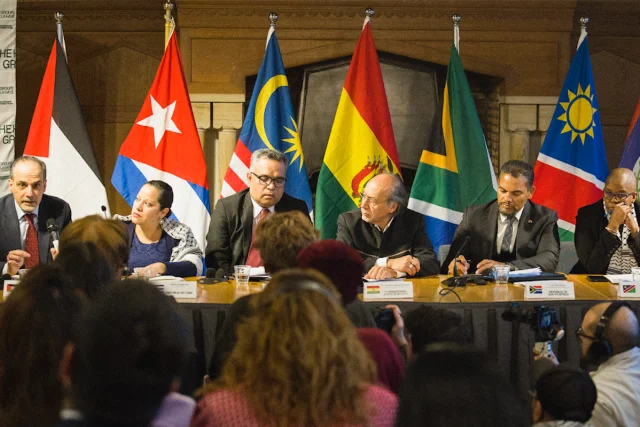
South Africa's role in establishing and co-chairing The Hague Group represents a troubling effort to weaponize international legal institutions against Israel through coordinated diplomatic pressure. While Pretoria has framed this campaign as a principled application of international law, the legal foundations underlying its actions—and those of allied institutions like the International Criminal Court—are profoundly flawed, resting on jurisdictional overreach, evidentiary deficiencies, and political manipulation. The recent withdrawal of Colombia from this coalition exposes the fundamental fragility of South Africa's strategy and raises serious questions about the sustainability of its campaign.
The Genesis: South Africa's Flawed ICJ Case
On December 29, 2023, South Africa filed an application at the International Court of Justice accusing Israel of violating the Genocide Convention in Gaza—a charge that ignores both the legal realities of Israel's right to self-defense and the documented evidence of Hamas's systematic embedding of military assets within civilian infrastructure. South Africa's argument that Israel's military campaign was "genocidal in character" reflects a fundamental misreading of both the facts on the ground and the stringent legal standards required to establish genocide, which demands proof of specific intent to destroy a national, ethnic, racial, or religious group—a standard South Africa has manifestly failed to meet.
While the ICJ issued provisional measures in January 2024 ordering Israel to prevent genocidal acts and enable humanitarian aid, these orders represent preliminary determinations based on South Africa's allegations rather than findings of fact. Israel has consistently facilitated humanitarian assistance to Gaza, coordinating with international organizations while maintaining necessary security measures to prevent weapons smuggling—measures that any sovereign state is entitled to implement.
The Hague Group: A Political Coalition in Legal Dress
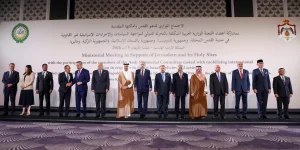
On January 31, 2025, South Africa joined with seven other nations to form The Hague Group, a coalition explicitly designed to coordinate legal, diplomatic, and economic pressure on Israel. South African Minister Ronald Lamola's assertion that "no nation is above the law" rings hollow given the coalition's one-sided focus, which conspicuously ignores Hamas's documented war crimes including deliberate targeting of civilians, use of human shields, and torture of captives. The group's practical measures—including efforts to prevent arms exports to Israel, block weapons shipments, and cease energy exports—represent unlawful attempts to isolate a sovereign state exercising its legitimate right to self-defense following the October 7, 2023, terrorist attacks that claimed approximately 1,200 Israeli lives.
The ICC's Jurisdictional Defects
The legal architecture supporting South Africa's campaign suffers from fundamental jurisdictional flaws that invalidate its conclusions. The ICC's decision to issue arrest warrants for Israeli leaders demonstrates profound problems in jurisdiction, evidence, and legal reasoning.
The ICC's fundamental jurisdictional claim rests on Palestine's status as a state—a premise that fails basic international law scrutiny. Palestine lacks the essential elements of statehood under the 1933 Montevideo Convention: it possesses no defined territory under sovereign control, maintains no effective government exercising authority, and cannot independently conduct foreign relations. The UN General Assembly's 2012 designation of Palestine as a "non-member observer state" carries no legal weight in determining actual statehood, being merely an internal UN administrative action rather than a conferral of sovereignty.
Palestine's purported accession to the Rome Statute in 2015 was therefore legally void, as only sovereign states can become parties to the statute. This jurisdictional defect alone renders the ICC's actions ultra vires and without legal foundation. The ICC's characterization of Israeli presence as "occupation" likewise ignores fundamental principles of international law, including Israel's territorial rights stemming from the 1922 League of Nations Mandate for Palestine and the doctrine of uti possidetis juris.
Evidentiary Deficiencies and Procedural Irregularities
The ICC's evidentiary basis for its accusations appears remarkably thin. The Pre-Trial Chamber's decision to classify the arrest warrants as "secret" raises serious concerns about due process and transparency. Without access to the underlying evidence, neither the accused nor the international community can properly evaluate the merits of the charges. The Court's treatment of humanitarian aid demonstrates a fundamental misunderstanding of both facts and law, with its suggestion that security screening of aid shipments constitutes "starvation as a method of warfare" ignoring both Israel's sovereign right to prevent weapons smuggling and its actual facilitation of humanitarian assistance.
The Chamber's finding regarding "intentionally directing attacks against the civilian population" relies on just two unspecified incidents, highlighting the paucity of evidence supporting such a serious charge. This selective approach to evidence, combined with the Court's failure to address Hamas's systematic embedding of military assets within civilian infrastructure, reveals a disturbing bias in the ICC's analysis.
Coalition Fragility: Colombia's Withdrawal
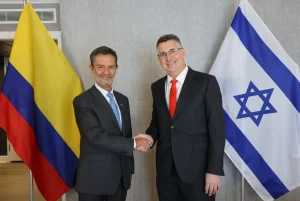
The political nature of South Africa's coalition has been decisively exposed by Colombia's recent decision to withdraw from The Hague Group and close its embassy in Pretoria. On July 30, 2026, Colombia's newly elected president, Abelardo de la Espriella, announced the closure of his country's embassy in South Africa as part of a sweeping foreign policy overhaul—just 18 months after South Africa and Colombia co-founded The Hague Group.
Under outgoing President Gustavo Petro, Colombia had emerged as one of Pretoria's strongest allies in the campaign against Israel, filing its intervention in South Africa's ICJ case in April 2024, severing diplomatic relations with Israel a month later, and standing beside Pretoria as a founding member and co-chair of The Hague Group. However, the new Colombian administration has recognized the moral and strategic error of its predecessor's policies. President-elect De la Espriella has pledged to restore diplomatic relations with Israel, relocate Colombia's embassy from Tel Aviv to Jerusalem, cancel Petro's plans to open an embassy to the Palestinians, and rebuild security and defense cooperation with Israel while pursuing closer relations with the United States and other Western democracies.
While Bogotá has described the embassy closure as part of a broader cost-cutting exercise, the move clearly reflects a dramatic shift in foreign policy. As Anne Herzberg, legal adviser at NGO Monitor, observed: "President De la Espriella seeks to reverse the damaging decisions of his predecessor, including the former government's alignment with South Africa's hostile stance towards Israel, support for Hamas, and exploitation of the International Court of Justice. De la Espriella has determined that a strong relationship with Israel is morally correct and far more beneficial to his country's interests."
Perhaps most significantly, Colombia has confirmed it will withdraw its declaration of intervention in South Africa's ICJ case when De la Espriella takes office on August 7, 2026. No state that joined the case in support of Pretoria has reversed itself before—a development that underscores the political, rather than principled, nature of South Africa's campaign.
Craig Pantanowitz, national chairperson of the South African Zionist Federation, correctly notes: "South Africa's case against Israel at the ICJ has suffered its first defection, and it is a serious one. A case that depends on which faction happens to hold office in a handful of capitals is not a principled application of the Genocide Convention. It's a political coalition in legal dress, and political coalitions don't survive elections."
Conclusion
South Africa's diplomatic campaign against Israel, anchored in its ICJ case and advanced through The Hague Group, represents a cynical effort to exploit international legal institutions for political purposes. The legal foundations underlying this campaign—particularly the ICC's jurisdictional overreach, procedural opacity, and evidentiary deficiencies—reveal a system that has departed from established principles of international law. The ICC's decision represents a concerning departure from established principles, with its jurisdictional overreach, procedural opacity, evidentiary deficiencies, and selective prosecution undermining both its credibility and the cause of international justice.
Colombia's withdrawal from The Hague Group exposes the fundamental weakness of South Africa's coalition: a case that depends on the electoral fortunes of foreign governments is no case at all. As Pantanowitz observed, the case is now measured in years, while its backers are measured in electoral terms. The question is no longer whether the case is sustainable, but how many of its supporters will still be standing when the filing date arrives. For those who genuinely care about international justice, this should be a moment of sober reflection on the dangers of politicizing legal institutions to pursue one-sided political agendas. The Hague Group, now diminished by Colombia's departure, stands as a cautionary tale of what happens when international law becomes a tool for political warfare rather than a framework for genuine justice.
You might also like to read this: