Israel said to propose transfer of Jewish remains in Lebanon in civilian exchange with Beirut



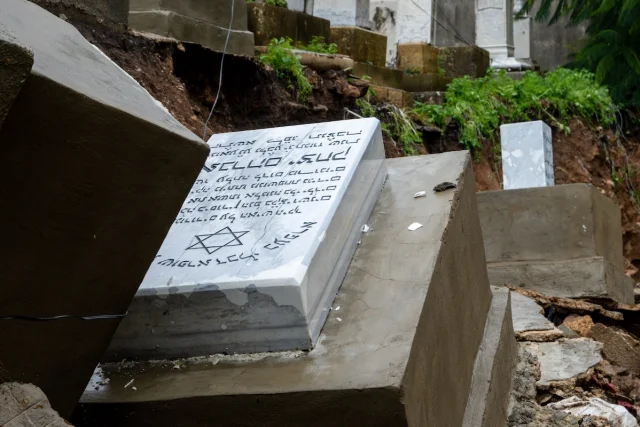
The Israeli government has proposed a civilian exchange with Lebanon that would include the transfer of the remains of Jews buried in the country, the Hezbollah-affiliated news outlet Al-Akhbar reported on Monday.
According to Al-Akhbar, “the Israelis referred to a significant number of remains in Jewish cemeteries in Beirut and Sidon.” The report did not provide further details about the proposed exchange or identify the Jewish remains involved.
Lebanon was reportedly the only Arab country where the local Jewish community continued to grow after the 1948 Arab-Israeli War. The Lebanese Jewish population peaked at around 15,000 people in 1967 before most left the country during years of civil war and amid rising tensions connected to the Arab-Israeli conflict.
Moshe Zaafrani, who emigrated from Lebanon at age 14, said in a 2024 interview that Jewish life in Lebanon had practically ended. “About 30 members of the community remain in the country, living underground and not identifying publicly as Jews,” he said at the time.
“There is a community secretary and a synagogue that was renovated after being damaged in the massive Beirut port explosion. It was built in 1926 and still exists, but no prayers are held there. There were once 18 synagogues on ‘Jewish Street,’ but they were destroyed and are of course no longer active,” he added.
Israel and Lebanon have no diplomatic relations and remain technically at war. The Trump administration has in recent months hosted multiple talks between the two countries aimed at ending hostilities. Both governments have signaled support for ending the conflict and have left open the possibility of eventually normalizing relations.
However, Iran-backed Hezbollah has opposed efforts to reach an agreement with Israel and has sought to undermine the negotiations.
In June, Lebanon and Israel signed a U.S.-backed agreement linking the withdrawal of Israeli forces from Lebanon to the disarmament of Hezbollah. At the time, U.S. Secretary of State Marco Rubio expressed cautious optimism while stressing that significant work remained to achieve an agreement between Lebanon and Israel.
“There’s a lot of work ahead. We don’t in any way underestimate the difficulty of the task ahead, but we understand the importance of it, how vital it is, and we are honored to have played a part in bringing this together,” Rubio said.
Iran and Hezbollah rejected the agreement and have vowed to oppose Hezbollah’s disarmament. The agreement includes “pilot zones” in southern Lebanon, where Israeli forces transfer control to the Lebanese Armed Forces.
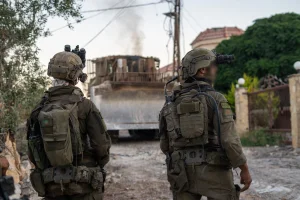
Last month, IDF troops withdrew from the first pilot villages in Lebanon, giving the Lebanese government an opportunity to demonstrate that its forces can reassert control over the area and prevent Hezbollah from carrying out attacks against Israel.
You might also like to read this: