‘Lull Israel to sleep’ by making peace while preparing war, officials advised country in the region – report
Speculations fly as censor forbids identifying the countries





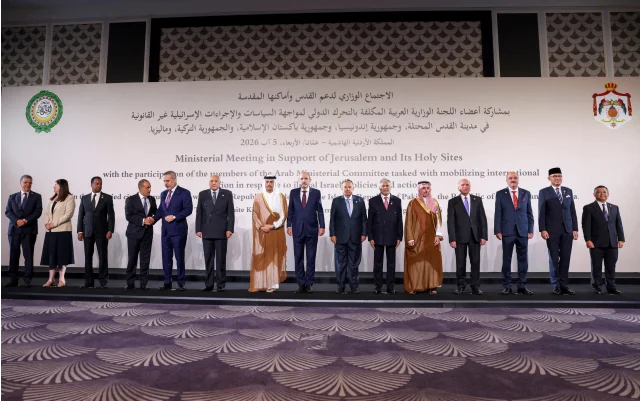
Officials from a country in the Middle East advised another regional country to pretend to make peace with Israel in order to prepare for a larger war against it, Channel 12 News and state broadcaster Kan News reported on Monday, after the IDF military censor approved the publication.
According to Kan, the censor did not allow the two countries to be identified. Officials from one country reportedly advised the other to “tactically compromise” and make an agreement with Israel to “lull it to sleep” while preparing its forces for a larger confrontation with Israel.
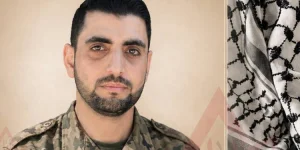
The officials explicitly pointed to a similar approach taken by slain Hamas leader Yahya Sinwar, the report said, who signaled that he was interested in “quiet in exchange for quiet” during the preparations for the Oct. 7, 2023, massacre.
Kan’s Arab Affairs Correspondent Roi Kais, who authored the report, commented on it by noting that “in one month, it will be exactly six years since the historic Abraham Accords – agreements that included the UAE as the pioneer, followed by Bahrain, Sudan, whose normalization process stalled, and Morocco.”
“The expansion of the Abraham Accords and normalization with Israel remain very much on the table, even if not in the immediate future. As U.S. President Donald Trump looks ahead to the second half of his final term, he wants to leave behind a legacy as the president who brought peace to the region.”
Without explicitly tying the countries to the report, Kais said that “Saudi Arabia is obviously the crown jewel, but it is not the only one. The Americans are also working in the direction of Syria and Lebanon.”
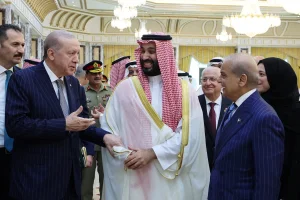
Israel Hayom’s political correspondent, Ariel Kahana, commented, “Because I don't currently know which countries are involved, I feel comfortable – and am permitted – to speculate that Turkey is the one giving the advice and Syria is the one receiving it.”
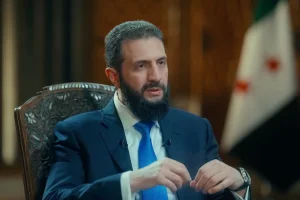
“The ideologies of Syrian President Ahmed al-Sharaa and Turkish President Recep Tayyip Erdoğan toward Israel are essentially identical. Al-Sharaa is not afraid of war and bloodshed. He is also currently engaged in negotiations with Israel and is being asked to make concessions, including by the Americans, to reach an agreement… it stands to reason that the axis behind the reported advice is between Ankara and Damascus.”
Kais compared the situation to “the Treaty of Hudaybiyyah, which according to Islamic tradition was the ten-year truce that the Prophet Muhammad concluded with members of the Quraysh tribe, who controlled the city of Mecca. He broke that agreement after two years, when he felt better prepared for war.”
“This is also the agreement that Palestinian Authority and PLO Chairman Yasser Arafat once invoked to explain to his opponents the rationale behind pursuing an agreement with Israel,” Kais noted.
In one of the first official reactions to the report, National Security Minister Itamar Ben Gvir wrote on 𝕏 that “anyone who thought we could entrust the security of our sons to agreements and guarantees from those around us received a painful slap in the face this morning.”
In another comment on the report, conservative intellectual Ran Baratz questioned the behavior of the military censor, which has often been criticized for its decision-making by Israeli media.
“If the censorship approves for publication that there is a country in the region that told another country to make with Israel something like the Hudaybiyyah agreement, there is no reason not to publish the names,” Baratz argued.
“After all, the countries in question know who they are. So why shouldn't the Israeli citizen know? Because the censorship thinks its role is to determine what the Israeli citizen needs and doesn't need to know, based on its own systemic considerations. The censorship in Israel has long ceased to safeguard security, but rather the interests of the security system,” he charged.
Support our independent, on-the-ground reporting from Israel. Become a $5/month Ally.
You might also like to read this: