A house divided: A wake up call for Israel and the high cost of Jewish division
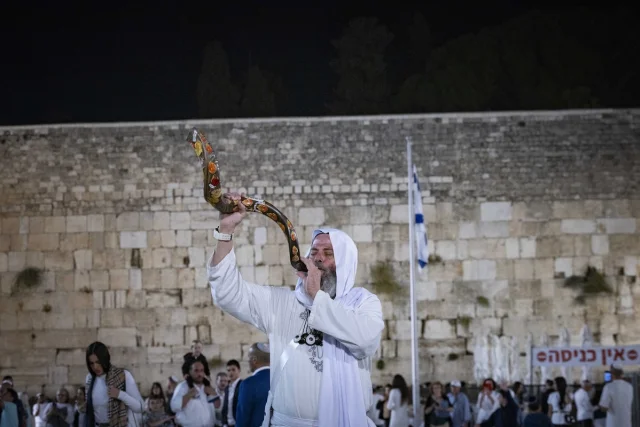
Upon assuming the high calling of President of the State of Israel, Isaac Herzog made his way to the Kotel. His first trip as President was not into the halls of parliament. Nor was it to visit with some other world leader in an environment filled with all the trappings of pomp and circumstance. His first presidential trip was to the Western Wall to humble himself before an audience of One. Standing before those ancient stones which once supported the magnificence and majesty of Solomon’s Temple, he placed a hand written prayer note into a crevice between two giant stones. It contained his heart’s desire and the theme which would eventually resonate through one of the most successful tenures of any of the nine presidents who preceded him. The note was a simple prayer that his service might help to bring about “unity among our people and a true love for Israel.” Understanding the high cost of Jewish division of the past, his constant call for Jewish unity has been the central and endearing theme of his presidency.
Israel’s greatest danger today may not reside outside her borders but from within her own people. While Jews have been well known for their vigorous, often brutal, debate and dialogue, something feels different today. A myriad of challenges threaten Israeli unity. Whether it is the debate over war goals in Gaza, the right and left’s deep division over settlement expansion in the so called “occupied territories” of Judea and Samaria, the constitutional crisis over the future of the judiciary, tensions over the role of Jewish law (Halakha) in public life especially as it relates to gender segregation, the ongoing domestic dispute over the military draft exclusion historically granted to the Haredi ultra-Orthodox men, the increasingly fragmented political landscape with the debate over whether Prime Minister Benjamin Netanyahu’s leadership has run its long course, or any of a dozen other seemingly insolvable differences, Israelis are becoming a divided people. The growing concern over these political, social, and religious divides recently prompted President Herzog to warn, “I am convinced that there is no greater existential threat to our people than the one that comes from within: our own polarization and alienation from one another.”
Throughout their long history Jews have been able to maintain a keen sense of how important it is to have long memories. Remembering the past has been crucial to their existence down through the centuries. The most repeated command that God gave to the Jews, and to all of us, in the Hebrew Bible, is the command to remember. Dozens of times this is mentioned in sacred scripture. When Joshua led the Children of Israel into the Promised Land their first stop was at Gilgal where they built an altar to which they often returned to “remember” all that God had done for them. The Psalmist made his plea, “If I forget you oh Jerusalem let my right hand forget its skill, let my tongue stick to the roof of my mouth, if I do not remember you” (Psalm 137:5-6). For centuries in exile and at thousands of Passover meals they remembered Jerusalem with the benediction, “Next year…in Jerusalem!” Our Jewish friends place a Mezuzah on the door posts of their homes so that with their coming in and going out they “remember” the greatness of their God. Jews do not have the luxury of forgetfulness. Amnesia has never been an option for them. But it seems today the alarm is sounding and the wake up call is ringing loud and long.
No country has suffered and endured the repeated exiles from their Motherland as have the Jewish people. Three times in their history they have been on the brink of annihilation and suffered major exiles. The first during the time of Joseph which ultimately led to Egyptian bondage and four hundred years of exile. The second saw the destruction of the Holy Temple on the Ninth of Av and led to the Babylonian captivity. To this very day when this solemn date on the Jewish calendar rolls around, Jews sit and mourn as they meditate on the Book of Lamentations. The third exile lasted almost two thousand years when Titus and his Roman Legions destroyed the city and the people of God were dispersed all over the world, far away from their holy city of Jerusalem.
All three of these exiles shared one common characteristic. They were specifically caused when the Jewish people became “a house divided,” ultimately revealing the fate of the high cost of Jewish division. The late Rabbi Jonathan Sacks was the first to identify the correlation between these exiles resulting from Jewish dissension within their own ranks. He weighed in with moral clarity at this point: “History is complex. But, memory is clear. In Jewish memory all three exiles have something in common. They were caused by the failure of Jews to live peacefully together.”
Consider the time of Joseph and the exile of Jacob and his sons from Israel. Joseph’s own blood brothers, filled with jealousy and hatred, threw him in a pit and sold him to a group of Ishmaelites who took him down to Egypt and sold him at auction. Through an amazing collection of miracles he ended up becoming the virtual Prime Minister of the most progressive nation in the world. Then, a severe famine came to Israel forcing Jacob and his family to journey to Egypt in search of food. United with Joseph, they settled in the fertile region of Goshen. There they prospered and over the years multiplied greatly in number. Subsequently, a new Pharaoh arose “who did not know Joseph.” Seeing these Hebrews as a looming threat, He enslaved them with hard labor resulting in 400 years of exile from Israel. It all started with a house divided among Jewish brothers revealing the high cost of Jewish division.
The second exile took place in 586 B.C. It started long years earlier when the people requested a King to lead them. This lasted for three generations and then the Kingdom divided under Solomon’s son, Rehoboam. Upon becoming King, Rehoboam had an opportunity to bring all the twelve tribes together. He sought counsel from some of the more mature elders who said, “If you will be a servant to them and serve them and speak good words to them they will be your servants forever” (1 Kings 12:7). However, the younger elders advised him to be tough and stick his finger in the face of the ten tribes in the North. Unfortunately, he took their advice thereby splitting the Kingdom of Israel into a Northern and Southern Kingdom. The Northern Kingdom never had a single good king and met their fate in 722 B.C. when they were taken away into Assyrian captivity never to return. The Southern Kingdom lasted until 586 B.C. when Nebuchadnezzar and his Babylonian armies destroyed Jerusalem and took the Jews into Babylonian captivity and exile. Again, it all began with the inability of the Jews to live in peace with one another resulting, once again, in another house divided.
Then came the third and longest exile from the Jewish homeland lasting from 70 A.D. until the year 1948. First century Jerusalem found the Jews in constant conflict politically, socially, and religiously. There arose deep divisions among the Pharisees, Sadducees, and Essenes and the ever growing problem of the Sicarii sect who, in essence, were the first religious terrorists. Add to this the deep divisions between the House of Shammai and the House of Hillel that threatened to split rabbinic Judaism into two Torahs and it all made for a situation where Rome besieged the city and simply waited for them to crumble from within. Again, a Jewish house divided gave way to two thousand years of exile from Jerusalem.
The bitter irony of the whole spectrum of these events is that all the powerful empires that sent the Jews into exile are only remembered in ruins and in museums today. Go to Egypt and you will see the pyramids of Giza along with all the ruins of a once great empire. Go to the Pergamon Museum in Berlin today and you can stand before the ancient blue and gold Ishtar Gate that once guarded the magnificent entrance to the city of Babylon. Visit most any country in the Mediterranean world and you will find the remains of amphitheaters and other ruins once built by the mighty Roman Empire. They are all but shells of the grandeur they once revealed. And the Jews? They are back in their homeland after centuries of exile. As has been said, “It seems the only people who have the capability of destroying the Jewish people are the Jewish people themselves.” They seem to never learn this simple lesson and find it near impossible to live in love and unity with one another.
Moments of mutual love and respect like Americans felt on September 12, 2001 and Israelis felt on Oct 8, 2023 are, sadly, short lived. Today Jews seem to be as fragmented as they have been since the days of the birth of the modern nation. In Israel Ashkenazi Jews have earned a reputation of having an air of superiority over their Sephardic Jewish brothers. This often leads to conflict and confrontation. The ultra orthodox and secular Jews seem to seldom agree on the most basic of issues.
Presently, Jews in Israel are facing the most important election in their modern history. Yet, there is more fragmentation in the political parties with every passing day’s news. Every day brings another new political party promising much of what they will never be able to deliver. Just when we think Israeli politics can never get stranger another more convoluted coalition appears on the scene threatening the fragmentation once more of any semblance of national unity.
It is no different with Jews in the diaspora. Just two an a half decades removed from the collapse of the World Trade Center on 9/11 and less than three short years from the horrors of October 7, American exit polls during the recent New York City mayoral race showed that one third of the Jewish voting population in New York City voted for a new radical Islamic Mayor. One in every three Jews voted for a Muslim who has called the Prime Minister of Israel a war criminal and the architect of a horrific genocide. One third of the Jewish population of New York City voted for a mayor who proudly became the first mayor in decades to refuse to attend the annual Israel Day Parade honoring his campaign promise not to do so. An outsider looking in today is staggered by the lack of unity in today’s Jewish world.
This is a wake up call for the Jews of the world to see that the way forward is back…back to remember lessons of the past. Back to see that a house divided can not stand. Back to hear and head the words of their ancient prophets and leaders. Words like the warning from the pen of King David calling his fellow Jews to the importance of living together in unity and mutual responsibility—“Behold, how good and pleasant it is for brethren to dwell together in unity” (Psalm 133:1).
Father Abraham’s appeal across these long centuries sounds the alarm and wake up call today just as it did back then. Hear him as he pleads with his fellow Jews today, “Let there be no strife, I pray between me and you, for we are brothers” (Genesis 13:8). And do not forget the plea of HaShem Himself through Moses that we should “love our neighbor as we love ourselves” (Leviticus 19:18).
The Torah also reminds us that there is an exponential dynamic to unity when it claims “one can chase a thousand but two can chase ten thousand” (Deuteronomy 32:30). Jesus of Nazareth, whom evangelicals call Yeshua HaMashiach, living in the midst of first century Jewish strife, weighed in with this prophetic warning, “If a house is divided against itself, that house will not be able to stand” (Mark 3:25).
In 2023, addressing the United States Congress, Israeli President Isaac Herzog admitted that “as a nation we must find a way to talk to each other no matter how long it takes.” Could time be running out once more on a house so divided?
As Israel has now entered perhaps the most defining election period in their history, President Herzog recently issued a final and clear wake up call to his nation. He warned his fellow Jews that the destruction of their ancient Temples should remind them today of the danger of “polarization, division and hatred among us.” Acknowledging that the coming election is a test of Israeli unity and cohesion, he warned, “Twice we failed. We must not repeat the mistakes of the past.” We will soon learn if our Israeli friends have eyes to see and ears to hear.
Now more than ever we Evangelicals and Jews alike should bombard heaven and “Pray for the peace of Jerusalem” (Psalm 122:6). And in so doing, believing that somehow, some way, a spirit of love and unity might be restored to these people to whom God referred to as “the apple of His eye.” It will take a miracle. But the God of Israel is still in the miracle making business. May our Israeli friends hear this wake up call from heaven, beseech with fervor the Throne of Mercy, and avoid the fate that often comes from being…A HOUSE DIVIDED.