









As Trump weighs resumption of large-scale military operations in Iran, Israeli military raises alert level
CENTCOM completes 11th consecutive day of strikes on Iranian targets
.jpg/4afbb3a452328f2576a6383b77240f1e/2026-07-22-17.45.27-(1).webp "As Trump weighs resumption of large-scale military operations in Iran, Israeli military raises alert level")
The U.S. military completed an 11th consecutive day of strikes against Iran, Central Command (CENTCOM) announced early Wednesday.
U.S. forces targeted “Iranian military operations centers, maritime capabilities, aircraft hangars, drone storage facilities, and military logistics infrastructure to further degrade Iran's ability to threaten commercial shipping in the Strait of Hormuz,” CENTCOM said in a statement.
CENTCOM also noted that Iranian forces have attacked over 30 commercial vehicles transiting the strait over the past three months, with some attacks happening even during the period of the Memorandum of Understanding, which guaranteed free passage to all commercial vessels.
“Despite Iranian aggression, the Strait of Hormuz remains open for commercial vessel transit. Since early May, CENTCOM forces have helped facilitate the transit of approximately 900 commercial vessels and 450 million barrels of crude oil,” CENTCOM stated.
Following the strikes, the Iranian military conducted retaliatory attacks with missiles and drones on U.S. facilities in Kuwait and Jordan, according to the Islamic Republic News Agency.
The Jordanian military announced it had intercepted four drones and four missiles fired at its territory. Explosions were heard in the port city of Aqaba, opposite the Israeli city of Eilat, on the Red Sea, and two plumes of smoke were seen from apparent impacts.
Iran's IRGC says it targeted a U.S. installation near Aqaba, Jordan. Smoke is visible rising from the Israeli city of Eilat across the border. pic.twitter.com/LInSByK1qU
— OSINTWarfare (@OSINTWarfare) July 22, 2026
Following the reports of loud explosions, the IDF said in a statement that no missiles nor shrapnel from the explosions hit Israeli territory.
The Strait of Hormuz remains a consistent friction point between the Islamic Republic and the United States, as the Iranian regime insists that it will retain sovereignty over the critical waterway in any agreement.
U.S. Secretary of State Marco Rubio reaffirmed the unwillingness of the United States to accept such an outcome, during remarks at the Association of Southeast Asian Nations (ASEAN) in Manila, Philippines on Wednesday morning.
“If we create a precedent in the Middle East where a nation-state can decide to control an international waterway, charge a toll, and blow up your ships if you don’t pay, we have created a very dangerous precedent that will repeat itself in other parts of the world, including this region,” Secretary Rubio said.
Meanwhile, U.S. President Donald Trump said the military will soon bomb the nuclear facilities at Pickaxe Mountain, near the nuclear facility in Natanz, which was struck during last year’s Operation Midnight Hammer.
“We'll be hitting that area very probably pretty soon,” Trump said during his meeting with Lebanese President Joseph Aoun at the White House on Tuesday. “There's not a thing they can do about it. You know, normally I wouldn't say that. If I thought they could do something about it, I would never say that. But we'll be hitting that area pretty soon, and very heavily.”
Reporter: Do you believe that Iran has moved nuclear centrifuges into Pickaxe Mountain?
— Open Source Intel (@Osint613) July 21, 2026
Trump: We don't have it on record. All we do is read the fake news, you know, we see the news is so wrong so many times. So, you know, maybe, maybe this one they have right. We’ll be hitting… pic.twitter.com/upQJkN7qgi
During his comments, President Trump also stated that the U.S. has no concrete evidence that Iran has moved nuclear material into the Pickaxe Mountain site.
In a report on Israel's Army Radio, military correspondent Doron Kadosh said Israel assesses that all the components required to establish an enrichment facility have been transferred to the site, but the site is not yet operational.
Israeli security officials also assess that the U.S. will not be able to completely destroy the underground site using conventional weapons, as it did in Isfahan and Fordow, due to the greater depth, and the fortifications that have been added to prevent a similar strike. However, they believe the U.S. could neutralize the site temporarily, by damaging or destroying entrance tunnels.
At the same time, Israel is preparing for the possibility of a broad escalation with Iran, after U.S. officials said Trump is weighing a resumption of hostilities aimed at forcing the Iranian regime to capitulate.
Axios reported that Trump is considering resuming the joint military campaign with Israel, saying on Tuesday that the U.S. is “not finished at all” with its military efforts.
Israel’s security establishment estimates that in the event of an escalation, Iran will likely launch missile barrages at Israel, while also involving its proxies Hezbollah and the Houthis. While Israel assesses that Iran’s ballistic missile capabilities have been degraded, the IDF is preparing for a scenario of large barrages.
After the U.S. increased the numbers of aerial refueling aircraft in Israel in an apparent preparation for an escalation, the IDF has raised its alert level, increasing the level of readiness and preparedness for a possible resumption of hostilities.
Over the past year, the defense ministry has worked to accelerate the number of interceptor missiles being produced, Hebrew media reported.
“We are in tense times,” a senior defense official told Walla News. “We are waiting for an American decision.”
The official said Israel is preparing for “all scenarios.”
“We are preparing for all scenarios - from an Iranian attack that would require us to respond to an American request to join the offensive if the White House decides to do so. The IDF is on high alert in the air, at sea, on land and, in cyberspace,” he added.

Please take a moment and join others who are praying for Israel at this very moment by adding your light on the live prayer map with a simple click at prayforisrael.live.
Popular article:
interview Easter message of resurrection hope amid war at Jerusalem's Garden Tomb
biblical commentary Let my people go: a Passover message for today
4 IDF soldiers killed, 2 wounded in fighting in southern Lebanon, as Israel eliminates dozens of Hezbollah terrorists
Receive latest news & updates
A message from All Israel News
Help us educate Christians on a daily basis about what is happening in Israel & the Middle East and why it matters.
For as little as $10, you can support ALL ISRAEL NEWS, a non-profit media organization that is supported by readers like you.
Latest articles:
Israeli fighter jets flew to Iranian border in ‘power projection,’ deterrence exercise ahead of elections next week

Israeli intel chief Zini travels to France to give counterterrorism advice amid violent riots – report

Founding trustee of Oxford’s Islamic studies department believed Muslims should ‘continue the work of Hitler’
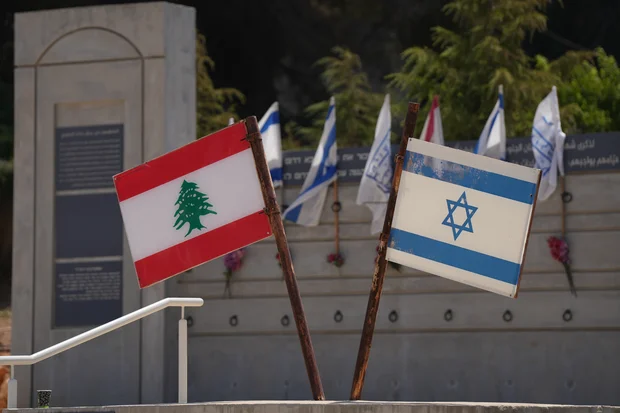
'Peaceful dialogue is not a crime:' Petition urges Lebanon to abolish its Israel Boycott Law

Israeli defense companies expand global reach with new deals in Cyprus, Germany and Canada