









Trump approves civilian nuclear program with Saudi Arabia, raising Israeli concerns & arms race fears
Israeli cabinet reportedly surprised by agreement
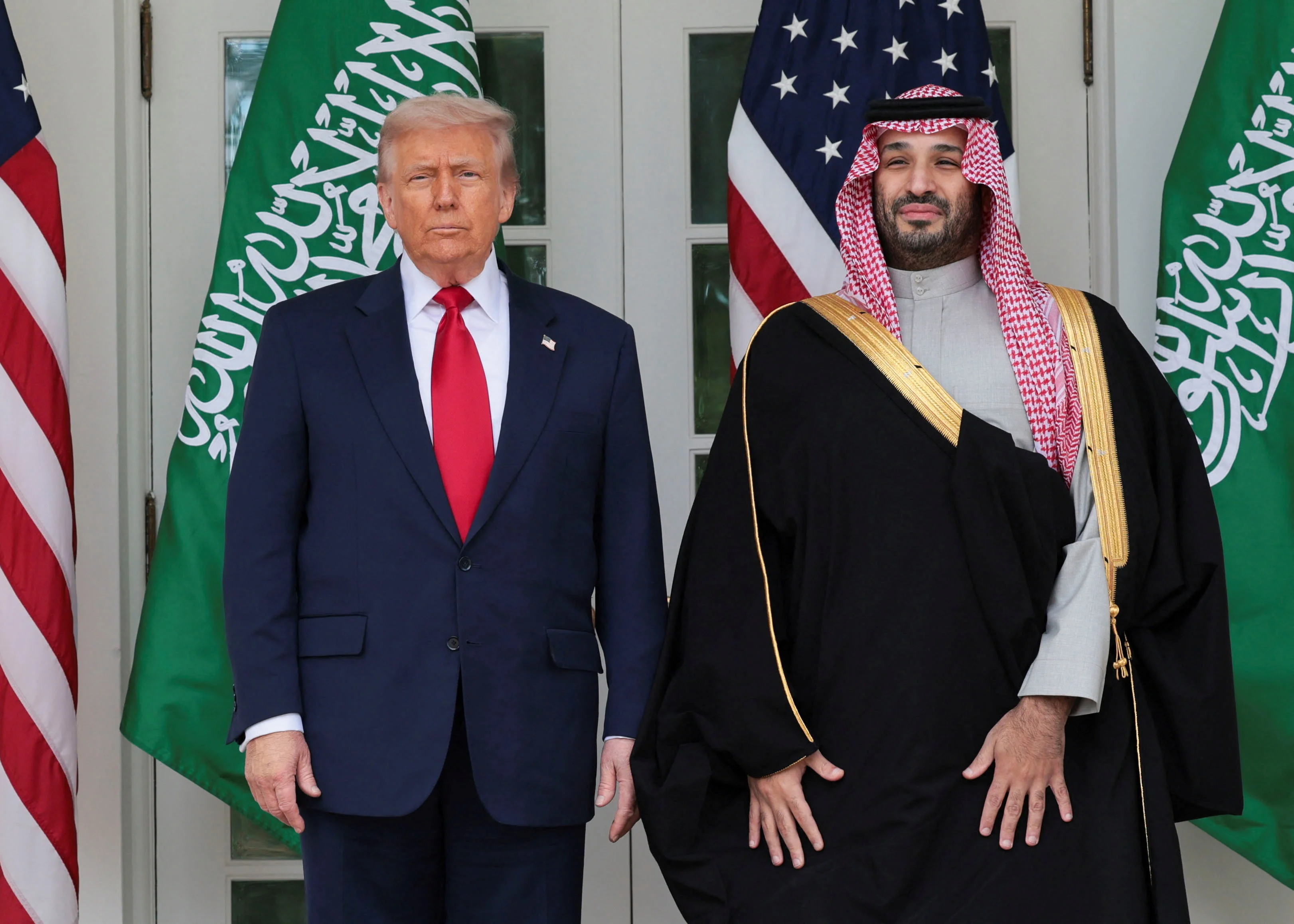
U.S. President Donald Trump approved an agreement to provide the Kingdom of Saudi Arabia with a civilian nuclear program – without including stringent safeguards to stop materials being developed for nuclear weapons, and without conditioning it on peace with Israel, The Wall Street Journal reported on Tuesday.
The nuclear program had long been a key component of negotiations over a Saudi-Israeli peace deal and was expected to be contingent on the signing of a broader agreement.
Israeli leaders have strongly opposed granting any country in the region a nuclear program, concerned it could eventually be used to develop weapons and potentially plunge the region into a broad arms race.
Over the years, Saudi Crown Prince Mohammed bin Salman has vowed that the kingdom would build nuclear weapons if the Iranian regime does.
Israel had no immediate official reaction to the report, but the cabinet was reportedly surprised by the agreement and the timing of its announcement, according to Israel Hayom.
The New York Times reported that the agreement would be announced later on Wednesday and presented to Congress for approval soon after. However, the newspaper also said that lawmakers from both parties, as well as Israeli officials, have expressed opposition.
In one of the first reactions from Israeli leaders, Yisrael Beitenu party chairman and former Defense Minister Avigdor Liberman warned that “a civilian nuclear program in Saudi Arabia will ultimately lead to nuclear weapons and trigger a reckless arms race across the entire Middle East. The State of Israel must make its position unequivocally clear: we strongly oppose this. The Israeli government must act decisively with the U.S. Congress to block this move.”
“It is hard to overstate what a serious blow this would be to Israel,” said Army Radio’s political correspondent, Yanir Cozin.
“One of Saudi Arabia's biggest incentives for normalizing relations with Israel was supposed to be a US-backed civilian nuclear program,” agreed Yaakov Katz, former editor-in-chief of The Jerusalem Post.
“If Washington is now prepared to provide that without normalization, it fundamentally changes the equation and appears to be a serious setback for the Abraham Accords' biggest remaining prize – Israeli-Saudi normalization. Hopefully there's more happening behind the scenes than we can see. For now, there is no evidence of that,” Katz wrote on 𝕏.
Reminder: only five states without nuclear weapons enrich uranium (down from six with Iran’s setbacks). @POTUS wants to put it in Saudi Arabia, which has publicly discussed acquiring nukes. https://t.co/nk5cR78DTa pic.twitter.com/laQ9djpDEK
— Andrea Stricker (@StrickerNonpro) July 22, 2026
The agreement would remain in effect for 30 years and grant American companies a key role in developing Saudi Arabia’s nuclear infrastructure, including the potential construction of a uranium enrichment facility if a feasibility study determines it is warranted.
The facility would reportedly be built under a so-called “black box” arrangement designed to prevent the transfer of sensitive enrichment technology.
Trump administration officials added that the U.S. role in the program would also prevent the spent nuclear fuel from being reprocessed.
The preferential role granted to U.S. companies over other foreign companies is a key provision cited by Trump administration officials as a way to exercise control and prevent misuse of the program, despite Saudi Arabia declining to adopt several safety measures, including the so-called “gold standard” established with the United Arab Emirates.
When the U.S. signed a similar agreement with the UAE in 2009, it signed an “additional protocol” for more rigorous monitoring and inspections with the International Atomic Energy Agency and vowed to forgo the right to produce its own fuel or to repurpose the spent fuel.
“We could perpetuate the gold standard with the UAE – this will demolish it,” warned Andrea Stricker, deputy director of the Nonproliferation Program at the Foundation for Defense of Democracies (FDD).
“Congress should block [the deal]. If it does not, one hopes the policy will be reversed by a subsequent administration before too much damage is done in terms of watering down safeguards, setting negative precedents for other states, and failing to contain the spread of enrichment and reprocessing—which we just put back in the box in Iran via force,” Stricker added.
“Whither goes Saudi Arabia, so goes the United Arab Emirates, Turkey and Egypt. The idea that this will have a happy ending is delusional,” Henry Sokolski, executive director of the Nonproliferation Policy Education Center, told the WSJ.
Popular article:
interview Easter message of resurrection hope amid war at Jerusalem's Garden Tomb

biblical commentary Let my people go: a Passover message for today

4 IDF soldiers killed, 2 wounded in fighting in southern Lebanon, as Israel eliminates dozens of Hezbollah terrorists
Receive latest news & updates
A message from All Israel News
Help us educate Christians on a daily basis about what is happening in Israel & the Middle East and why it matters.
For as little as $10, you can support ALL ISRAEL NEWS, a non-profit media organization that is supported by readers like you.
Latest articles:
Hamas planned to detonate bombs in Gaza refugee camps to help terrorists escape, says IDF
NEWS ANALYSIS 7-in-10 Israelis say Trump ‘friendliest US president to Israel ever’ – will his bear hug of Bibi move the needle?
.jpg/4c2b717a9b0837c64aab73caa4c3e5d9/f250719mg15-(2).webp "Israeli security forces stand guard at the Israeli border fence with Syria")
Syrian gov’t fears Israeli-backed Druze offensive in southern Syria in the near future – report
Michigan Democratic Senate nominee says Israel ‘is actually not our friend’
Netanyahu to advance partial reconstruction in Gaza in exchange for Trump endorsement - Israeli report