AG Baharav-Miara opposes gov't's plans to establish 'political' commission of inquiry into Oct 7 failures
Coalition accuses A-G of politically-motivated opposition to the bill




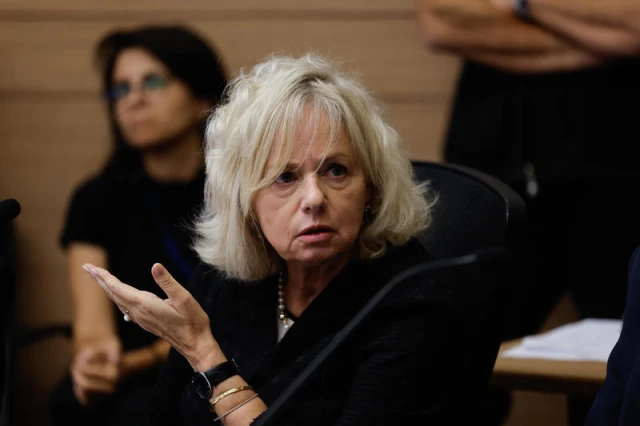
Attorney General Gali Baharav-Miara once again expressed her opposition to the government’s plans on Sunday, this time, excoriating the coalition for bills aiming to establish a commission of inquiry into the failings leading to the Oct. 7, 2023 Hamas massacre, and to close down Army Radio.
In a written legal opinion, Baharav-Miara particularly rejected the bill proposed by Likud MK Ariel Kallner, arguing that the planned “National Commission of Inquiry” would “politicize” the proceedings.
The government decided against establishing a state-level commission of inquiry, which Baharav-Miara said was “the designated tool established by the Knesset for events of this magnitude more than 50 years ago,” noting that this tool is perfectly suited to probe the events of Oct. 7.
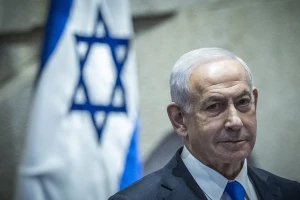
Under the government-backed bill, Prime Minister Benjamin Netanyahu would be tasked to lead the government panel determining the members and the mandate of the commission.
The decision to establish the “National Commission” rather than setting up a State Commission has been heavily criticized by the opposition and is viewed unfavorably by a large number of Israelis, according to recent surveys.
Baharav-Miara went on to argue that the government’s proposed mechanism doesn’t “align with the vital need for a professional and independent commission of inquiry,” charging that it “indicates that this is a ‘personal’ bill, ‘tailored to the measurements’ of the current government.”
“The bill is a personal and improper bill that does not meet the legal standards required for legislation,” she added, “and in any case does not give proper expression to the weighty interests and rights required for an effective investigation of the events of October 7 and the war.”
The A-G also quoted remarks former Justice Minister Yaakov Shapira made ahead of the first reading of the law concerning the establishment of a state commission of inquiry in December 1967: “The public must not think that the government established a commission of inquiry with a composition convenient to it, and therefore our proposal seeks to reduce the government’s authority regarding commissions of inquiry to a minimum.”
She concluded, “The bill undermines the purpose of uncovering the truth and drawing full lessons regarding the events of October 7 and the war that followed. The proposed framework is riddled with substantive flaws that will not allow reaching the truth and will, in fact, thwart the possibility of striving to do so. The commission proposed to be established now lacks the basic characteristics of a state commission of inquiry—independence, professionalism, and non-dependence.”
“In light of the above, the bill does not meet the required legal standards, and it should be opposed,” wrote Baharav-Miara.
Predictably, her legal opinion drew harsh criticism from members of the coalition, which has long accused her of trying to hamper its efforts and has even voted to replace her.
“We will not allow the ousted attorney general and her associates to evade a commission of inquiry. The mandate letter frightens them, and a commission of inquiry not under their control drives them crazy,” charged Communications Minister Shlomo Karhi.
Diaspora Minister Amichai Chikli wrote on 𝕏 that “Attorney Miarah’s” opinion “carries no substantial weight, especially as she is neck-deep in covering up the serious affair of the Military Advocate General.”
He also quoted a statement by Government Secretary Yossi Fuchs, who said that the A-G’s legal opinion contained “everything except legal arguments.”
“This is an independent inquiry committee, with exactly the same powers as an inquiry committee under the Inquiry Committees Law, all its members will be professionals, its establishment and composition will be determined equitably between the coalition and the opposition, and it will be able to lead to the investigation of the truth with broad public trust,” according to Chikli citing Fuchs.
“It’s a shame she earns a much higher salary than the real leader of the opposition, Yair Lapid. She should go to the Knesset, be opposition leader – I’m sure she’d do a better job than him,” quipped Knesset Constitution Committee chairman, Simcha Rothman.
Speaking with Ynet News, Rothman also addressed plans by a group called the “October Council,” which says it represents bereaved families from the massacre, to launch a campaign pressuring coalition members not to vote in favor of the bill.
“There is, of course, a choice to relate to them, rather than, for example, to the ‘Din VeTzedek Forum’, which is also made up of bereaved families who say exactly the opposite,” Rothman noted.
“This is a legitimate political debate, and I’d be happy to conduct it with members of the October Council, members of the Din VeTzedek Forum, Knesset members from the coalition and the opposition.”
However, he added that he opposes “Prime Minister Benjamin Netanyahu appointing all the members himself. The bill doesn’t even propose that. I oppose the court appointing all the members itself, and the coalition appointing all the members itself. I think the members should be appointed, as the bill proposes, by 80 Knesset members. If we turn the commission of inquiry into a political battering ram of one side against the other instead of conducting a real investigation, its conclusions will be filed deep, deep in the trash.”
You might also like to read this: