Ultra-Orthodox IDF soldiers prevented female officer from entering military base – report
Shas party leader Deri vows not to join any government without commitment to continue Haredi draft exemptions


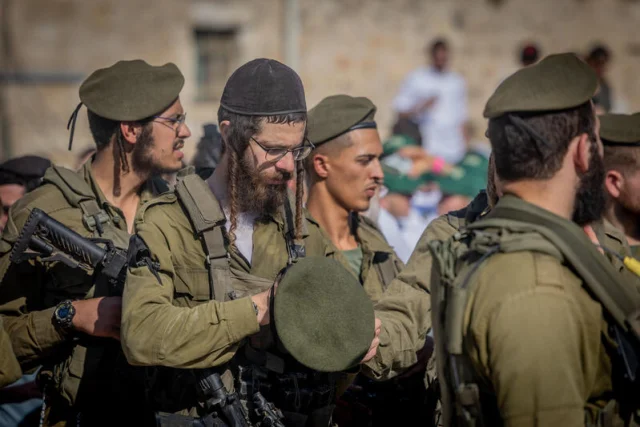
With the elections fast approaching and the issue of ultra-Orthodox military service emerging as one of the key issues, a Kan News report that a female IDF officer was refused entry to a base because of her gender could further inflame tensions.
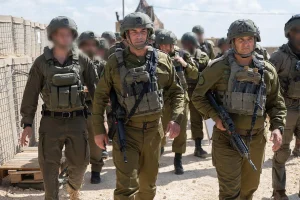
The state broadcaster reported Tuesday evening that soldiers of the Hasmonean Brigade refused a female logistics officer entry to the Mount Hermon outpost.
The brigade is the IDF’s flagship project showcasing the possible integration of large numbers of Haredi (ultra-Orthodox) soldiers while enabling them to maintain a religious lifestyle.
The officer was at the base to accompany Ministry of Defense contractors renovating fuel tanks ahead of winter, which provide electricity and hot water for the soldiers.
The male contractors were admitted to the base, while the female officer was not allowed to enter the courtyard where the old fuel tanks are located. She reportedly did not seek entry to the base’s compound or living quarters, which are segregated by gender throughout the military.
Responding to the report from Kan, the IDF acknowledged that the soldiers' behavior was “a mistake,” and that the female officer “should have been allowed to enter the outpost, with the necessary arrangements made to enable her to perform her duties.”
The military stated, “The General Staff order specifically addressing the integration of members of the Haredi community stipulates that in a unit operating under the ‘David’ track, under which the Hasmonean Brigade operates, all unit personnel must observe the Torah and its commandments.”
“Nevertheless, there is no impediment to professional personnel, both men and women, serving in other units, entering camps where units of the brigade are stationed in order to carry out their duties.”
The incident highlights concerns from both the secular and Haredi communities that the integration of ultra-Orthodox soldiers into the IDF could harm their respective lifestyles.
For example, secular soldiers have previously complained about being prohibited from bringing non-kosher food onto IDF bases, where kitchens are generally kept kosher to accommodate religiously observant soldiers.
On the other hand, ultra-Orthodox leaders have warned that serving in the IDF’s broader military framework could lead their children to abandon the Haredi lifestyle. Among their concerns are serving in close proximity to female soldiers and being required to listen to women singing at ceremonies, which some rabbis prohibit.
Moran Zer Katzenstein, a candidate in the far-left "Democrats" party, condemned the incident as a “glaring warning sign for all of us.”
“This is not Jewish law; this is extremism and a threat to security,” she charged. “A female officer carrying out her duties is not a hazard that needs to be hidden from sight.”
“Within four years, women will no longer serve in the military.”
Haredi military service has been one of the central issues of the current election campaign, as the IDF military police has increased its arrests of draft evaders following instructions from the High Court of Justice. In recent months, the Haredi community has responded with several large-scale demonstrations, including spontaneous and sometimes violent protests that have prevented some arrests.
On Wednesday, ultra-Orthodox Shas chairman Aryeh Deri confirmed that his party, despite being a long-time ally of Prime Minister Benjamin Netanyahu, would not join his government without a commitment to a new IDF draft law, presumably including the continuation of broad exemptions for young Haredi men.
Speaking to Kikar HaShabbat, Deri said, “There will be no government in Israel that Shas supports or participates in unless we regulate the status of yeshiva students. How can we accept this sword hanging over the arrests?”
Meanwhile, IDF Chief of Staff Lt.-Gen. Eyal Zamir reiterated the military’s need for more soldiers in a speech on Tuesday.
"In times of war, the importance of the mission of meaningful military service in the IDF becomes even clearer. This is the highest of commandments – the commandment to defend the land, its citizens, and our historical heritage,” Zamir said before bereaved families and military personnel.
“It is a privilege, a duty, and a burden that we carry with pride. We must strengthen the value of service in the IDF, expand the ranks, and support our combat soldiers as the heroes of the nation and role models of Zionist excellence."
You might also like to read this: