A biblical response to Amb. Zomlot's claims about Palestinian Christianity: History, Scripture, and the Gospel

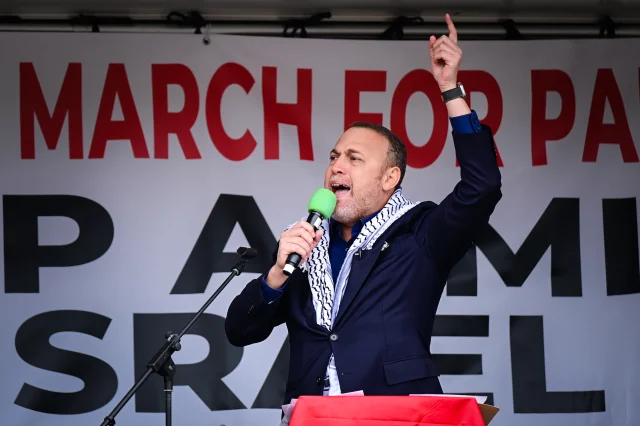
Husam Zomlot, the Palestinian Ambassador to the United Kingdom, has made several significant claims about Palestinian history, Christianity, the Bible, and Jesus Christ. These claims deserve a careful response, not merely from a political perspective, but from the perspective of Scripture, history, and historic Christianity.
First, Arab Christians do have ancient and important roots in the Holy Land and across the Middle East. Christian communities have existed in and around Jerusalem, Bethlehem, Nazareth, and other parts of the region for many centuries. Their history, presence, and contributions should never be ignored or dismissed.
However, the statement, "We are the original Christians," requires far greater historical precision than is often given. Christianity did not emerge from a modern Palestinian national identity, nor did it arise from any modern political movement. The Christian faith arose in the first century within the Jewish context of Judea and Galilee. Jesus was born in Bethlehem, lived in Nazareth, ministered throughout Galilee and Judea, was crucified in Jerusalem, and rose again exactly as recorded in the New Testament.
Palestinian Ambassador to UK Husam Zomlot: Palestinian History Was Stolen; We Are the Original Christians; The Bible Was Rewritten to Be Used Against Us; Jesus Is Our Gift to the World https://t.co/gOkzF1hAzd
— MEMRI (@MEMRIReports) September 16, 2026
The apostle Paul describes Jesus as "descended from David according to the flesh" (Romans 1:3). Likewise, Matthew presents Jesus as the promised Messiah who fulfilled the Old Testament Scriptures (Matthew 1:1; 2:5-6). The Bible consistently roots Jesus in the history of Israel and the promises God made to His covenant people. These historical realities cannot simply be redefined to fit modern political narratives.
Second, the claim that "the Bible was rewritten to be used against us" is an extraordinary accusation and therefore requires extraordinary evidence. Such a claim should not be accepted merely because it is emotionally powerful or politically convenient. Serious historical assertions must be supported by serious historical evidence.
While Scripture has certainly been misused by individuals, governments, and political movements throughout history, misuse is not the same thing as rewriting the text itself. People have twisted Scripture for their own purposes, but that does not mean Scripture was changed to support those purposes.
More importantly, this claim strikes at the very foundation of Christian faith. If the Bible was deliberately rewritten to support a political agenda, then the authority and reliability of Scripture are fundamentally compromised. Such a statement does not merely challenge a political viewpoint; it challenges the faith of Christians worldwide, including Arab and Palestinian Christians, who have trusted, preached, translated, preserved, and defended these Scriptures for centuries.
The historical evidence simply does not support the accusation. Long before the modern Israeli-Palestinian conflict existed, the biblical text had already been copied, translated, studied, and distributed throughout the ancient world. The Bible was not created by modern politicians, nor was it rewritten for modern political causes.
To claim that the Bible was rewritten is not merely to challenge a political interpretation. It is to make a sweeping historical accusation against the text that has been embraced by the global church for nearly two thousand years. Such a claim requires evidence, and without evidence it should be rejected.
The Christian faith does not rest upon a modern political narrative. It rests upon God's revelation in Scripture and upon the historical life, death, and resurrection of Jesus Christ.
Third, Jesus should not be understood through the categories of modern nationalism. The national identities that exist today did not exist in the first century. Jesus was born a Jew, lived as a Jew, fulfilled the Jewish Scriptures, and ministered within the land historically known as Judea and Galilee under Roman rule. To impose modern national categories upon Him is not historical accuracy; it is historical revisionism.
Jesus Himself declared:
"My kingdom is not of this world."
John 18:36
And the apostle John writes:
"For God so loved the world, that he gave his only Son."
John 3:16
Jesus is not the possession of any modern nation, ethnicity, or political movement. He is not a political symbol to be claimed by competing groups. He is the eternal Son of God, the promised Messiah, and the Savior of the world.
As Christians, we can recognize the history, dignity, and suffering of Arab and Palestinian Christians while refusing to reshape biblical history to fit a modern political agenda. We can affirm their value and defend their rights without denying the Jewish historical context of the Bible. We can care deeply about justice and peace without changing what Scripture actually teaches.
Christians should reject every attempt, whether from the political left or the political right, to rewrite biblical history for contemporary purposes. God's Word must judge our politics. Our politics must never rewrite God's Word.
The gospel does not need political revision. The Bible does not need to be rewritten. And Christ does not belong to any modern political identity.
Claims that the Bible was rewritten to support a modern cause are not supported by the historical evidence. The Scriptures existed long before today's political conflicts, and their message remains unchanged. The answer to political disagreement is not to rewrite history, reinterpret the identity of Jesus, or cast doubt on the integrity of Scripture.
As Jesus said:
"Heaven and earth will pass away, but my words will not pass away."
Matthew 24:35
Our responsibility as Christians is not to make Scripture serve our politics, but to allow Scripture to speak truthfully to our politics, our history, and our lives. When political narratives conflict with biblical truth, Christians must stand with the truth of God's Word, regardless of how popular or unpopular that position may be.
You might also like to read this: