Farthest Israeli city reached by Hamas terrorists forever changed by Oct 7
Ofakim mayor bolsters barriers, civilian responders and trauma care as frontline shifts closer



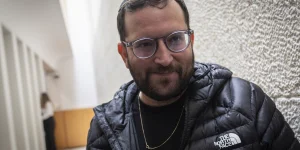
Twenty-two kilometers (13 miles) from the Gaza border, Ofakim had never considered itself a frontline city. Three years after Oct. 7, Mayor Itzik Danino described how Hamas' attack changed the way the city protects its residents.
For Danino, the memory of the alerts triggered by the first rocket barrage on Oct. 7 is inseparable from a horrifying realization: residents rushing for cover would find the city’s public bomb shelters locked.
“In those moments, at 6:29, all I am thinking about is that my residents are running to the public shelters and finding them locked, because until then there had been no concern or security threat to our residents,” Danino recalled.
By then, 18 terrorists had already reached Ofakim. As residents ran toward shelters, gunmen opened fire.
Unlike Sderot and the kibbutzim immediately surrounding Gaza, Ofakim is not part of the area traditionally designated as the Gaza Envelope. Its distance from the border had shaped assumptions about the threats it faced and the prevalence of bomb shelters in private homes.
Danino said the terrorists arrived in the city in two pickup trucks loaded with rifles, grenades, explosives and ammunition — enough weaponry, in his description, to “burn down all of Tel Aviv.”
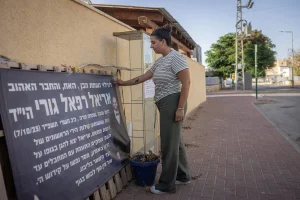
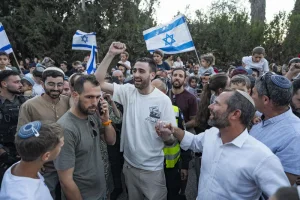
Ofakim became a battleground as residents, some armed with private firearms and others with whatever tools they had, went out in shorts and baseball caps to confront the terrorists. By the end, 48 Ofakim residents had been killed.
Relying on defense rather than distance
Municipal policing has doubled since Oct. 7, according to Danino, and the city has established a civilian response team of more than 50 armed residents.
“If, God forbid, there is a security incident, we will not wait for a soldier to arrive at two in the afternoon,” he said. “We will know how to respond in the first minutes with our own forces.”
The municipality is also installing roughly 2,000 advanced cameras and sensors in public areas.
Perhaps the most striking measure is a municipal program known as “Safe Ofakim 360,” which has placed barriers around the city’s perimeter. Ofakim has five entrances; three close between 11 p.m. and 6 a.m., while two remain open with security.
The measures have not been universally welcomed. In response to the municipality’s announcement on social media of Safe Ofakim 360, some commenters compared the barriers to enclosing residents in a ghetto and argued that the government should provide greater border security rather than “imprisoning” the city’s population.
Danino argues that the changes are intended not only to improve security but also to restore residents’ sense of safety.
The road to recovery
The immediate attack in Ofakim ended at 2:20 a.m. the morning after Oct. 7, but the sense of danger did not.
Israeli forces moved through the city “house by house, street by street,” searching for terrorists who might still be hiding. The operation continued until Monday afternoon.
At 5 p.m. that day, Danino went live on Facebook: “Dear residents, there are no terrorists in Ofakim,” he recalled announcing. “We understand that the war will be long. We will get through it together.”
But despite trying to restore a sense of safety publicly, he said he kept sleeping at home with furniture barricading the front door.
“I have this conflict within myself: on the one hand, we need to restore routine for the community and the residents as quickly as possible,” he explained, “while at the same time there is still fear of terrorists.”
He said that tension remained with him for eight months.
On Oct. 11, 2023, 30 volunteer psychologists arrived in Ofakim. Danino asked them to become municipal employees beginning the next morning. When they agreed, Danino decided not to evacuate the city.
“That is where I made the decision to keep all the residents here in the city during the hardest and most terrible moments,” he said.
Three years later, the psychological toll remains visible.
Danino said more than 5,000 residents have been officially recognized as victims of hostile acts, with varying degrees of disability. The municipality now employs more than 90 psychologists and trauma therapists, and “the waiting list just keeps getting longer,” he said.
‘This is our revival’
The city’s post-Oct. 7 story is not only one of fortified security and trauma treatment, but also growth.
Seven years ago, Ofakim had around 24,000 residents. This week, its 80,000th resident purchased an apartment there. At that rate, Danino says Ofakim has been Israel’s fastest-growing city over the past three years.
“This is the revival of the city of Ofakim,” he said. “This is the revival of the State of Israel.”
Ofakim is now seeking to turn its agricultural roots into an AgriTech future, attracting startups, developing research facilities and allocating land for experimental agriculture.
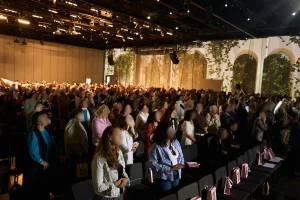
Marking three years since the attack, Danino ended his remarks by asking those present to stand in silence for Ofakim’s fallen.
Oct. 7 permanently changed how the city understands its proximity to Gaza. The border did not move geographically, but for Ofakim, it moved psychologically.
You might also like to read this: