Prayers at Nir Am: Did a women’s gathering play a role in an Oct 7 miracle?
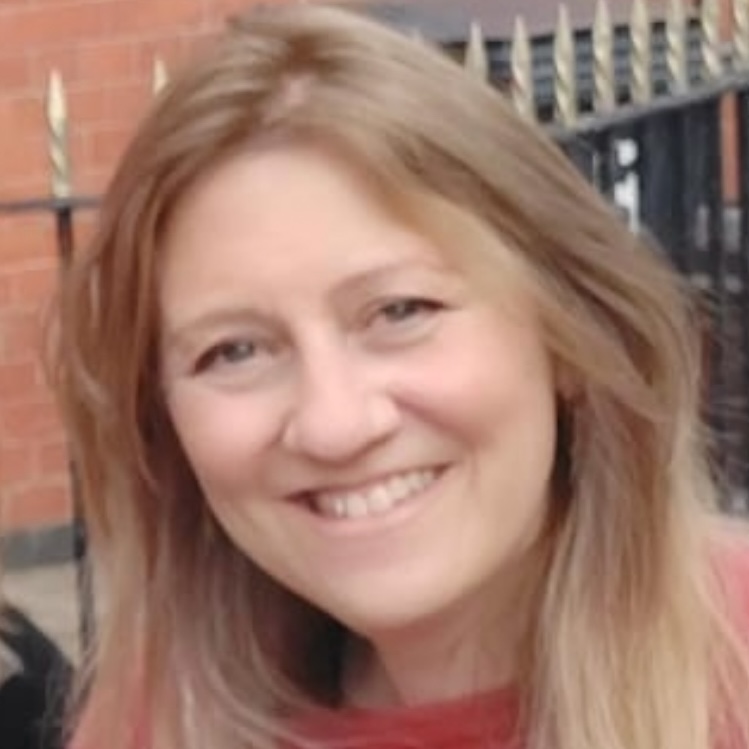

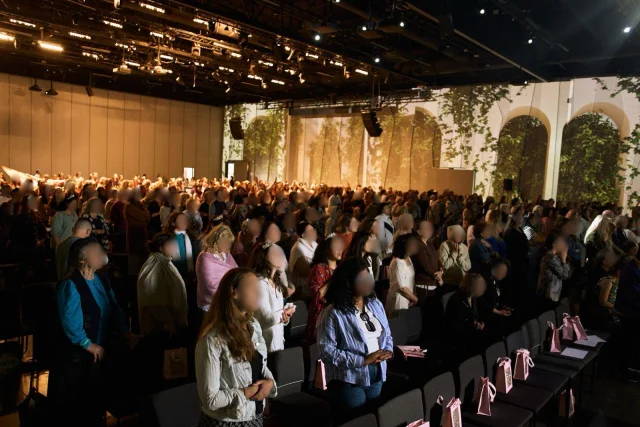
Could a prayer event have played a part in the miracle of Kibbutz Nir Am on Oct. 7? Chaya Mizrachi, co-founder of the “Bat Zion” conferences, told ALL ISRAEL NEWS about their event on the kibbutz, which suffered no casualties in the attack.
Mizrachi explained how she and Norma Sarvis started gathering women in Israel to pray almost ten years ago. They had attended a gathering called “Arab Deborahs Arising” near Jerusalem.
"I saw all these Arab women being touched by God and just being ministered to. And I sat there that day thinking, we need this for the Jewish women. They need something. And it became just, like, burning in me."
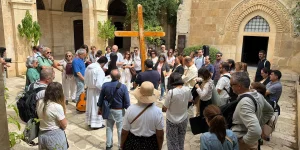
So when Norma brought a pastor’s wife from Poland and suggested starting annual conferences, Chaya leaped at the opportunity. The first one took place next to the Sea of Galilee at Magdala, in a beautiful building that honors the women of the Bible.
“Every year, we dedicate a special day to honor and encourage women believers… celebrating the blessings they bring to their families, communities, and the body of Messiah,” affirmed Chaya’s husband, pastor Avi Mizrachi.
“What started out as a modest event of just about 150 women, coming together to celebrate the first Bat Zion [Daughter of Zion] Conference in 2018, has become a tremendous success with nearly 800 women from all over Israel.”
However, soon after it was launched, Bat Zion was faced with the challenge of working around Covid restrictions. Mizrachi asked God what to do, and they decided to divide into three smaller groups: one in the north, one in Jerusalem and one in a kibbutz in the south.
After several refusals, one kibbutz agreed to let the group meet on their grounds.
“It was Kibbutz Nir Am,” said Mizrachi. “It's right by Gaza.”
Communities like Nir Am beside the border have been subjected to intermittent rocket fire from Gaza over the years and a missile landed near the kibbutz the night after their first gathering.
“I remember we prayed so much for this kibbutz and we said, ‘Lord, I ask for the safety and protection of every member of this kibbutz, of the children, the families… We ask you to remember them because they opened up for us.’”
Bat Zion met there for two years during Covid, and at one point during a time of worship, the electricity went out and the women clapped and danced as they sang without instruments.
“It felt like the earth was shaking,” said Mizrachi. “It was like women marching – an army of women; we were clapping our hands… everybody joined in the rhythm to help in the worship. But it was like the sound of marching women.”
A year and a half later, the Oct. 7 attack took place.
The following Spring, Chaya relayed to the gathering of 600 women, now meeting all together as one group, what happened at Kibbutz Nir Am during the attack. It was one of the only communities near Gaza that had no casualties.
A 25 year old woman named Inbal Lieberman was in charge of the security team on the kibbutz, and twice she had unexplained impulses which defied logic and orders, saving the lives of the residents.
Now hailed as a hero, Lieberman woke up to sirens on the day of the attack and received instructions to wake the rest of the security team. According to the Jerusalem Post, after sending out messages, something “did not sit right with her,” prompting her to send another message to come immediately to her office to receive weapons.
“Something in her gut inside of her said, ‘Call in your security team, go to the armory, where they lock up their guns. She unlocked them and gave out their guns,” Mizrachi explained.
Saar Paz, a Nir Am resident, described Lieberman's quick thinking to distribute weapons and station the team across the periphery even though the official directives were simply to stand by as “a game-changer."
They fought the terrorists for hours on end, while others hid, huddled in safe rooms. There had been a power outage, but Lieberman's intuition urged her not to turn on the generator despite the sweltering heat in the safe rooms. The electric gate of the kibbutz was immobilized, resulting in another life-or-death decision.
“I personally believe in my heart that God led her to do that,” said Mizrachi. “I looked back and I thought, Lord, thank you, because you remembered the prayers we gave. You hold those prayers in your bowl. You don't forget any prayer. Ever.”
Mizrachi said some of her children and grandchildren were supposed to be on a camping trip near the Gaza border that day, but because she had a medical emergency right at that time, they canceled their plans — a turn of events which likely saved their lives.
Mizrachi was in hospital on Oct. 7 after a simple surgery went very wrong. Unable to move from her hospital bed, her husband put a mattress against the window to protect them from shrapnel and they hoped for the best.
“We just sat there, we prayed and we sang,” Mizrachi recalled. “There was nothing we could do. We had to look to the Lord. He had to be our shield.”
“I could hear the mothers in the hall start wailing. I'll never forget it. And I understood that their children could be moved… We had been hearing the helicopters bringing in wounded from the South, and our quiet floor became like a madhouse. Families and soldiers and people… they were having nonstop surgeries; they were going nonstop.”
Though doctors warned her she might be paralyzed for life, Mizrachi miraculously recovered as the war raged and the rockets fell. She narrowly escaped a missile that landed close to her home when she was unable to make it to the bomb shelter but she sees God’s hand of protection over her throughout it all.
The Bat Zion conferences have brought great comfort to the believing women of Israel, bringing together women from different communities and cultures to worship and gain God’s perspective amid the traumas of war.
They became so popular that they outgrew their venue, which could host 600 and almost 800 registered for the most recent one despite huge warheads from Iran falling at the time. It was based on the theme of Isaiah 61: Beauty for ashes.
“Many of us had ashes on our heads,” said Mizrachi. “It was a time to really see that God would do it… give us beauty instead of ashes.”
You might also like to read this: