President Herzog vows to do ‘absolutely everything’ to avoid repeat elections as polls project deadlock
Repeat elections loom despite all sides striving to prevent them


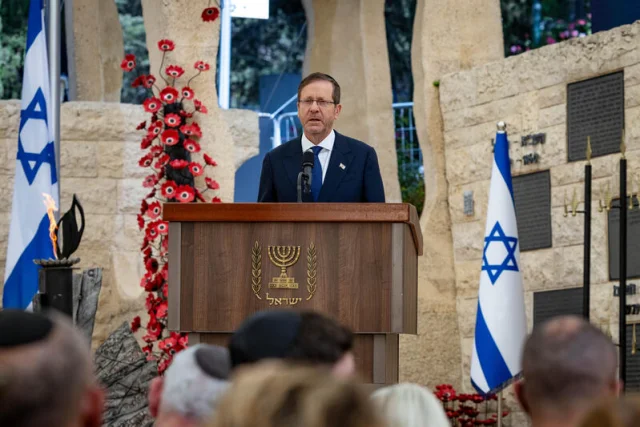
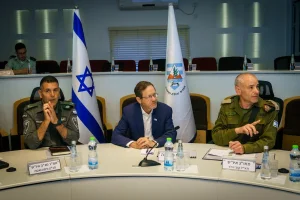
Israeli President Isaac Herzog said he would do everything to prevent a return to the cycle of repeat elections seen between 2019 and 2022, as most polls continue to project a close race in which neither bloc wins enough seats to form a government.
Over the past week, the once narrow but clear lead of the Gadi Eisenkot-led “Change Bloc” has melted, and most polls now project a tie between the blocs, raising the prospect of returning to the exhausting, polarizing period that saw four elections held in rapid succession in just under three years.
The deadlock was partly driven by the political boycott of Prime Minister Benjamin Netanyahu by most centrist and left-wing parties, a phenomenon referred to as “rak lo Bibi" (just not Bibi).
The current opposition bloc largely maintains this stance, also holding Netanyahu responsible for the Oct. 7 failures and rejecting cooperation with ultra-Orthodox parties, making a cross-bloc unity government unlikely.
Against this backdrop, President Herzog asserted, “I'm doing everything I can to ensure Israel has a stable government.”
“But I'll go further than that: I will do absolutely everything I can to prevent repeat elections,” he told Ynet News in an interview published on Monday.
Herzog warned that Israel faces enormous national challenges and cannot afford repeated election cycles. “We need to wait for the results rather than pass judgment in advance, but we must do everything possible to avoid going through this again and again and again,” he vowed.
Responding to a warning expressed by some in the opposition, Herzog said he believes “everyone” will accept the election results.
“I constantly urge Israelis to vote, and I remind everyone that elections are not a civil war. Elections are the way to resolve issues, make decisions and understand that the day after, we still go on together. Those who lose and those who win must all understand that they belong to the same people. Those who are elected must also look after those who were not,” he said.
Asked if he would urge the blocs to establish a unity government, he declined to comment in detail, noting, “There are different opinions about the composition of the government and different political outlooks. Everyone understands which school of thought I come from, but it would not be right for me to say, two weeks before the election, what kind of government should be formed.”
Netanyahu’s ongoing criminal trial has been another key reason cited by the opposition for ruling out a coalition with him. Herzog has sought to broker a compromise deal between Netanyahu and the attorney general, reiterating his view that “this case needs to end, and it should end with a plea agreement. It needs to be resolved through a settlement.”
However, Herzog declined to say whether he would consider offering a presidential pardon as part of an effort to help secure a coalition agreement.
Under Israel's system, after the elections, the president gives the first opportunity to form a stable coalition to the leader of the bloc with the best chance of forming a government, though this is not necessarily the leader of the largest party.
“The president has the full authority to task a member of Knesset with forming a government. That has nothing to do with pardons. After I hear from all the parties, in a process that the public will already be discussing because the results will come in about a week after the election, the consultations begin,” Herzog said.
In recent weeks, the Change Bloc has grappled with different scenarios for how to deal with a situation in which it fails to obtain the 61-seat majority in the elections. One possibility is to establish a minority government with outside support from one or both of the Arab parties.
Even if this fragile government were to collapse relatively quickly, Eisenkot or another opposition leader would head the caretaker government during the election period, rather than leaving the current government in place.
However, such open cooperation with the Arab parties could give the right-wing bloc ammunition for the next election cycle to accuse the Change Bloc of endangering national security.
Former prime minister and leader of the "B'Yachad" (Together) party, Naftali Bennett, drew strong criticism from other bloc members on Sunday after suggesting that he does not, in principle, oppose Netanyahu joining a government with him.
“If he accepts our policy guidelines – including a state commission of inquiry [into the October 7 failures] – he’s welcome to give me a call,” Bennett said, adding that Netanyahu had been an outstanding finance minister in the past.
However, "Yashar" party leader Gadi Eisenkot responded: “Everyone who was in office [on October 7] is unfit to serve in command and leadership roles.”
Yair Golan, chairman of the far-left "The Democrats" party, vowed that as long as his party has any say in the matter, Netanyahu would not be a part of the government, “not as finance minister, not as water minister, and not as a minister without a portfolio.”
Finally, Avigdor Liberman, whose hawkish "Yisrael Beitenu" party had once run together with the Likud and whose policies on paper remain close to it, wrote on 𝕏, “I call on my friends in the Zionist bloc to make it clear – the world can turn upside down, and we will not sit with Netanyahu. In the next government, Netanyahu will not be able to serve even as Minister of Regional Cooperation.”
Given this scenario and the election results projected by current polls, Eisenkot would have to convince the "Reservists/Economic" party to join his bloc – if it crosses the electoral threshold – then secure outside support from Arab parties, recruit defectors from the current coalition, or prepare for new elections.
You might also like to read this: