Israel’s political scene remains deadlocked despite massive cultural shifts post-Oct 7



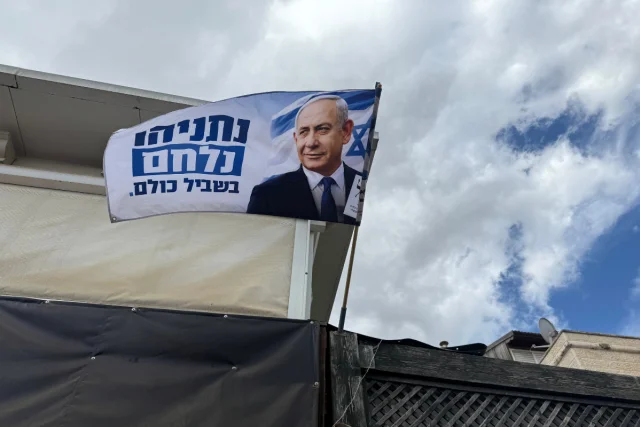
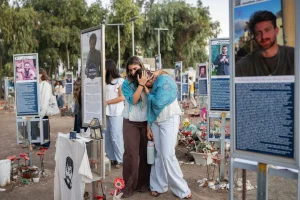
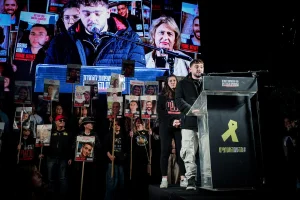
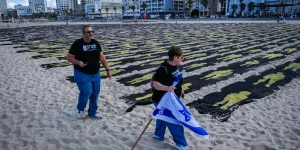
Three years after the Hamas-led Oct. 7, 2023, massacre and the war that followed, Israel’s political landscape remains deeply polarized, with voters largely entrenched in the same political camps they occupied before the country’s defining trauma.
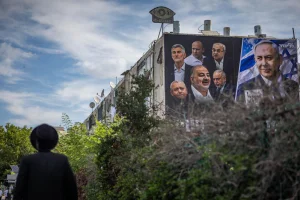
Israeli voters will go to the polls on Oct. 27, with incumbent Prime Minister Benjamin Netanyahu seeking to retain his position and leaders of several opposition parties hoping to replace him. Among those opposition leaders, former IDF Chief of Staff Gadi Eisenkot currently appears to have the best chance of doing so, according to most polls.
The events of Oct. 7 and the war that followed are certainly on voters’ minds. A report published in late September by the Jerusalem-based Israel Democracy Institute (IDI) found that 68% of voters consider Oct. 7 to be among their most important considerations when deciding how to vote.
However, Tamar Hermann, a public affairs specialist who led the team that conducted the survey for IDI, told the Jewish Telegraphic Agency (JTA) that Israeli voters have responded to the events not by changing their political views, but by becoming even “deeper into the political camps they were originally in.”
“It’s been three years since the October 7 attack, something that, of course, made an entire society post-traumatic, but will it really make people decide which party to vote for? I doubt it,” she said. “Most of the facts are already on the table, and it is the interpretation of the events that influences people’s decisions. The main question is which interpretation does one adopt?”
In recent weeks, revelations have emerged about failures on Oct. 7 that cost Israeli lives. So far, however, they do not appear to have significantly affected Netanyahu’s support among voters, despite the fact that he was prime minister at the time and has not publicly taken responsibility for his role in the failures.
Most other government officials, intelligence chiefs and senior IDF officers who held positions of authority on Oct. 7 have publicly taken responsibility for their failures and resigned.
Netanyahu has also refused to take responsibility for the security failures surrounding the attempted hijacking of flydubai flight 1973 earlier this month, but that incident likewise does not appear to have damaged his support among voters.
“The anti-Netanyahu camp tries to remind people of October 7 as a political issue… they try to convince voters that Netanyahu was the one to be blamed for it,” Hermann explained to JTA. “On the other side, they are asking ‘why now?’ and the answer is that the new piece of information is being revealed right now as part of a campaign to topple Netanyahu.”
Hermann said cultural issues that predated Oct. 7 also continue to play a major role, including “the vision for Israel’s future, about its Jewish character, how prominent it should be, and whether it goes hand in hand with a democratic regime?”
Against this backdrop, polls published by Israel’s leading media outlets indicate that neither Netanyahu nor Eisenkot is currently positioned to form a governing coalition after the votes are counted. That could lead to another election after 90 days or potentially to a minority government.
The 120-seat Knesset requires a governing coalition to have the support of at least 61 lawmakers. Most polls show that neither the right-of-center bloc led by Netanyahu nor the “change bloc” theoretically led by Eisenkot would reach that threshold on its own. However, parties in either bloc could potentially be persuaded to switch sides if the political incentives were strong enough.
The two Arab parties are not considered part of either bloc, while other parties that could cross the electoral threshold have not committed to supporting either side.
Ilana Shpaizman, a senior lecturer in the Department of Political Studies at Bar-Ilan University, also lamented that most political factions in Israel do not try to convince voters to support them based on a plan or party platform. Instead, she told JTA, they often seek to frighten voters by portraying their opponents as monsters or incompetents who will lead the country into disaster.
Gideon Rahat, a political scientist at Hebrew University of Jerusalem, agreed, arguing that the political debate surrounding the election is driven more by identity than by accountability for Oct. 7.
“You would expect the election debate to be about responsibility [for October 7], but really it is all about identity. People who have a religious identity and, for some, a Mizrahi [eastern] identity, will vote for Netanyahu whatever happens, and on the other side, it is the same – even if Netanyahu had really succeeded in this war, many secular people, or Ashkenazi people, will never support him.”
“Politics in Israel is highly personalized, it’s highly polarized, and highly populist… and identity politics is linking to this type of politics very well,” he said.

Please take a moment to join believers worldwide praying for Israel right now. Add your light to the live prayer map—and show the world one more watchman praying for the peace of Jerusalem.
You might also like to read this: