‘A great privilege to defend the country’: 500 ultra-Orthodox recruits join IDF despite protests






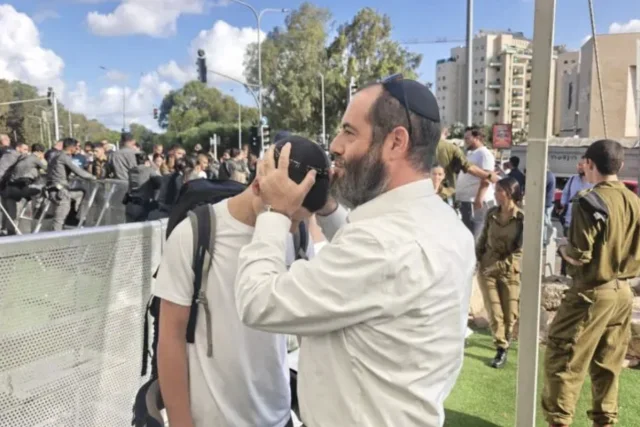
Some 500 Haredi (ultra-Orthodox) young recruits arrived on Sunday at the Israel Defense Forces (IDF) recruitment center at Tel Hashomer, outside Tel Aviv, to enlist, as a growing minority of ultra-Orthodox Israelis embrace military service despite opposition from some Haredi leaders.
About 60%, or 300, of the new recruits are slated for combat roles in the Hetz Company, the Hasmonean Brigade, and the Netzah Yehuda Battalion, units that enable Haredi soldiers to serve while maintaining strict religious observance.
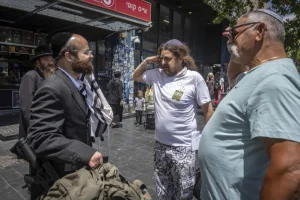
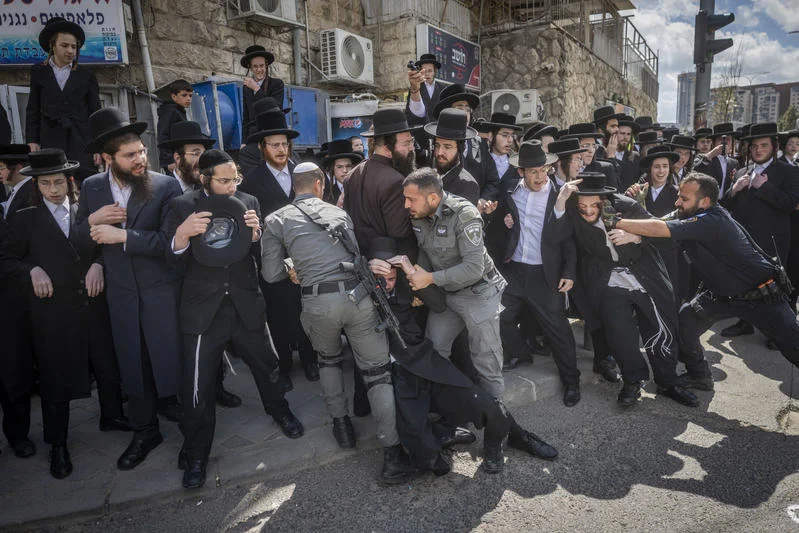
Radical ultra-Orthodox protesters gathered outside the recruitment center and attempted to block the recruits’ path. Inside, however, the mood was marked by enthusiasm and a desire to serve.
“It is very important to me to contribute to the country and be part of the system that protects all of us,” Haredi recruit Shmuel Cohen told Ynet News.
Yosef Friedman, a Haredi recruit from the Orthodox Jewish town of Modi’in Illit, expressed similar enthusiasm.
“I didn’t sleep last night. I’m extremely excited. It is a great privilege to defend the country,” Friedman said. He is enlisting in the Netzah Yehuda Battalion after studying at the Haredi combat hesder yeshiva Betzavta.
Itamar Reinhold, a graduate of the religious pre-military academy Nitzotz Ba’Emunah, is also joining the IDF’s first Haredi battalion.
“I simply wanted to be part of it. My brother served in Netzah Yehuda; he fought throughout the war in Gaza, and he inspired me,” Reinhold explained.
Haredi males historically have received an unofficial exemption from IDF service for political and religious reasons. But the issue has become increasingly contentious during Israel’s ongoing multifront war, with growing calls for a more equal sharing of the military burden.
While mainstream Haredi leaders continue to oppose IDF service, an increasing number of ultra-Orthodox men are volunteering. In 2024, then-IDF Chief of Staff Lt. Gen. Herzi Halevi praised Haredi soldiers during a visit to the Netzah Yehuda Battalion.
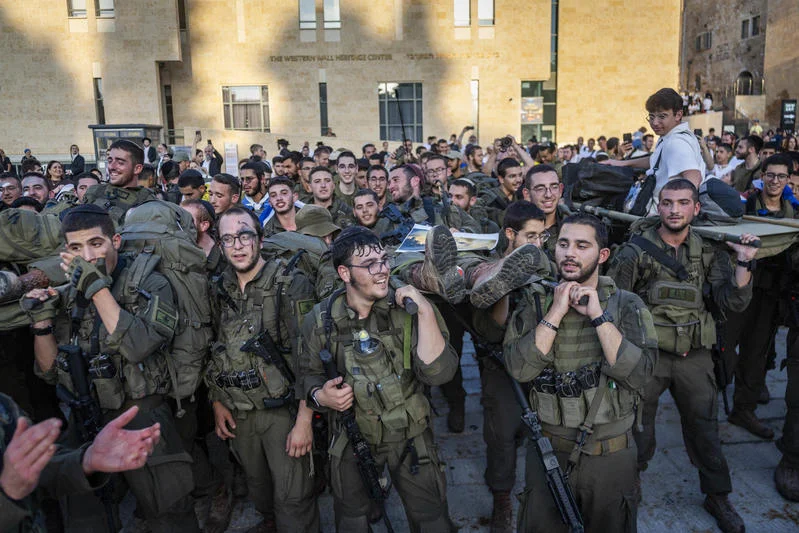
"The IDF needs more fighters," Halevi told the soldiers. "We want you to show that it's possible to be a Haredi fighter, to study and protect the state's security. Continue doing a good job, protecting the residents here and also being a pioneer – Haredi fighters, each one as he defines himself."
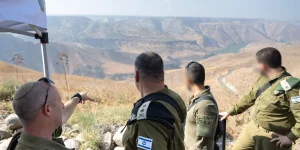
Since the Oct. 7, 2023, Hamas attack and the subsequent Swords of Iron war, Haredi combat soldiers have operated against Hamas in Gaza, Hezbollah in Lebanon and terrorist groups in Judea and Samaria. Netzah Yehuda troops have also participated in operations to recover the bodies of Israeli hostages killed in Gaza.
The Haredi Hasmonean Brigade is also expanding. Its Yonatan Battalion has operated against Hezbollah in southern Lebanon, including missions targeting the terrorist group’s infrastructure and capturing Radwan operatives, members of its elite commando unit.
Yossi Levy, a reserve lieutenant colonel and CEO of the Shomer Israel organization, welcomed the increase in Haredi enlistment.
“Today we are seeing a significant leap forward. The Haredi youths arriving at the induction center are proving that it is possible to combine strict adherence to a Torah-based identity with a direct contribution to national security on the front line,” Levy said.
“Our mission is to continue building a support system that will allow them to perform meaningful service while maintaining their way of life,” he added.
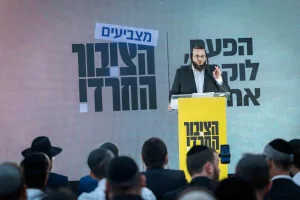
Moti Leitner, chairman of the new Haredi Public Party, which supports military service for Haredi youths, also attended the induction.
“The days when the Haredi leadership was ashamed of you and did not stand behind you are over,” Leitner told the new recruits.
“We are proud of you. Those whose Torah study is truly their calling should receive protection that allows them to continue studying without fear or persecution. Those who are not devoted full time to Torah study should serve,” he continued.
Avigdor Liberman, chairman of the Yisrael Beitenu party, also attended to welcome the recruits.
“This is an expression of the principle that ‘all of Israel is responsible for one another,’ of social solidarity and of what we expect from everyone,” he argued. “The state must strengthen those who enlist and deal firmly with all draft dodgers and those who incite against service."
Support our independent, on-the-ground reporting from Israel. Become a $5/month Ally.
You might also like to read this: