Israel’s 26th Knesset prepares to convene as coalition uncertainty looms
A look at the makeup of the next Knesset
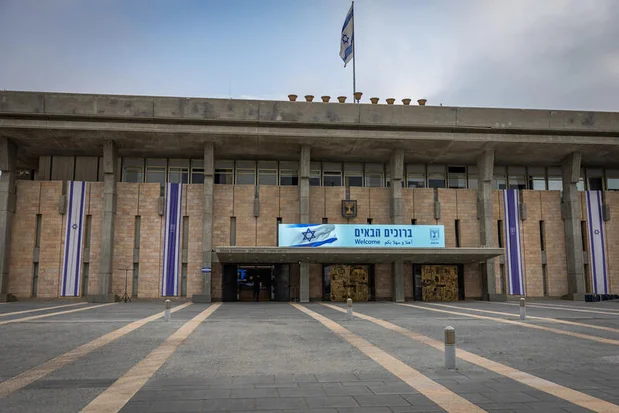
Despite the lack of a clear path to a coalition government, the 26th Knesset is due to be sworn in on Nov. 10, 14 days after the elections.
The new Knesset roster brings a mix of veteran lawmakers and new faces to the plenum.
According to a detailed breakdown by Israeli website Vote Smart, 61 MKs (51%) will be returning from the 25th Knesset, 47 (39%) are new MKs, and 12 (10%) are former MKs, yet were not part of the 25th Knesset.
The majority of the 26th Knesset members bring a significant amount of education and experience to their positions; with over half of MKs (56%) having a Master’s Degree [or equivalent] or higher, 23% having a Bachelor’s degree, and 88 MKs (73%) having served in the IDF, while another 5 MKs (4%) performed non-military national service.
Additionally, 74 MKs, ( approximately 62%) are over the age of 50, while the total number over the age of 40 is 108 (90%).
The majority of MKs in the 26th Knesset are men, 87 (approximately 73%), while 33 (approximately 28%) are women.
The most experienced Knesset member, is also the longest-serving prime minister in Israel’s history, Benjamin Netanyahu, with 32 years of Knesset experience, followed by fellow Likud member and current Defense Minister Israel Katz (28 years) and United Torah Judaism’s MK Meir Porush (28 years).
Just behind those three are Israel Beitenu party leader Avigdor Liberman; Joint List member and head of the Ta’al party, Ahmad Tibi; and Likud MK Haim Katz; each with 27 years of Knesset experience.
With all of the votes counted, Netanyahu’s Likud party is the largest, with 27 seats, followed by the Yashar party of Gadi Eisenkot, with 21 seats, the B’Yachad party of Naftali Bennett and Yair Lapid, with 12 seats, and the Arab Joint List with 11 seats.
The Democrats party of Yair Golan and the Arab Ra’am party each secured 8 seats, while Israel Beitenu, Jewish Power, and the ultra-Orthodox United Torah Judaism each received 7 seats. The Religious ZIonism-Identity joint list headed by Finance Minister Bezalel Smotrich, and the ultra-Orthodox Shas party bring up the rear with six seats each.
All other parties failed to clear the election threshold of 3.25% of the vote, and will not receive any seats.
Of the parties that passed the election threshold, four are believed to be seeking the office of prime minister in the next government, either for the full term, or in a rotation as part of coalition agreements.
Those four are current Prime Minister Benjamin Netanyahu, whose Likud party won the most votes of any party in the elections; former IDF Chief of Staff Gadi Eisenkot, head of the Yashar party, which won the second largest number of votes; former Prime Minister Naftali Bennett, head of the B’Yachad (Together) party, which won the third highest number of votes; and Avigdor Lieberman, head of the Israel Beitenu party, which won seven seats in Knesset.
With no bloc having won enough seats to form a majority government, a possible solution is a rotation agreement, in which the heads of more than one party would agree to share the role of prime minister throughout the Knesset term.
A similar agreement took place in April 2020, when then Prime Minister Netanyahu and then head of the Blue and White party, Benny Gantz agreed to form a unity government, in which the office of prime minister would be split between them.
Netanyahu was slated to serve the first 18 months in the office, before handing the office to Gantz. The agreement did not last, over disagreements regarding the appointment of justices under then Justice Minister Avi Nissenkorn, of the Blue and White party, and disagreement over the upcoming 2021 budget.
Under the broad unity government in the 2021 elections, Bennett and Yair Lapid agreed to share the office of prime minister in a rotational agreement, with Bennett serving first.
That government, which included the Arab parties, proved to be unstable and collapsed after just over a year in power. As part of the agreement, Bennett stepped down and allowed Lapid to hold the office of prime minister until the elections in October 2022, which led to the most recent right-wing coalition government.
Popular article:

interview Easter message of resurrection hope amid war at Jerusalem's Garden Tomb

biblical commentary Let my people go: a Passover message for today

4 IDF soldiers killed, 2 wounded in fighting in southern Lebanon, as Israel eliminates dozens of Hezbollah terrorists

Receive latest news & updates
A message from All Israel News
Help us educate Christians on a daily basis about what is happening in Israel & the Middle East and why it matters.
For as little as $10, you can support ALL ISRAEL NEWS, a non-profit media organization that is supported by readers like you.
Latest articles:

Biblical-era dye factory in Israel found to also produce olive oil, textiles

UK police arrest 139 at London protest supporting banned Palestine Action

Israel Aerospace Industries wins Lockheed Martin supplier awards for F-35, F-16 programs

After call with Netanyahu, Trump says 'one or two sites in Iran need to be dealt with’

'IN THE WAR ROOM' – The gutsy gamble against Iran that changed the war