'IN THE WAR ROOM' – The gutsy gamble against Iran that changed the war
Part Three of interview series on THE ROSENBERG REPORT: The inside story of the leaders, rivalries and decisions that shaped Israel’s longest war
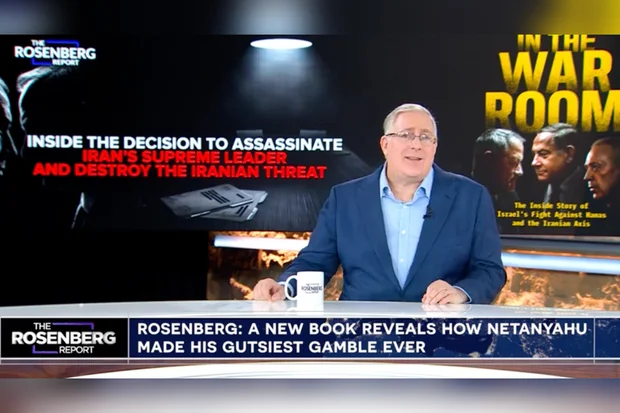
In his three-part series on THE ROSENBERG REPORT, host and ALL ISRAEL NEWS Editor-in-Chief Joel Rosenberg speaks with the authors of the Amazon #1 bestseller, "In the War Room: The Inside Story of Israel’s Fight Against Hamas and the Iranian Axis."
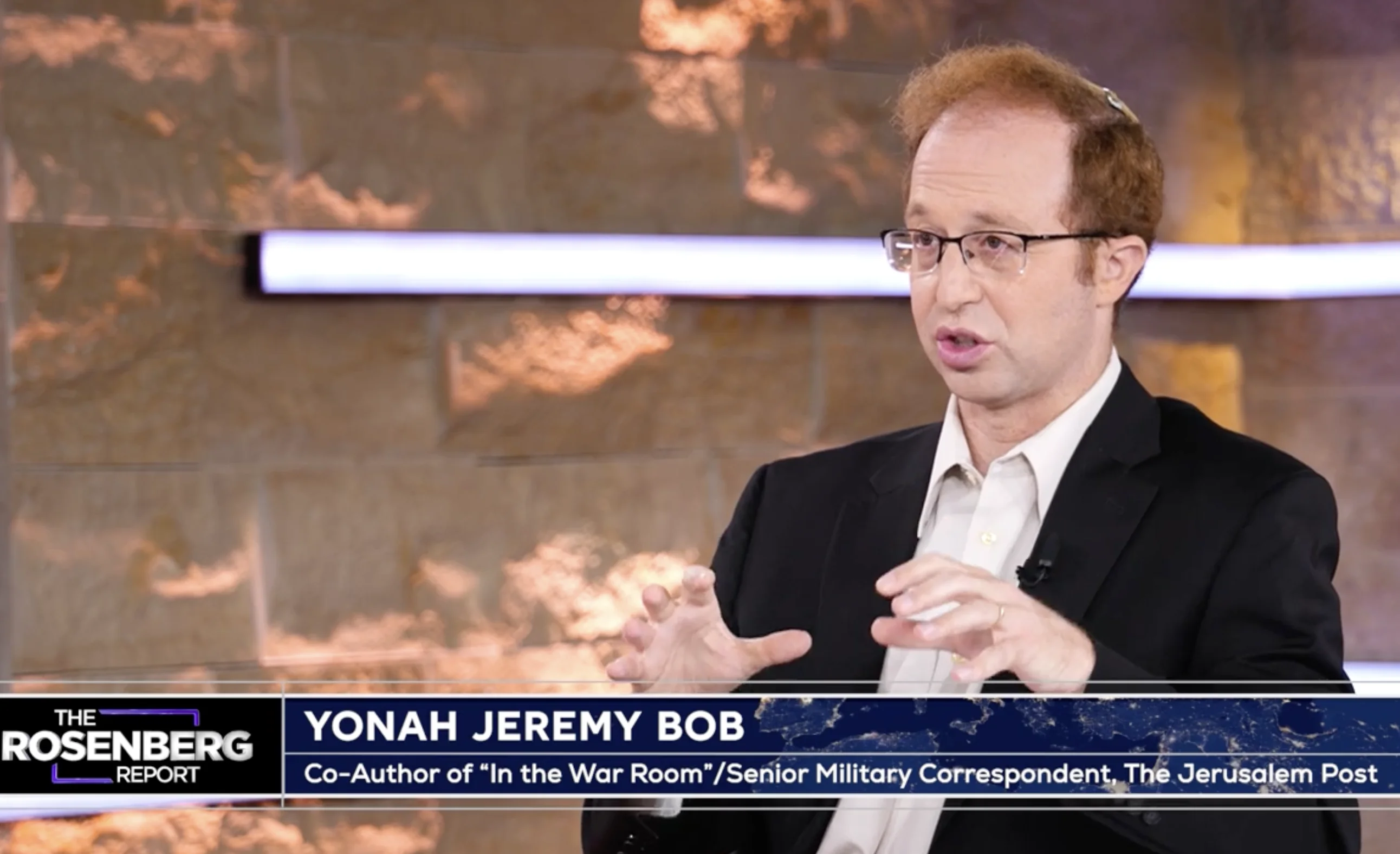
In this third interview, Rosenberg continues his conversation with co-author Yonah Jeremy Bob about how far Israel was prepared to go to achieve its wartime objectives – and how much risk Prime Minister Benjamin Netanyahu was willing to accept. Their conversation examines some of the most consequential decisions of Netanyahu’s career, from striking Iran’s nuclear program to launching a decapitation operation targeting Supreme Leader Ali Khamenei and the Iranian regime’s leadership.
For decades, Netanyahu had warned that Iran’s nuclear ambitions posed an existential threat to Israel. Yet Israel had never carried out the kind of full-scale assault on Iran’s nuclear program he had long contemplated, and no American president had given him the green light.
In June 2025, Netanyahu made his gutsiest gamble yet, ordering strikes against Iran’s nuclear and ballistic-missile programs with or without American support.
“Up until June 2025, I think the decision to take out most of Iran's nuclear weapons program is maybe the biggest moment of the war because, it's...like you said, it's the threat that everybody's been talking about for decades,” Bob said.
The question was why the Israeli military and successive American administrations had previously been unwilling to support such an operation, and what finally changed.
Bob described Israel’s confrontation with Iran as unfolding in four distinct stages: April 2024, October 2024, June 2025 and this year.
In April 2024, Iran launched more than 100 ballistic missiles, along with large numbers of drones and cruise missiles, at Israel. Israel and its allies intercepted the attack, while Israel struck part of an Iranian S-300 air-defense system.
The message was essentially "...if we can blow up your best system that's guarding one of your nuclear facilities, don't mess with us," Bob said.
Iran attacked again in October 2024, this time launching nearly 200 ballistic missiles. Israel again intercepted the attack, but its response went further, destroying Iran’s remaining top air-defense systems and damaging part of its ballistic-missile production capacity.
But deterrence did not end Iran’s nuclear and missile ambitions. Instead, Bob said, Iran continued accelerating its programs. That led to June 2025.
“Israel says, 'OK. We know that you can't stop us because we already took out your best stuff. So we're going to take out the entire nuclear weapons program.'”
Israel succeeded in destroying most of Iran’s nuclear program and a significant portion of its ballistic-missile capabilities, although Bob noted that a substantial part of the missile program remained.
"And that leads... 2026. From the Israeli perspective, the existential threat that remains is the volume of ballistic missiles that Iran starts to produce," Bob said.
Rosenberg explained three major developments that transformed the calculations inside Israel's war room: Israel had already weakened Iran’s air defenses; Israeli leaders feared its nuclear window was closing; and now U.S. President Donald Trump was back in the White House.
Rosenberg called the shift from Biden to Trump “a sea change” in the strategic environment.
Bob drew a sharp distinction between Washington’s support for Israel during the Gaza and Hezbollah campaigns and its stance on Iran.
“But Iran is night and day," he said. "There is no way that Biden would have given Israel the green light to strike Iran and there is super no way that Biden himself would have dropped, you know, 30,000-pound bombs on the Fordow Nuclear Facility, which was necessary if he really wanted to take out Iran's nuclear program.”
Bob credited Trump’s decision to attack Fordow as historic.
“And again, I'm willing to critique Trump, you know, on Qatar and on NATO and some other things. But the decision that he made to take out the Fordow nuclear facility was a historic decision, which made the world much safer. Biden would never have done it.”
The June 2025 operation demonstrated Israel’s ability to penetrate deep into Iran, eliminating senior military and security officials, including the heads of Iran’s military and the IRGC, while striking its nuclear program.
Bob said he never anticipated that, by early 2026, Israel and the United States would launch a joint campaign on such a scale, splitting the burden roughly equally, to try to topple the Iranian regime.
“Part of the reason I didn't see it coming is that nobody in Israel saw it coming,” he added.
Then the strategic picture changed rapidly. Iran was accelerating its ballistic-missile production and, according to Bob, was telling American officials that it had enough highly enriched uranium to produce 11 nuclear bombs.
Then came the Iranian protests. Bob described the mass demonstrations in January 2026 as another factor that altered the calculations in Washington.
"The Iranian protests. Nobody expected that one million Iranians would come out on January 8th and 9th. And when that happens, Trump tweets, I think it's on January 14th, "Help is on the way." Bob pointed to the slaughter of Iranian protesters, with estimates of 10,000 to 40,000 as another factor that motivated Washington to take action against the regime,
At roughly the same time, the Trump administration demonstrated American military power in Venezuela, where U.S. forces captured Venezuelan dictator Nicolás Maduro.
For Bob, those two developments changed Trump’s perception of what American power could accomplish.
Trump had previously emphasized an “America First” approach and expressed reluctance to become involved in lengthy foreign wars. But, Bob argued, Venezuela demonstrated that the U.S. could use overwhelming force quickly, while the Iranian protests changed the president’s perception of the possibility of political change inside Iran.
“When you put those things together, Trump himself changes, I would argue, in terms of what he's willing to do and how he sees the world in terms of using American power.”
Bob said the protests and Washington’s response also shifted Israel’s thinking. Israeli leaders had long wanted to topple the Iranian regime but believed they could not do so alone. Now, for the first time, they saw the possibility of U.S. support.
The most extraordinary decision that Rosenberg and Bob discussed was the decision to try to decapitate the Iranian leadership by targeting Supreme Leader Ali Khamenei.
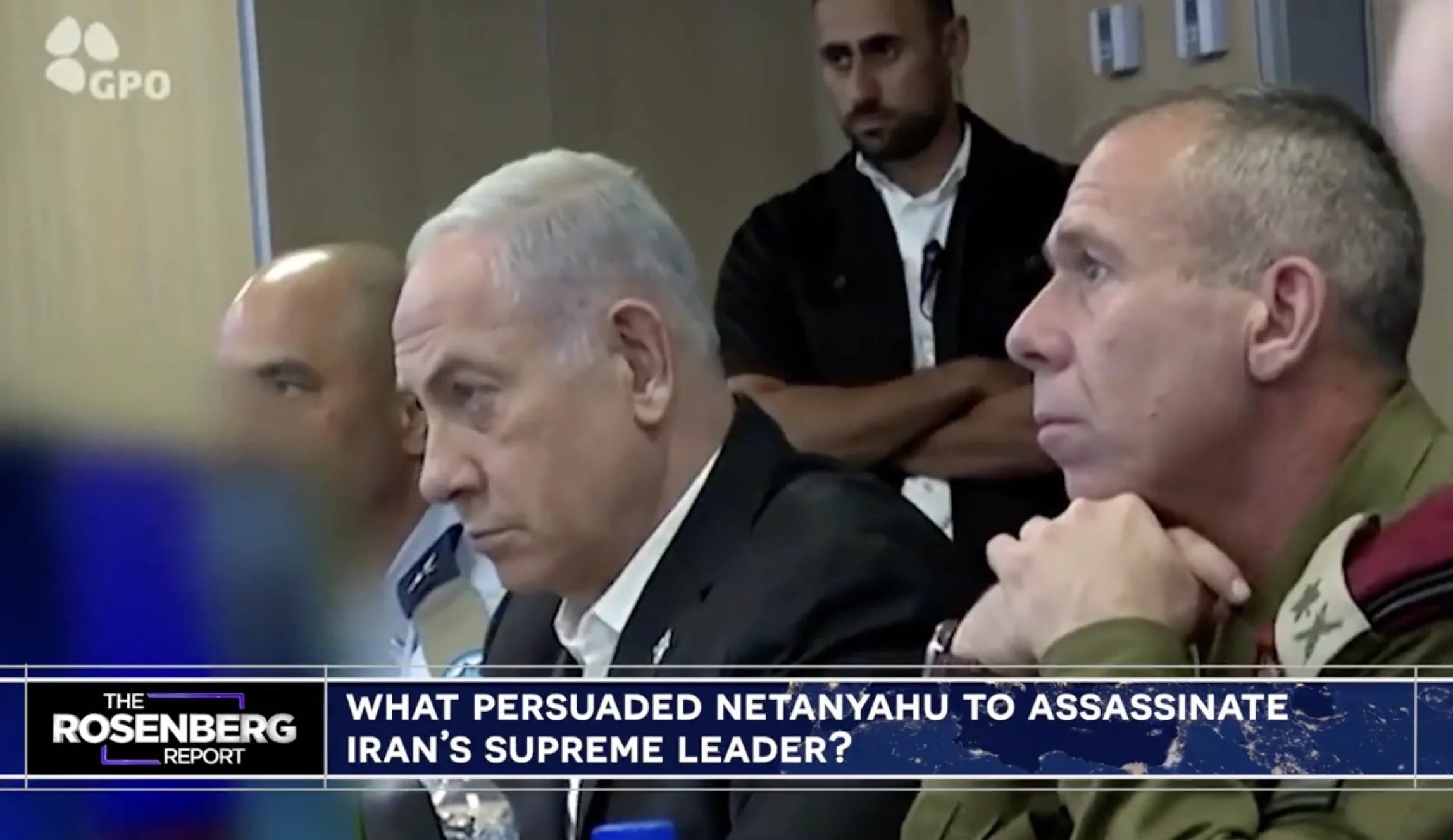
When asked why Netanyahu would risk an even bolder operation than the failed 2025 strike on Hamas leaders in Doha, Bob described how Israeli intelligence outmaneuvered Khamenei’s security precautions. Unable to track Iranian leaders’ phones, Israel tracked those of their bodyguards and used cyber capabilities to disable nearby cameras and communications, preventing warnings of the incoming attack.
Bob described the operation as extraordinarily precise.
“They are removing them from being able to get a warning. And the warning isn't going to be seeing airplanes flying in the territory because the airplanes weren't in Iran. They were firing ballistic missiles. from hundreds of kilometers away.”
The Iran campaign also raises broader questions about Netanyahu’s leadership as Israel approaches elections on Oct. 27.
Rosenberg argued that critics of the prime minister may not give him enough credit for the military achievements that followed Oct. 7, even while acknowledging Netanyahu’s responsibility as prime minister when the Hamas attack occurred.
“He's a complex character,” Bob said, referring to the prime minister. He acknowledged that Netanyahu’s political interests and ongoing trial may have influenced some decisions. But he also argued that Netanyahu entered the war with a clear strategic conviction: Hamas had to be dismantled as a military organization.
Bob said that after Oct. 7, Netanyahu viewed Hamas not simply as a terrorist or guerrilla group but as a “terror army.” Israel succeeded in dismantling Hamas as an organized military force, he said, though the group itself has not been completely eliminated
Bob also credited Netanyahu, the IDF and Mossad with a series of military victories, including damaging Iran’s nuclear program in 2025 and dramatically degrading Hezbollah’s military capabilities. Rosenberg cited the killings of Hezbollah leader Hassan Nasrallah and Hamas leaders Yahya Sinwar and Mohammed Deif, along with other achievements.
Yet, Rosenberg noted, Netanyahu’s political standing has not reflected the scale of his military achievements. Bob said the largest reason ultimately comes back to Oct. 7, 2023.
Despite the subsequent military victories and the return of all the hostages, Netanyahu remains politically burdened by the fact that he was prime minister when Hamas launched the attack, Bob said.
He noted that senior military and security officials who held positions of responsibility on Oct. 7 have since resigned or been dismissed, leaving Netanyahu as “the only one left.”
This concludes our three-part series based on "In the War Room: The Inside Story of Israel's Fight Against Hamas and the Iranian Axis," co-authored by Yonah Jeremy Bob and Elliot Kaufman. The book goes behind the headlines to reveal the debates, personalities and decisions that shaped the war, and offers the fullest picture of how Israel went from the shock of Oct. 7 to confronting the Iranian axis at the highest possible stakes.
Click to read Part One: “Inside the clashes that divided Israel’s leadership” and watch the interview here.
Click to read Part Two: “The risks Netanyahu was willing to take” and watch the interview here.
THE ROSENBERG REPORT airs Thursday nights at 9 p.m. EST and Saturday nights at 9:30 p.m. EST – on the Trinity Broadcasting Network (TBN), the most-watched Christian television network in the United States.
Popular article:

interview Easter message of resurrection hope amid war at Jerusalem's Garden Tomb

biblical commentary Let my people go: a Passover message for today

4 IDF soldiers killed, 2 wounded in fighting in southern Lebanon, as Israel eliminates dozens of Hezbollah terrorists

Receive latest news & updates
A message from All Israel News
Help us educate Christians on a daily basis about what is happening in Israel & the Middle East and why it matters.
For as little as $10, you can support ALL ISRAEL NEWS, a non-profit media organization that is supported by readers like you.
Latest articles:

UK police arrest 139 at London protest supporting banned Palestine Action
Israel Aerospace Industries wins Lockheed Martin supplier awards for F-35, F-16 programs
After call with Netanyahu, Trump says 'one or two sites in Iran need to be dealt with’

Israeli startups make up nearly half of Fortune 2027 Cyber 60 list

God’s Middle East peace plan in Isaiah 19 and the people living it out today