God’s Middle East peace plan in Isaiah 19 and the people living it out today
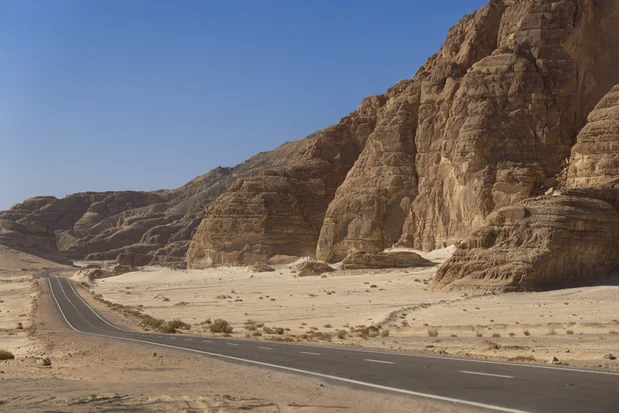
A prophecy in Isaiah seems to have come into focus particularly over the last few decades, which is saying something when you consider how long ago the book of Isaiah was written.
To put it into perspective, Canon Andrew White, affectionately known as the “Vicar of Baghdad” for his service in Iraq, pointed out the passage as an anomaly in the 100-year-old Bible that once belonged to British evangelist Smith Wigglesworth:
"Every chapter in this Bible has been marked or underlined in some way. Except for Isaiah 19," he said. Why? “It is a Scripture meant for our day,” he concluded.
Isaiah 19 is mostly a prophecy against Egypt, but it ends, as God’s prophetic word usually does, with a note of hope and redemption:
“In that day there will be a highway from Egypt to Assyria, and Assyria will come into Egypt, and Egypt into Assyria, and the Egyptians will worship with the Assyrians. In that day Israel will be the third (or part of the trio) with Egypt and Assyria, a blessing in the midst of the earth, whom the Lord of hosts has blessed, saying, “Blessed be Egypt my people, and Assyria the work of my hands, and Israel my inheritance" (Isaiah 19:23-25).
Clearly, this prophecy has not yet come to pass but it seems there will be a day in which Egypt, the people of the Assyrian Empire, as it once was, and Israel will join as one and worship God together. A highway will open, and people will be free to travel throughout the Middle East, and these nations will be a blessing in the midst of the earth.
In a similar way to praying “Your kingdom come, Your will be done on earth as it is in heaven,” as Jesus taught, there are people here in the Middle East today who believe we do not have to sit on our hands as we wait for the ultimate fulfillment of this prophecy in the Messianic kingdom, but are praying and working towards it even today.
Up until about 20 years ago, the prevailing logic of those serving in the Middle East held that ministry to Jews and Arabs should be kept separate — they were two worlds best kept apart. Working with both together seemed impossible, but much has changed in the last two decades.
In the late 1980s, through the 1990s and the first part of this century, several movements based on Isaiah 19 started springing up. Similar to the “Back to Jerusalem” movement that mobilized many house churches in China, unconnected groups simultaneously began taking up the God-given vision and running with it.
Michael Bar Metzar is one such man who has made this prophecy central to his life’s mission. He and other co-laborers, most notably Robert Sakr, began traveling this ancient Highway over 30 years ago and later hosted gatherings that reflect the vision of Isaiah 19.
The prophetic promise became for them a “framework for ministry,” serving believers and engaging unbelievers with the love of God and the truth of the gospel in the Middle East.
They annually bring together believers from Iraq, Iran, Egypt, Lebanon, Turkey, Armenia, Syria, and Cyprus to worship Jesus with Messianic Jewish brothers and sisters as an expression of Isaiah 19, share stories of what God is doing in their countries, and build relationships across the region.
The first time I attended one of these events some ten years ago, I thought I had stepped into heaven itself. Worship, not only in Hebrew and Arabic but also in Turkish, Kurdish and other languages, flowed from the sanctuary; songs of longing, pain and surrender to God, as well as adoration of the Prince of Peace, felt all the more glorious knowing the contexts people came from.
These meetings have been held throughout the times when ISIS was roaming Mesopotamia, and I met a woman from Iraq who spoke Chaldean whose hands have cared for rescued Yazidi sex slaves.
We prayed for the release of Pastor Andrew Brunson even as he was held in a Turkish prison and met Egyptians who were learning the Hebrew language. The worshipful gatherings of Spirit-wrought unity are a heady environment, and the adherents to the Isaiah 19 promise a special breed of people.
After decades in the field, Bar Metzar has collated his thoughts and experiences in a book, “On an Ancient Highway: Israel and the Prophetic Promise of Isaiah 19,” which was released this summer.
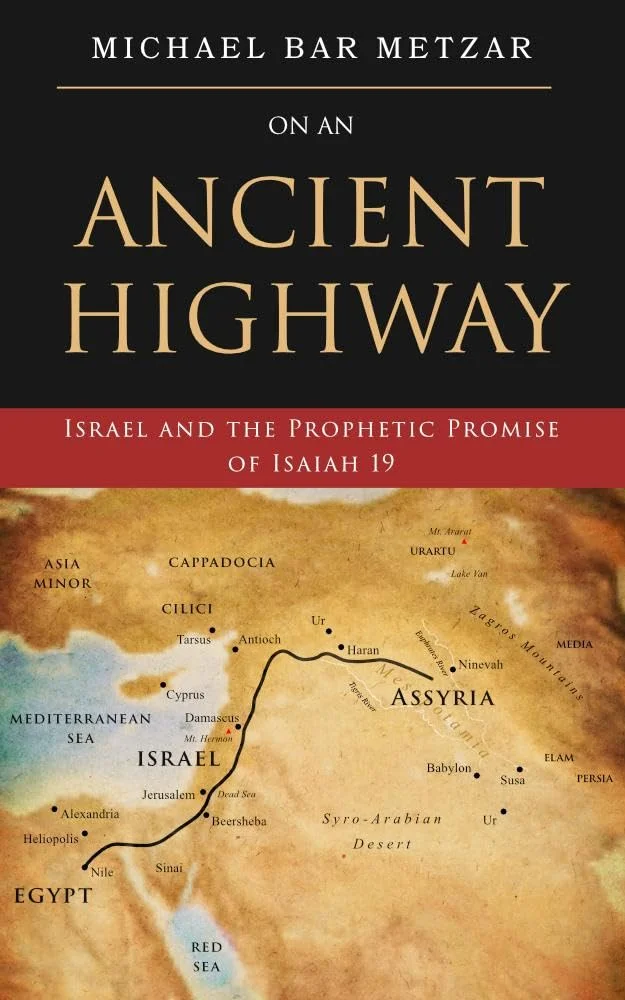
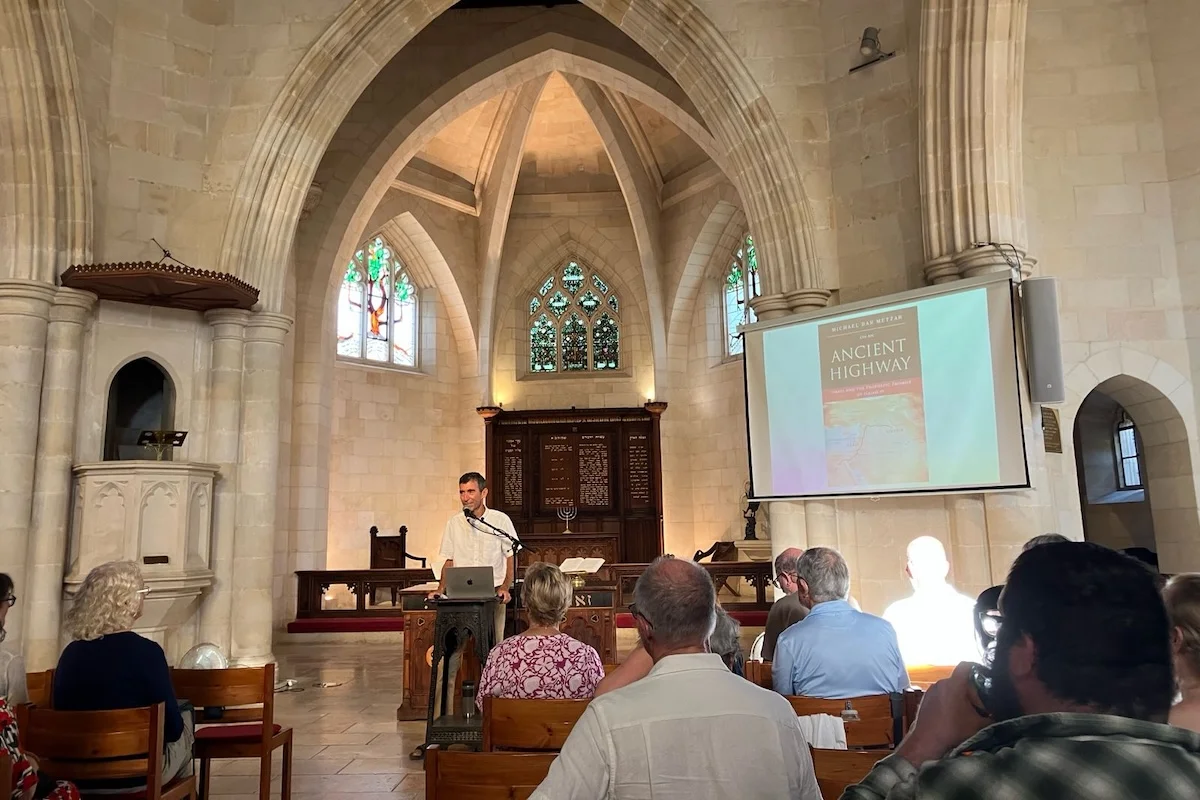
At the book launch, David Pileggi, the rector at Christ Church by the Jaffa Gate in Jerusalem’s old city, gave his words of introduction as one of those who had implored Bar Metzar for years to write it all down for a wider audience. Pileggi affirmed Bar Metzar as a man burning with vision who “is not bound by the tyranny of the possible.”
“While our author is a realist, he is not a fatalist,” said Pileggi, adding that Bar Metzar “refuses to fall into pessimism, hopelessness or passivity.”
Pileggi, in cooperation with Sakr, originally envisioned an Isaiah 19 conference on the premises at Christ Church in Jerusalem. After joining Bar Metzar and others on several of their frequent travels around the region, Pileggi was impressed by their willingness to take risks and their total commitment to this calling.
“The promise and purpose of the Isaiah 19 highway demands movement!” Bar Metzar reminded delegates at a recent event in Cyprus, which was once part of the ancient Assyrian empire.
Those who gathered at Christ Church for the book launch were reminded that Isaiah 19 is more than a prophecy; its principles and practices appear throughout the Bible, from Genesis to Revelation.
The Isaiah 19 “highway” includes countries from the Assyrian empire to the north and east of Israel together with Egypt and Israel itself, and is interestingly parallel to the original journey of Abraham the patriarch — in a sense, its vision is an enlargement of the blessings that God gave to him in Genesis 12.
“God’s covenant with the Jewish people is eternal but not static,” said Pileggi. “Gentiles are brought fully into God’s covenantal relationship through the enlargement of covenantal relationships and not by replacement or suspension.”
Indeed, a rejection of replacement theology is what binds many of these Middle Eastern believers together, as they join in unity in worship of the God of Israel while refusing to reject God’s eternal covenant with His people.
Interestingly, it is often believers who come to faith from a Muslim background who find it easier to embrace God’s heart and purposes for Israel, and who are eager to fellowship with Jewish Israelis.
“And that may eventually be what provokes the Jewish people to jealousy,” mused Bar Metzar, referring to Romans 11:11.
Bar Metzar has spent years traveling throughout the region, serving communities of disciples and teaching the saints, Pileggi informed, sharing how the vision is both practical and beautiful, challenging believers in closed countries to move beyond a simple strategy of survival.
“It is a model of what reconciliation can look like when it is based on the work of God,” said Pileggi, “and it is God’s intention for the church, characterized by worship, mutual support, lacking envy or the attempt to gain dominance of one group over another.”
“Our first loyalty is to God’s purposes, not our politics, ethnic group or our theology,” he reminded, pointing to Jesus as the One who can bring us together.
Bar Metzar often says he “married into the highway.” An American Jew, he went to serve among Turkish- and Kurdish-speaking Muslims in Turkey in the 1980s and ended up marrying an Armenian Turkish believer named Elise.
In essence their journey on the Isaiah 19 highway began with their marriage union and was an expression of the “One new man” the Apostle Paul spoke of in Ephesians 2, breaking down walls of hostility through unity in the Messiah. They spent years serving among Turkish and Kurdish people in what was once Assyria, but they are now based in Jerusalem.
Sharing the decades of context behind the book’s pages, Bar Metzar displayed multiple maps and shared his love for the Apostle Paul, who also carried this vision of unity between Jew and Gentile and traveled extensively in these same regions.
“The life and the work of the Apostle Paul represents in many ways the calling of Israel to be a light to the nations and inspires me to this day. There's so much in who he is and what he writes,” Bar Metzar enthused, saying it was essential to actually travel as part of the vision.
“It's not about a meeting, it's not about studying. It's about getting out on this highway walking with the people of the Highway. That's what has changed my life.”
“This book is not my story. It's their story. It's our story, it's God’s story,” he said, recalling the numerous believers of all different backgrounds who have become colleagues and friends throughout the Middle East.
“This is God's prophetic promise. This is His vision. We're merely recipients of these great and precious promises,” he said, “moving out from this tiny little strip of land in the eastern Mediterranean, to fulfill the calling that God gave to our people: to be a light to the nations.”
Support our independent, on-the-ground reporting from Israel. Become a $5/month Ally.
Popular article:

interview Easter message of resurrection hope amid war at Jerusalem's Garden Tomb

biblical commentary Let my people go: a Passover message for today

4 IDF soldiers killed, 2 wounded in fighting in southern Lebanon, as Israel eliminates dozens of Hezbollah terrorists

Receive latest news & updates
A message from All Israel News
Help us educate Christians on a daily basis about what is happening in Israel & the Middle East and why it matters.
For as little as $10, you can support ALL ISRAEL NEWS, a non-profit media organization that is supported by readers like you.
Latest articles:

Israeli startups make up nearly half of Fortune 2027 Cyber 60 list
Israeli opposition moves to replace Speaker Ohana, gain control of Knesset leadership
Hamas seeks to overturn Australia's designation of the group as a terrorist organization
Democratic Socialists threaten to withdraw endorsement of LA mayoral candidate unless she backs BDS against Israel
US sends more forces to Israel, region amid new attempts to revive Iran talks ahead of midterms