Israeli researchers develop new method to clean up oil spills






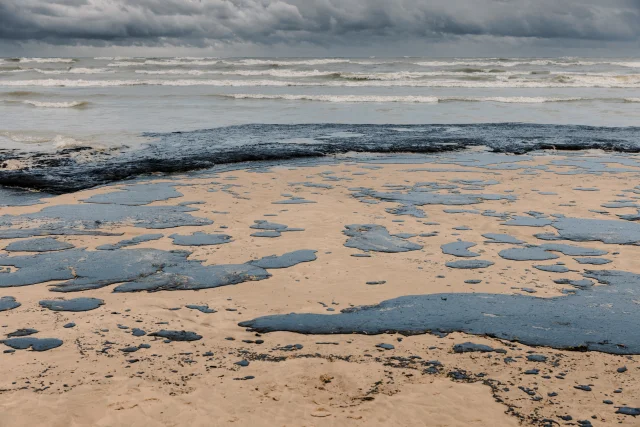
Israeli researchers have developed a cellulose-based aerogel that can absorb large amounts of oil and other hydrocarbons while also helping bacteria break down the pollutants, potentially offering a faster and more comprehensive way to clean up oil spills.
Researchers from Ben-Gurion University of the Negev’s Environmental Biotechnology Laboratory say the material can absorb about 100 times its own weight in oil-based substances, including motor oil, jet fuel, gasoline and kerosene. The aerogel can also support the natural biodegradation of hydrocarbons, particularly when they have been spilled in marine environments.
Hydrocarbon spills have long posed a major environmental threat, contaminating oceans, soil and groundwater. Conventional cleanup methods often focus on containing the spread of oil – for example, by using booms to keep floating oil from spreading – and then removing as much of the pollution as possible.
The researchers’ approach combines those immediate cleanup efforts with biodegradation, potentially allowing contaminated areas to be treated more thoroughly while speeding the longer-term breakdown of pollutants.
The study was conducted under the leadership of Prof. Ariel Kushmaro and headed by Dr. Danit Lisa Karsagi Biron of Ben-Gurion University’s Faculty of Engineering. It was published in the August edition of the academic journal Chemical Engineering Journal Advances.
“These findings demonstrate the potential of the method we developed as a versatile and sustainable platform for treating oil spills in aquatic and marine environments,” Kushmaro said.
“By combining physical adsorption with biodegradation, the technology offers a promising and innovative alternative to conventional approaches, addressing both immediate containment and long-term environmental recovery.”
The researchers developed what they call Nutrient-Supplemented Carbonized Aerogels or NSCA. The material is designed to absorb hydrocarbons while supplying nitrogen and phosphorus, nutrients that are often scarce in marine environments but are important for the bacteria responsible for biodegradation.
According to the study, “Oil and petroleum spills are severe environmental hazards that disrupt ecological balance by contaminating water and soil. To mitigate their impact, various remediation technologies have been developed.”
The researchers said they were introducing “a novel strategy that combines in situ adsorption and biodegradation in aqueous environments using Nutrient-Supplemented Carbonized Aerogels (NSCA).”
In experiments using artificial seawater contaminated with oil, the researchers found that NSCA significantly improved oil breakdown compared with carbonized aerogels without the added nutrients.
They also tested how different pyrolysis temperatures and nutrient concentrations affected the material’s performance. The researchers found that effective NSCA could be produced at temperatures as low as 360°C (680°F), with optimal performance at 450°C (842°F).
When produced at that temperature, the aerogels demonstrated high water repellency and a hydrocarbon adsorption capacity of 78 grams (2.8 ounces) of crude oil per gram of NSCA.
The study also found that increasing nutrient concentration in the aerogel directly increased both the rate and extent of biodegradation.
The researchers concluded that NSCA could provide an energy-efficient and effective approach to cleaning up oil spills while addressing both the immediate removal of hydrocarbons and their longer-term environmental breakdown.
You might also like to read this: