Israel doesn’t expect US-Iran agreement, prepares for escalation as Trump calls Iranian proposal ‘not good enough’
Mediators present framework for temporary 45-day truce to negotiate final deal




Israel is preparing for a further escalation in the war against Iran and is drawing up plans to strike the regime’s energy facilities, Israeli and U.S. media reported.
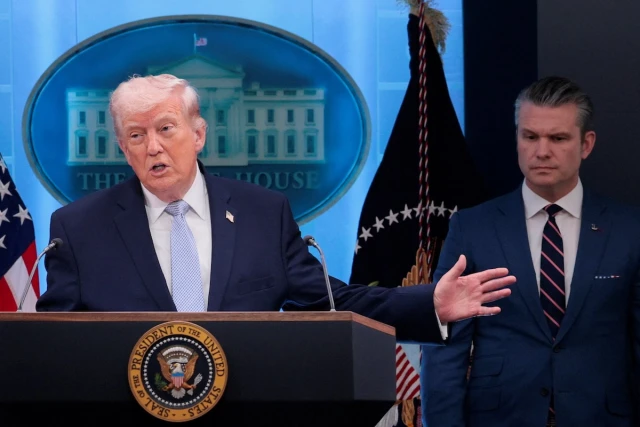
The reports come against the backdrop of negotiations between Washington and Tehran, which appeared to falter on Sunday evening when U.S. President Donald Trump said a proposal he received from the regime was “not good enough.”
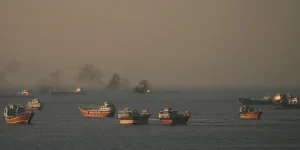
Trump told reporters during the White House Easter egg hunt that the proposal for a ceasefire, which reportedly calls for a 45-day temporary truce and the immediate reopening of the Hormuz Strait, was still “a very significant step.”
He also warned that his deadline for Iran to open the strategic waterway by Tuesday would be final. "I gave them a chance and I hope they take the chance. If they don't, it's trouble."
"Are you prepared to move the deadline back again?"@POTUS: "Highly unlikely. They've had plenty of time." pic.twitter.com/nbRig1kd9Y
— Rapid Response 47 (@RapidResponse47) April 6, 2026
Meanwhile, several reports in Israeli media outlets indicate that Jerusalem doesn’t expect a ceasefire to take shape, and is instead preparing for a further escalation of the fighting.
A senior Israeli official told The Jerusalem Post on Monday that Israel and the U.S. are now more closely aligned than ever before, despite both administrations pursuing their own strategic goals in the war.
Ynet News reported that U.S. officials told Israel the Trump administration still very much wants to reach a temporary ceasefire.
Kan News said on Sunday that Jerusalem is waiting for the “green light” from Trump to start striking energy targets and national infrastructure in Iran, and that the Israeli military has already drawn up target lists to that effect.
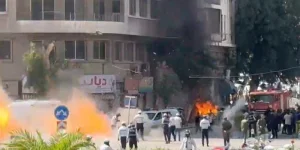
In recent days, the U.S. and Israel have already started to focus on infrastructure targets, with the U.S. destroying a key bridge and Israel striking two petrochemical facilities in the past days.
.@POTUS on the Iranian regime: "They're animals and we have to stop them — and we can't let them have a nuclear weapon. Very simple." pic.twitter.com/RZS3jg2qUT
— Rapid Response 47 (@RapidResponse47) April 6, 2026
“The IDF has now targeted Iran’s two biggest petrochemical complexes, rendering more than 85 percent of Iran’s petrochemical export capacity inoperable,” the military stated.
Israel is being kept in the loop by the U.S. about all developments, the report by Ynet stressed, adding that Prime Minister Benjamin Netanyahu spoke with Trump for half an hour on Saturday.
Two sources told The Jerusalem Post that both militaries are closely aligned and have compiled a comprehensive list of strategic targets to strike once the talks fail.
The list was reportedly finalized during a meeting last Thursday between IDF Chief of Staff, Lt.-Gen. Eyal Zamir and top officers from the U.S. Central Command.
Trump’s envoy, Steve Witkoff, is also updating Israel on the details of his talks with representatives of Pakistani mediators and with Iran’s Foreign Minister Abbas Araghchi, with whom he is reportedly exchanging text messages, according to Ynet.
However, an Israeli official said that the U.S. is not receiving a clear answer from Tehran. “It is impossible to know what will happen, it can go this way or that way,” the official said. “Our assessment is that in the end it will go to an explosion because Mojtaba Khamenei did not deliver an answer, and it is difficult to move the Revolutionary Guards away from their extremist ideology, and they are not willing to open the Strait of Hormuz.”
Meanwhile, Iran’s state news agency IRNA reported on Sunday evening that the regime’s response sent to Washington “consists of 10 clauses and includes a reaffirmation of its rejection of a ‘temporary ceasefire’ and an emphasis on the need for a permanent end to the war...”.
Iran's demands also include “an end to the wars in the region,” meaning the fighting against its proxies in Lebanon and Yemen, as well as “the establishment of a protocol for safe passage through the Strait of Hormuz, reconstruction, and the removal of sanctions.”
According to the news outlet Axios, the mediators have presented Iran and the U.S. with a proposal for a two-phased deal, with the first phase being a 45-day truce during which a permanent end to the war would be negotiated.
You might also like to read this: