Iran fortifies Kharg Island oil hub ahead of potential US invasion, as Pentagon reportedly prepares options for ‘final blow’
Commanders of IRGC Naval force and Naval intelligence Division killed in overnight Israeli strike





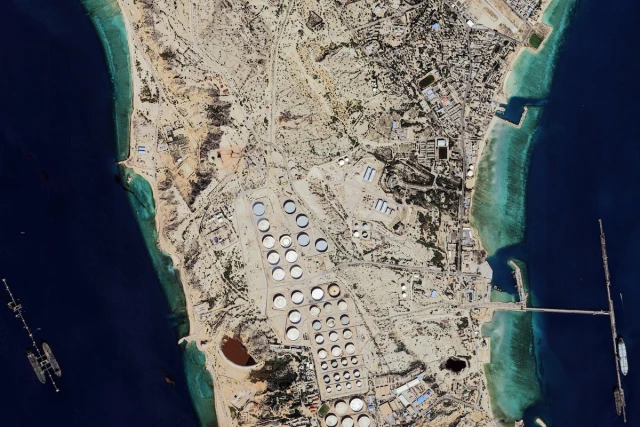
Iran is reinforcing defenses and deploying additional forces to Kharg Island, including increased air defense systems and placing sea mines, in anticipation of an American invasion to seize the key Iranian oil hub, CNN reported on Wednesday.
Meanwhile, Israel confirmed on Thursday the assassination of senior commanders of the IRGC Navy, which is responsible for attacks on shipping in the Strait of Hormuz as well as the security on Kharg Island.
The moves to strengthen the defense of the critical piece of Iran’s oil infrastructure come as multiple reports have claimed that U.S. President Donald Trump is weighing a ground invasion of the island, in order to coerce the Islamic Republic’s regime into reopening the Strait of Hormuz, or even into surrendering and accepting U.S. demands.
The island is critical to Iran’s economy, with around 90% of the country’s crude exports being processed there. It hosts major oil storage facilities, pipelines, and tanker terminals.
While the U.S. military already carried out strikes on Kharg Island earlier in the war, without hitting the oil infrastructure, recent reports have pointed in the direction of a targeted operation to seize the island and its oil capabilities in order to deny the regime that revenue.
However, both U.S. and Israeli military officials have cautioned that such an operation could prove problematic for the U.S. military, due to the island’s proximity to the Iranian mainland.
An Israeli source told CNN that American troops on Kharg would be exposed to attacks by Iranian drones and shoulder-fired missiles, leading to further deaths.
“The hope is that they won’t take that risk and will instead fire at the oil fields, but there is no way to know,” this source said.
Retired Adm. James Stavridis, former NATO Supreme Allied Commander and current CNN military analyst, said, “I would be very worried about this.”
“Iranians are clever and ruthless, Stavridis said. “They will do everything they can to inflict maximum casualties on U.S. forces both on the ships at sea, and especially once ground troops are anywhere in their sovereign territory.”
These reports come alongside reports of additional U.S. troops being deployed to the theater of operations.
Two Marine Expeditionary Units, which specialize in rapid-response amphibious landings, raids, and assault missions from Navy amphibious ships, are currently en route to the Middle East, reports in U.S. media have said. Those units include thousands of Marines along with amphibious warships, aviation assets, landing craft, and support crews.
The Marines are the most likely force to be inserted in a combat operation to seize Kharg Island. Additionally, around 1,000 U.S. soldiers with the Army’s 82nd Airborne Division are also expected to deploy to the region in the coming days, CNN said.
Axios reported that the Pentagon is preparing for a "final blow" in Iran that could include the use of ground forces and a massive bombing campaign.
The outlet cited “two U.S. officials and two sources with knowledge” of the plans for its report, saying the military is currently weighing four different options for bringing military pressure on Iran to try to end the war.
Those options include:
Either invading or blockading Kharg Island to deny Iran the oil revenue.
Invading Larak Island, an island with strategic positioning for controlling the Strait of Hormuz. Iran currently hosts military equipment for that purpose on the island.
Seizing the disputed islands of Abu Musa, which are claimed by the United Arab Emirates, but are currently under Iranian military control. They are near the western entrance of Hormuz, and could be used to control traffic through the waterway.
Enforcing a blockade on all vessels carrying Iranian oil on the eastern side of Hormuz.
According to Axios, the Pentagon is also still considering a targeted raid to seize the highly enriched uranium buried within nuclear facilities targeted by the U.S. and Israel in last year’s Rising Lion and Midnight Hammer operations, as well as in the current military operations of Epic Fury and Roaring Lion.
If that option is ruled too risky, Axios said the U.S. could conduct additional airstrikes in an attempt to make the material practically inaccessible.
At the same time, Iranian parliament speaker Mohammad-Bagher Ghalibaf wrote on social media on Wednesday that Iranian intelligence suggests "Iran's enemies, with the support of a country in the region, are preparing an operation to occupy one of Iran's islands.”
It is believed that he could be referring to Abu Musa.
“All enemy movements are under the surveillance of our armed forces. If they take any action, all the vital infrastructure of that regional country will be targeted without limitation by relentless attacks,” Ghalibaf wrote.
Ghalibaf’s threat comes alongside a threat by the IRGC to disrupt shipping through the Bab al-Mandeb Strait at the entrance to the Red Sea, through the activation of their Yemenite proxy, the Houthi rebel group.
“If the enemy wants to take action on land in the Iranian islands or anywhere else in our lands or to inflict costs on Iran with naval movements in the Persian Gulf and the Sea of Oman,” an IRGC source told the Tasnim News Agency, “we will open other fronts for them as a surprise so that their action will not only be of no benefit to them but will also double their costs.”
“The Bab al-Mandab Strait is considered one of the world’s strategic straits, and Iran has both the will and the ability to create a completely credible threat against it,” the source added.
“Therefore, if the Americans want to think of a solution for the Strait of Hormuz with stupid measures, they should be careful not to add another strait to their problems and predicaments.”
Bal al-Mandeb is located off the coast of the Houthi-controlled portion of Yemen, and the rebel group has declared their willingness to seize the vital waterway on behalf of Iran.
In a possible preparation for some sort of activity in the Persian Gulf, the IDF announced on Thursday that it had eliminated the commander of the Islamic Revolutionary Guard Corps Navy, Alireza Tangsiri, in an overnight strike.
The IDF said that Tangsiri was the commander of the IRGC Naval force for the past eight years. During the Oct. 7 Gaza War, Tangsiri threatened to close off the Strait of Hormuz following an Israeli strike on the Iranian embassy in Damascus, Syria, which killed seven IRGC officers, including two senior commanders.
צה"ל חיסל את צמרת חיל הים של משמרות המהפכה - מפקד החיל וראש אגף המודיעין חוסלו
— צבא ההגנה לישראל (@idfonline) March 26, 2026
חיל האוויר בהכוונה מודיעינית מדויקת של אמ"ן ומספן מודיעין חיל הים, תקף במהלך הלילה בבנדר עבאס וחיסל את עלי רצ'א תנגסירי, מפקד חיל הים של משמרות המהפכה בשמונה השנים האחרונות.
תנגסירי מילא שורת תפקידי… pic.twitter.com/Ch0RQnXFDz
According to the IDF, during Operation Roaring Lion, Tangsiri oversaw the closure of the Strait of Hormuz and promoted terror activities against vessels traversing the waterway. The head of the Iranian Navy's Intelligence Division, Hanam Rezaei, was eliminated in the same strike, the military said.
You might also like to read this: