Discovery of Altalena, powerful symbol of Israel’s need for unity, becomes bone of political contention
Ben Gvir announces discovery, Netanyahu reportedly films separate statement to avoid sharing stage





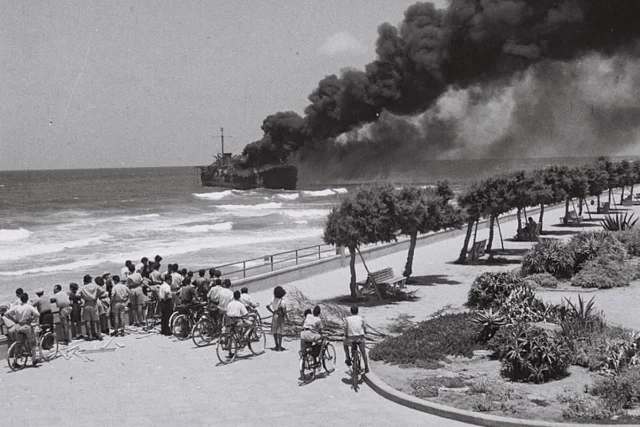
The wreck of the ship Altalena, whose sinking in 1948 has become one of the Jewish state’s most potent symbols for the need for internal unity, was found intact at a depth of 503 meters several dozen kilometers off the coast of Israel.
The sensational discovery was announced by National Security Minister Itamar Ben Gvir and Heritage Minister Amichai Eliyahu, both of the Jewish Power (Otzma Yehudit) party, and was quickly dragged into political maneuvering and election campaigns despite the ship’s story being seen as the most searing warning against intra-Israeli fighting and violence.
The ship had arrived on Israeli shores shortly after the declaration of independence. It was loaded with immigrants but also carrying weapons, military equipment, and fighters of the Irgun, also known as Etzel.
The Irgun militia touted the right-wing ideology of Revisionist Zionism, and today is seen as the forefather of the Likud Party.
The organization was led at the time by later prime minister Menachem Begin, and had already signed an agreement to be absorbed into the newly formed Israel Defense Forces, which was dominated by the Irgun’s former rival, the Haganah.
David Ben Gurion, the first prime minister, demanded that every piece of equipment be handed to the IDF, rather than to partly still-independent units of the Irgun, as Begin demanded.
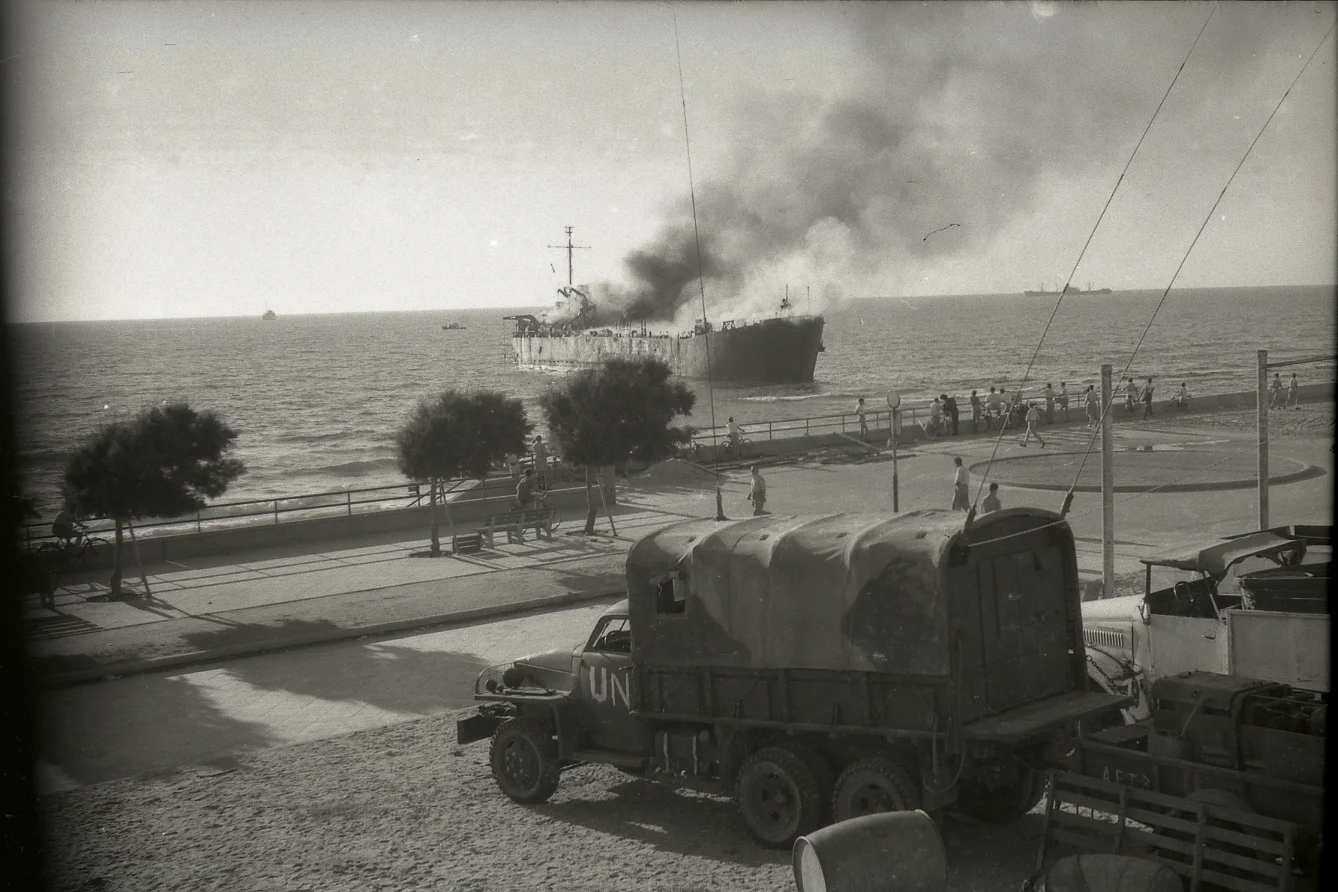
However, Ben Gurion feared this would become the seed of “an army within an army,” and ordered the ship to be shelled from the shores of Tel Aviv, eventually sinking it.
Along the central Tel Aviv promenade, near Herbert Samuel Street, a memorial in the shape of a sinking ship’s prow juts from the stone sea wall—a monument to the ship that brought Israel the closest it ever came to civil war. The life preserver from that ship hangs outside the… pic.twitter.com/hKhHyWV7VL
— Amit Segal (@AmitSegal) August 24, 2026
Clashes broke out between IDF and Irgun troops throughout the city, and sixteen Irgun soldiers and three IDF soldiers were killed. However, Begin, while still onboard the Altalena, gave the command to stop the fighting and avoid a civil war at all costs.
Both Ben Gurion’s ruthless determination to establish a state monopoly on all weapons, enforcing unity and the primacy of the state, as well as Begin’s decision not to fight back to avoid civil war, have since been hailed as key moments in the creation of the state.
But with the discovery of the Altalena coming at the time of perhaps the most extreme polarization within Israel since those days, the ship’s rediscovery and its announcement quickly became politicized.
Prime Minister Benjamin Netanyahu in a statement following the discovery of the ship ‘Altalena’, at the Etzel Museum in Tel Aviv:
— Prime Minister of Israel (@IsraeliPM) August 24, 2026
"My brothers and sisters, citizens of Israel, civil war - never again! This was the heartfelt cry of the commander of the Etzel, Menachem Begin. He… pic.twitter.com/XILbIK8EqO
Jewish Power ministers Ben Gvir and Eliyahu chose to announce the discovery on their own, foregoing a joint statement with the Defense Ministry, the military, or the Likud Party, as could have been expected.
At a press conference later on Monday, Ben Gvir lashed out at Prime Minister Benjamin Netanyahu, who had filmed and published his own video statement outside the Etzel Museum in Tel Aviv rather than join Ben Gvir and Eliyahu on stage.
The ship, said Ben Gvir, “is a symbol of the national camp that for years they tried to boycott, silence, and exclude from legitimacy… Menachem Begin knew the taste of people not wanting to be photographed with you on the same stage.”
Ben Gvir’s associates claimed to Ynet News that Netanyahu’s ostensible refusal to be seen with him indicates an intention to cooperate with Gadi Eisenkot’s bloc and shut out Jewish Power after the elections.
“Ben Gvir was good for him for four years, and precisely now to return to boycotts and avoid even being photographed with him?! This is exactly what they did to Menachem Begin, and it is regrettable that the prime minister is behaving [this way],” they said.
Ben Gvir also reiterated claims by some right-wingers that “they tried to bury the story of the Altalena, to erase it from the pages of history and to erase the legacy of the heroes who fought and fell,” noting his family connections to the Irgun.
“My mother, Shoshana, may she rest in peace, was a proud Irgun fighter. In the home where I grew up, I absorbed the stories of heroism, but also the stories of persecution and discrimination,” he said.
In his earlier statement, Netanyahu vowed that the ship would “be raised from the depths of the sea,” while criticizing Ben Gurion’s decision to open fire.
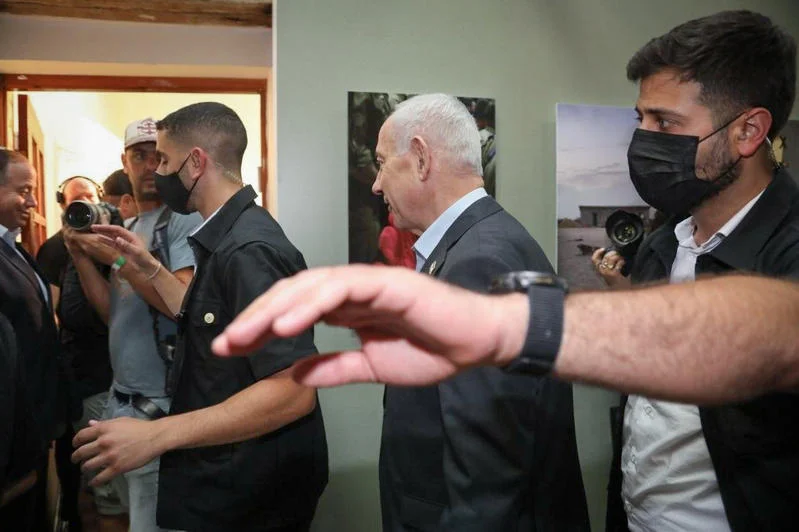
The prime minister also claimed credit for the discovery, noting that he ordered “the searches be renewed with a special budget” in 2019.
The wreck was found by the Maritime Mapping Division at the Survey of Israel (SOI). Its director, Roni Sadeh, said, “We succeeded in reaching the vessel at a depth of more than 500 meters thanks to advanced technologies and the intensive work of a professional and dedicated team at sea.”
The ship had floated off the coast for several weeks after being fired upon, before being towed out to sea and sunk there. Ben Gvir and Eliyahu later said that it was found over 20 kilometers west of Tel Aviv, outside Israel’s territorial waters.
“It is hard to overstate the place this event holds in Israel’s history,” commented Channel 12 News’s Amit Segal, himself a descendant of an Irgun family. “For some, it carries the weight of Lee’s surrender at Appomattox; for others, of Washington quelling his own officers at Newburgh, ending a mutiny over unpaid wages with an appeal to their patriotism.”
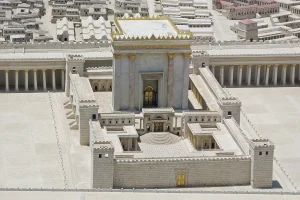
“The artillery piece that fired on the ship was dubbed the ‘Holy Cannon’ by Ben-Gurion, who said it should stand beside the Jewish Temple if it were ever rebuilt. For decades, it was enshrined at the IDF officers’ school—a standing lesson in military subordination to elected civilian leadership and the rejection of any dual chain of command… that the Altalena should surface now, at so contentious a moment in Israel’s history, feels like some kind of sign.”
Yaakov Hagoel, chairman of the World Zionist Organization, recalled that those Israelis who had grown up in revisionist Zionist homes, “see this as a national wound rising from the depths to demand accountability from us… But above all, I see Menachem Begin crying out in a voice choked with horror: ‘Civil war, never!’ A legacy cast in steel. The willingness to absorb the insult and to pay the heaviest price, provided that our unity as a people would not sink into the depths.”
“Altalena is our national commandment for unity. One body, one people, and partners in destiny. We don’t have the privilege of baseless hatred,” Hagoel warned.
National Labor Federation (Histadrut) chairman Yoav Simchi praised the discovery as “an event on a historic scale, with profound national significance. This is the story of the national camp and of the National Histadrut as a whole, connecting us to a significant chapter in the history of the establishment of the state and to the heritage of the struggle for independence.”
“This is a moving moment for the entire Jewish people, connecting us to our roots and to the story of our revival. In these days, although it is not popular at all, we see again and again, especially at this time, just how important unity is. Among the Jewish people, everyone is right, but we have always succeeded together when we acted as one person with one heart, in unity and wisdom.”
Support our independent, on-the-ground reporting from Israel. Become a $5/month Ally.
You might also like to read this: