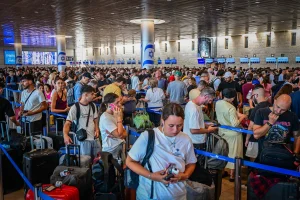
Ben Gurion Airport woes continue after labor strike, Airports Authority addresses staffing shortages






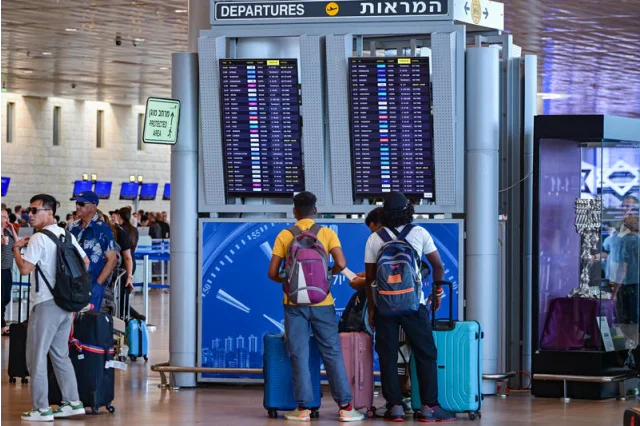
Following last Thursday’s two-hour strike at Ben Gurion International Airport, which several reports described as a “wildcat strike,” the Israel Airports Authority announced Sunday that it would implement several reforms recommended by labor representatives to stabilize operations and ease congestion. During the strike, airport workers refused to process traffic, contributing to severe congestion that led to Ben Gurion being dubbed the world’s most congested airport.
The employee strike last week reportedly cost the airport an estimated NIS 25-30 million ($8-10 million) and caused flight delays and cancellations, inconveniencing thousands of travelers. Some problems lingered into Friday. Workers said the strike was necessary because staff shortages and demands to work long shifts and overtime were creating safety concerns and leaving employees exhausted. As many as 500 positions urgently need to be filled, according to the Israel Airports Authority (IAA).
August traditionally sees the heaviest traffic at Ben Gurion Airport, and workers say additional staff should have been hired and trained ahead of the surge. Instead, existing employees have been pushed to work back-to-back 12-hour shifts, sometimes totaling as many as 220 hours a month under difficult conditions exacerbated by the summer heat. The IAA labor union has issued several warnings in recent months that accidents and illnesses, as well as workers being called up for IDF reserve duty, have created a severe shortage of trained and qualified personnel.
Under the measures announced Sunday, managerial staff will join shifts in ground-service areas, with an emphasis on baggage handling and managing passenger lines to keep operations moving and minimize congestion. Meanwhile, plans to hire additional workers ahead of the upcoming High Holiday travel season will continue.
Travel industry analysts expressed cautious optimism that the measures could address some of the airport’s problems and lead to smoother operations. However, they warned that significant challenges remain and that the situation could worsen ahead of Rosh Hashanah, which begins on Sept. 11 this year.
Meanwhile, the problems at Ben Gurion Airport are quickly becoming a political issue ahead of the upcoming Knesset elections on Oct. 27.
Israeli Transportation Minister Miri Regev announced that her office would investigate who was responsible for Thursday’s employee strike, as well as other issues at the airport. Former Transportation Ministry Director-General Keren Turner, now a member of the "Together" (b’Yachad) political party, said that ordinary Israelis are “paying the price for a ministry on the verge of collapse from excessive political appointments and failed management.”
The IAA also said it would launch its own investigation into the incident.
You might also like to read this: