Bab el-Mandeb Strait: Why the Red Sea passage is referred to as 'Hormuz 2.0'





Much of the world’s attention has been focused on the Strait of Hormuz, due to the Iran conflict and the increase in energy prices following its closure by the Iranian regime. Around 20% of the world’s naval traffic passes through the Strait.
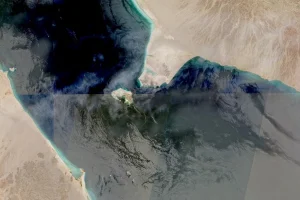
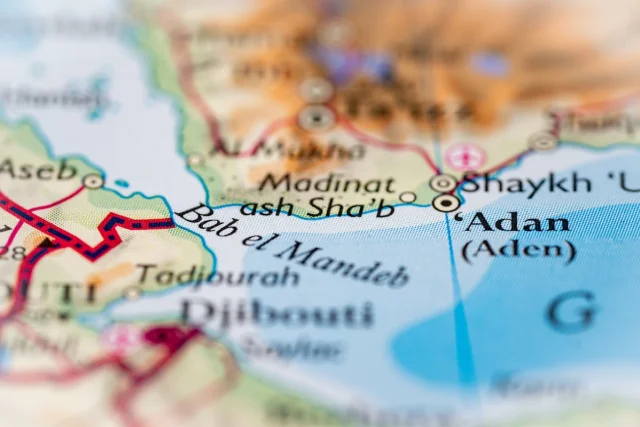
However, another waterway has also come into focus following recent tensions between the Iran-backed Houthi rebels in Yemen and Saudi Arabia. That waterway is the Bab el-Mandeb Strait, which connects the Gulf of Aden, south of the Arabian Peninsula, with the Red Sea.
Like the Strait of Hormuz, the Bab el-Mandeb is one of the world's busiest maritime chokepoints, carrying about 4.8 million barrels of oil per day, significant volumes of Qatari liquefied natural gas, and roughly 10–12% of global shipping traffic, or about 19,000 vessels each year.
The Islamic Revolutionary Guard Corps (IRGC) had previously threatened to close off the Bab el-Mandeb Strait as part of its attempt to weaponize the Hormuz, following the U.S.-Israeli air campaign launched on Feb. 28.
Iran’s ability to threaten both Hormuz and – via the Houthis – Bab el-Mandeb raises the economic stakes of the U.S.-Israeli strikes on Iran.
At its narrowest point, the Bab el-Mandeb ["Gate of Tears" in Arabic] waterway is only around 26 kilometers (16 miles) wide, functioning as a natural chokepoint between Djibouti and the Houthi-controlled territory in Yemen.
Bab el-Mandeb is the only direct route from the Gulf of Aden to the Suez Canal, making it the fastest shipping route from Asia to Europe. It is also the only route for crude oil shipped from Saudi Arabia's Red Sea port of Yanbu to Asia. The Suez Canal accounts for about 2% of Egypt's gross domestic product, generating around $10 billion in revenue in 2022–2023, before the start of the Gaza war.
While the Houthis lack the ability to completely shut down the Bab el-Mandeb Strait, the threat of attacks would likely force most shipping to bypass the waterway and the Suez Canal, depriving Egypt of significant revenue. Together with the Strait of Hormuz, the effective closure of both waterways would allow a single entity – the Islamic Republic of Iran– to disrupt roughly 30% of the global oil and gas supply.
Following recent Houthi drone strikes on Saudi oil facilities and an announced blockade of Saudi ships passing through the Red Sea, many feared the Iranians were attempting to act on that threat, raising fresh concerns about global energy supplies and trade.
After the start of U.S. and Israeli military operations against Iran, Saudi Arabia began diverting some of its oil exports through Yanbu following the IRGC's closure of the Strait of Hormuz.
Closing the Bab el-Mandeb would force tankers and container ships heading to and from Europe and Asia to divert around the Cape of Good Hope in South Africa, adding weeks to the delivery times, as demonstrated in late 2023, after the Houthis targeted commercial shipping in the Red Sea.
The Houthis said the attacks were carried out in solidarity with Hamas after the Oct. 7, 2023, Hamas-led attack on Israel.
However, due to the security risks, multiple shipping companies abandoned the route, opting instead for the longer journey around the African continent. The rerouting caused a relatively minor inconvenience for Israel but dealt a significant financial blow to Egypt, which reported an almost 66% decline in Suez Canal traffic, according to the Egyptian government.
According to Reuters, traffic through the Suez Canal has still not recovered to pre-2023 levels.
The most recent blockade has been targeting vessels to and from Saudi Arabia, according to Houthi military spokesperson Yahya Saree. The Houthis had previously imposed a similar blockade on Saudi vessels in 2018, as part of the conflict between Saudi Arabia and its Yemeni proxies, and the Ansar Allah party, commonly referred to by the name of its leader: Abdul-Malik al-Houthi.
Following the announcement of the blockade, Saudi Arabia announced plans in late July for a multinational maritime defense coalition aimed at protecting shipping and energy supply routes in the Red Sea region.
At the same time, in the days following the Houthi announcement, several oil tankers carrying Saudi crude oil passed through the Bab el-Mandeb with their tracking transponders turned off, en route to Asia and India.
A recent drone attack on a gas tanker in the Egyptian port of Damietta, however, has raised concerns that Iran could be expanding its proxy threat.
Maritime security firm Ambrey first reported that a drone had caused the explosion, a claim denied by the Egyptian government. The New York Times later reported that two Iranians confirmed the explosion was the result of a drone attack, saying the Iranian regime wanted to demonstrate its ability to threaten global shipping and energy supplies if it chose to escalate.
If true, it suggests that the Hezbollah terror group in Lebanon, currently in a weakened state after several years of fighting against Israel, has the ability to support its sponsor, Iran. Hezbollah has already demonstrated the use of drones with sufficient range to hit targets in Egypt.
The closure of Hormuz and the threatened closure of Bab el-Mandeb reveal that Iran’s greatest weapon may be its ability to impose an economic threat on the rest of the world.
After years of bearing the brunt of crippling Western sanctions, the Iranian regime appears to have concluded that much of the world is conflict-averse and would prefer to pay fees and accept terms that tighten Iran's control over Hormuz and expand its influence over Bab el-Mandeb rather than unite to confront Iranian coercion.
A failure to confront Iran, including through the use of military force, could lead to higher fees for access to the Hormuz Strait while giving the Islamic Republic greater leverage in future disputes. Based on its past behavior, the regime is likely to exploit that leverage repeatedly, now that it has recognized the West's distaste for confrontation.
The two U.S. attempts to confront the Houthis – Operation Prosperity Guardian in December 2023 and Operation Rough Rider in March 2025, after President Donald Trump returned to the White House – saw limited success.
These operations degraded but did not eliminate the Houthis' maritime attack capabilities and its leaders later claimed that President Donald Trump backed down.
Even if the Bab el-Mandeb Strait is not completely closed, heightened security risks will likely raise shipping insurance premiums, increase freight costs, and delay cargo shipments. Delays in crude oil deliveries and higher import costs would drive up fuel prices and affect inflation rates globally.
Help more people find our reporting from Israel! Leave a quick Google review of our website HERE .
You might also like to read this: