Israeli archaeologists recreate Byzantine-era wine from 1,300-year-old grape varieties





Thanks to an archaeological discovery in Israel's Negev Desert, researchers have recreated wines made from grape varieties last cultivated some 1,300 years ago, offering a rare taste of what people in the Byzantine-era Levant may have been drinking as Christianity spread across Europe, Persia and India.
The breakthrough stems from excavations conducted between 2017 and 2019 at Avdat National Park, located between Beersheba and Mitzpe Ramon.
Archaeologists uncovered carbonized grape seeds believed to have been buried around the middle of the 7th century A.D.
Analysis at Tel Aviv University's biology laboratories identified the seeds as belonging to the lineages of ancient grape varieties that still have modern descendants, making it possible to revive wines that had disappeared for more than a millennium.
One seed was identified as belonging to the Syriki variety, a small black grape still cultivated for sacramental wines used by Catholic and Greek Orthodox clergy in Lebanon and Greece. Another belonged to the lineage of the Ba'ar variety, which is used to produce white wines.
Lior Schweimer, the Southern District heritage director and an archaeologist for the Israel Nature and Parks Authority, is leading a project at Avdat National Park to revive these ancient grape varieties.
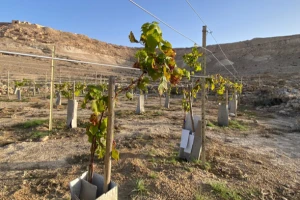
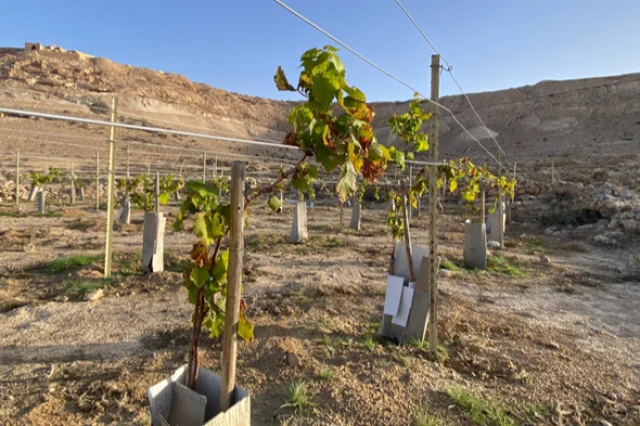
Using the archaeological discoveries as a guide, he compared the ancient seeds with modern cuttings taken from feral grapevines found near the Gaza border and planted them in restored 1,500-year-old agricultural terraces. He also planted Dabouki vines, a variety known to have been historically cultivated in the region.
Because the Negev receives less rainfall today than it did in ancient times, the vines are irrigated using drip irrigation rather than the runoff-based farming methods once used in the area.
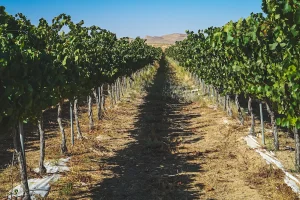
“The [vines] grew like Jack and the beanstalk, without any disease, without any spraying, and twice as fast as the Chardonnay and Sauvignon vines grown in this area,” Schweimer told the Times of Israel. “After two years, they yielded grapes.”
Schweimer said he gave grapes from the Syriki and Ba'ar vines to local winemakers Tsur Shezaf and Boaz Dreyer, while Dabouki grapes went to winemaker Gidi Talmor. The wines were produced without industrial yeast, chemicals, sulfites or other modern additives, and five varieties were eventually bottled.
“The biggest surprise when we opened the bottles was to discover amazing wine,” said Schweimer, who later brought some of the bottles to Tel Aviv for blind taste tests with industry experts.
“They were impressed,” he said. “They couldn’t identify exactly what it was – nobody had drunk it for 1,300 years – but they said it was very balanced, with a bit too much alcohol. It’s not a drink you should drive after!”
Schweimer said the project is continuing as researchers learn more about how the revived grape varieties respond to different cultivation methods and irrigation practices.
“We’re now approaching the second harvest and constantly learning about the varieties, their response to different cultivation methods and irrigation regimes,” Schweimer continued, adding that more ancient winemaking infrastructure is constantly being uncovered at the site and restored for use.
Additional vines have also been planted at nearby Shivta National Park. Schweimer hopes to have enough production to begin selling the wine in the Avdat National Park gift shop next year and eventually make it commercially available across Israel by the end of the decade.
“I think that finding varieties in their feral state, a moment before they disappear, and bringing them back to the place where they grew before can be copied elsewhere,” he said, adding that in a warming world, the vines he has cultivated will do better than more traditional species that require a more moderate climate to survive.
“Our varieties grow well in the desert, and they don’t need much,” Schweimer said.
You might also like to read this: