As 2nd round of negotiations with Iran starts in Geneva, Trump says he'll be 'indirectly involved'
Iranian FM says 'guiding principles' for future discussions reached in Geneva talks




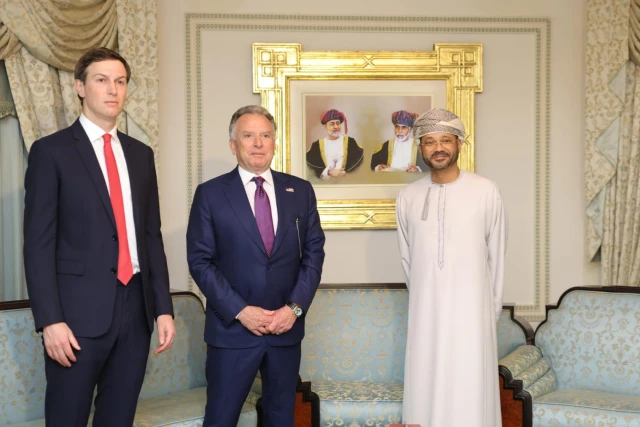
According to Iranian state media, the second round of indirect negotiations between Iran and the United States has commenced at the Omani Embassy in Geneva, mediated by Omani Foreign Minister Badr Albusaidi.
The talks are still being mediated by Oman, as they were during the first round in Muscat, Oman, earlier this month.
Iranian Foreign Minister Abbas Araghchi had described those talks as an exchange of positions, not true negotiations. On Monday, he wrote on social media that he is prepared to present “real ideas to achieve a fair and equitable deal.”
“I am in Geneva with real ideas to achieve a fair and equitable deal,” Araghchi wrote on 𝕏. “What is not on the table: submission before threats.”
Minister Araghchi is leading a team of five Iranian diplomats to the talks, while the U.S. is being represented again by special envoy Steve Witkoff and Trump advisor and son-in-law, Jared Kushner.
Iranian Foreign Ministry Spokesman Esmaeil Baqaei said on Monday, “A cautious assessment is that, from the discussions that have taken place in Muscat to date, at least what we have been told is that the U.S. position on the Iranian nuclear issue has moved towards a more realistic one.”
Iranian officials have continued to state that they will not accept a condition of zero enrichment, nor are they willing to add other issues, such as Iran’s ballistic missile program and its support for regional proxies, conditions that Prime Minister Benjamin Netanyahu asked U.S. President Donald Trump to establish during the renewed talks.
On Monday, ahead of the next round of talks, Trump told reporters on Air Force One that he would be indirectly involved in the discussions.
"I'll be involved in those talks, indirectly. And they'll be very important," he said.
He also reiterated his claim that Iran wants to make a deal, saying, “I don't think they want the consequences of not making a deal.”
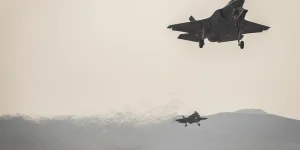
He mentioned the U.S. strikes on Iranian nuclear sites in June, called Operation Midnight Hammer, as a warning of what could happen if no deal is reached.
“We could have had a deal instead of sending the B-2s in to knock out their nuclear potential. And we had to send the B-2s,” Trump said. “I hope they're going to be more reasonable.”
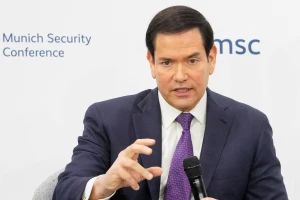
On Monday, U.S. Secretary of State Marco Rubio said there is a chance for a deal with Iran, “but I don’t want to overstate it.”
“I think that there’s an opportunity here to diplomatically reach an agreement that addresses the things we’re concerned about. We’ll be very open and welcoming to that. But I don’t want to overstate it either,” Rubio said during his visit to Hungary.
“I'm not going to prejudge these talks,” Rubio added. “The president always prefers peaceful outcomes and negotiated outcomes to things.”
He acknowledged the difficulties in reaching an agreement, saying the two sides are making decisions from different perspectives.
“It’s going to be hard. It’s been very difficult for anyone to do real deals with Iran, because we’re dealing with radical Shia clerics who are making theological decisions, not geopolitical ones,” he remarked.
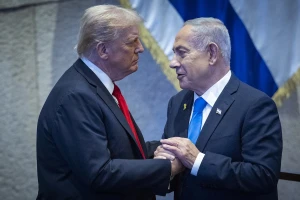
Netanyahu said on Sunday evening that he advised Trump to distrust Iranian intentions.
“I will not hide from you that I express my skepticism of any deal with Iran, because, frankly, Iran is reliable on one thing – that they lie and they cheat,” Netanyahu said.
The prime minister said he told Trump, “Distrust. Distrust, and always verify.”
While the negotiations between the Islamic Republic and the United States were taking place in Geneva, a group of Iranians gathered in front of the United Nations headquarters in the city to protest the talks and the Islamic regime.
Protesters gathered holding banners with the slogan “No to an agreement with terrorists,” and chanting slogans like “Javid Shah” [Long live the Shah].
During the Munich Security Conference over the weekend, around 250,000 people gathered to protest against the Iranian regime.
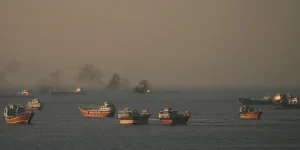
Meanwhile, alongside the U.S. military buildup in the Persian Gulf region, Iran's state media said that the Islamic Revolutionary Guard Corps (IRGC) began a series of war games in the Strait of Hormuz on Monday to prepare for “potential security and military threats.”
The round of negotiations in Geneva ended on Tuesday evening with little sign of progress. However, Iran's Tasnim news agency reported that Araghchi described the talks as serious and more constructive than the previous round.
Araghchi said the two sides reached a general agreement on guiding principles and would base future discussions on those principles.
You might also like to read this: