Munich rally draws 250,000 as Iranian activist calls for 'six immediate steps' to take against Islamic Republic



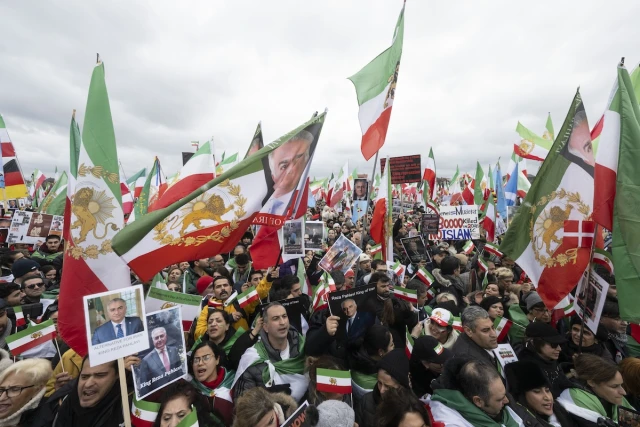
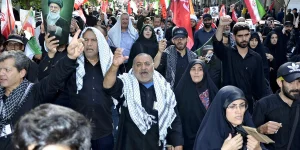
Nearly 250,000 protesters gathered in Munich, Germany, on Saturday to support the people of Iran and denounce the leadership of the Islamic Republic following its deadly crackdown on demonstrators last month.
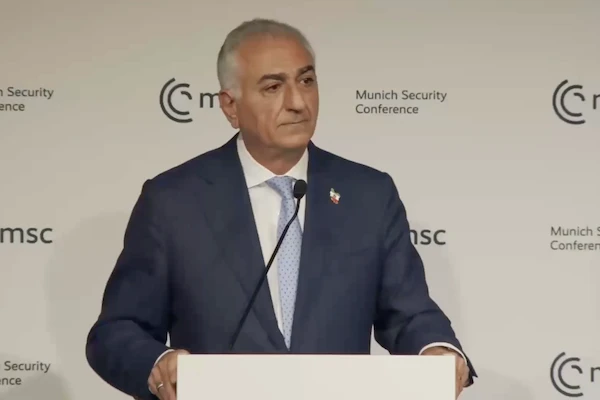
While in Munich for the Security Conference, Reza Pahlavi, the exiled son of Iran’s last shah, urged U.S. President Donald Trump to “help” the Iranian people.
ALL ISRAEL NEWS spoke with Roobin Norouzi, part of a group called Lion Guard of Iran and lead organizer of the London rallies. When asked what actions protesters want Western governments to take, Norouzi said they are “asking for six immediate steps, as outlined by HRH Reza Pahlavi.” The steps include:
Dismantling the regime’s machinery of repression and protecting the people of Iran;
Cutting off the regime’s financial lifelines in full;
Ensuring free internet and communications for the people of Iran;
Expelling the regime’s "diplomats" and prosecuting its criminals;
Immediately releasing all political prisoners;
Preparing to recognize a legitimate transitional government to lead Iran toward democracy.
When asked how realistic these measures are, Norouzi said, “Individually, many are already partially in motion, sanctions frameworks exist, terrorist designations have precedent, and technology solutions are operational. The issue is not feasibility but political will.”
He added, “In reality, the United States and Israel are already, theoretically and in some ways actively, moving in this direction, and we believe the European Union will increasingly follow this path.”
Addressing divisions within Iran’s opposition, Norouzi said it is important to clarify what the political landscape was prior to 1979.
“Iran functioned under a constitutional system with parliament, political plurality, and space for opposition voices, comparable to other developing democratic states of the time. The rupture came when an alliance of Islamists and Marxist factions, influenced by Cold War dynamics, overthrew that order and ultimately eliminated all competing forces to establish the Islamic Republic’s totalitarian theocracy,” he explained.
“In the decades since, so-called 'reformist' opposition within the Islamic Republic has remained structurally tied to the same ideological framework, offering administrative variation rather than systemic change,” he added.
While describing today’s landscape as “fundamentally different,” Norouzi said that “the consensus being built is not around a specific political system or party, but around shared national principles,” including “territorial integrity, secular governance, equality before the law, human rights, and a democratic process through which the Iranian people themselves determine the final form of government.”
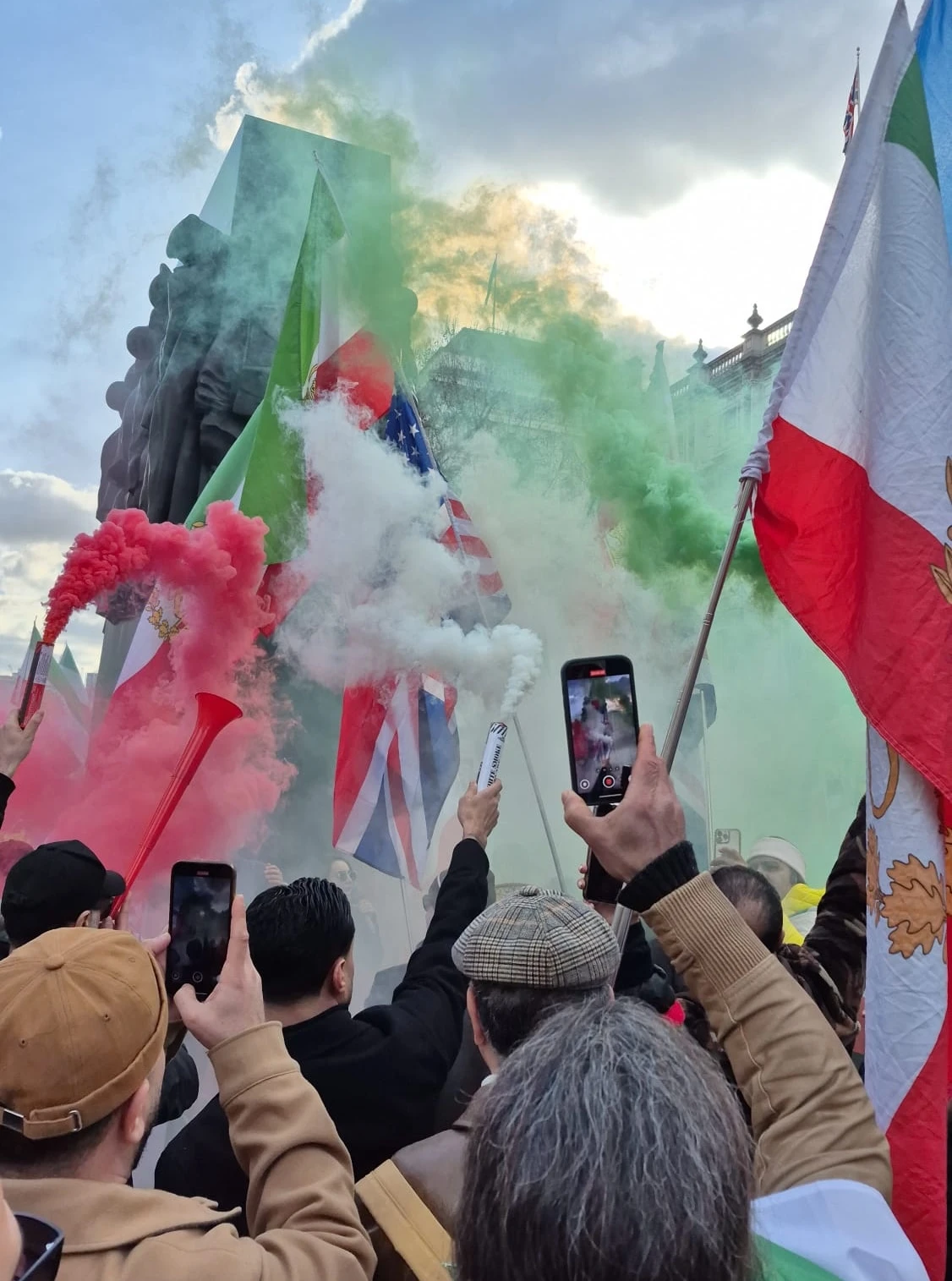
Amid the ongoing uprising, images and videos have shown Iranians replacing the current national flag with the Lion and Sun emblem. Norouzi said, “The re-emergence of the Lion and Sun flag in Iranian protests is deeply symbolic,” adding that it does not represent a “nostalgia for a political system, but a reconnection with Iran’s civilizational identity, an identity that long predates the Islamic Republic and even modern state structures.”
Norouzi said the flag represents three main things:
Historical continuity, a visible link to Iran’s ancient heritage and national story;
Secular national identity, distinct from the Islamic Republic’s ideological and religious symbolism; and
Unity of the people transcending ethnicity, religion, and political faction.
Some critics argue that the symbol could alienate parts of Iranian society, however, Norouzi called it a “unifying symbol,” emphasizing that “the struggle is not about imposing a flag, a monarchy, or any predetermined system. It is about restoring the Iranian people’s right to decide freely and democratically, their future constitution, governance model, and national symbols through referendum.”
While turnout in Munich and Toronto – where attendance reached 500,000 – was substantial, Norouzi said, “The real measure is impact.” He pointed to four areas:
Amplifying Iranian voices so the world hears those risking their lives under the Islamic Republic;
Mobilizing global solidarity to pressure governments to take the six steps outlined by Pahlavi to protect Iranians, ensure internet access, and weaken the regime’s repressive machinery;
Demonstrating political leverage by showing that Iranians at home and abroad reject the Islamic Republic and support Pahlavi as a transitional leader; and
Shifting the media narrative to break through silence or bias and spotlight the killing of more than 50,000 Iranians and the ongoing repression.
Norouzi said success comes “when these rallies convert visibility into action,” arguing they are not merely “symbolic” but rather “strategic,” and that “it turns global attention into tangible support for the Iranian people’s fight for freedom.”
Asked whether Pahlavi is the right person to lead a transitional government, Norouzi responded, “Absolutely. I love HRH Reza Pahlavi, his family, and the Pahlavi dynasty. For decades, Iranians were misled about his father and grandfather, but today we understand their vision for a modern, united Iran. We’ve learned the truth, rejected the lies, and now overwhelmingly support him as the legitimate leader of this revolution. We will defend him and the principles he represents with every means at our disposal.”
Regarding future demonstrations, he said, “General rallies and demonstrations abroad in Europe, the U.S., Australia, and elsewhere, will continue on weekends until Iran is free. Any major calls for coordinated global action or uprisings will only be announced by HRH Reza Pahlavi or his office.”
He added, “We will stand shoulder to shoulder with our Israeli brothers and sisters, carrying Israeli flags alongside our Lion and Sun, united against tyranny and terror. Together, as the strongest allies in the region and across the globe, we honor our shared history and covenant from the time of Cyrus the Great, defending freedom, justice, and humanity."
Expressions of solidarity between Israelis and Iranians have emerged since the protests began last month. ALL ISRAEL NEWS correspondent Oriel Moran previously spoke with Israeli-Iranian shopkeepers who shared blessings and prayers for their fellow Iranians. You can watch that here.
You might also like to read this: