Arab‑Israeli activist Yoseph Haddad could win four Knesset seats, defy traditional political lines, poll suggests





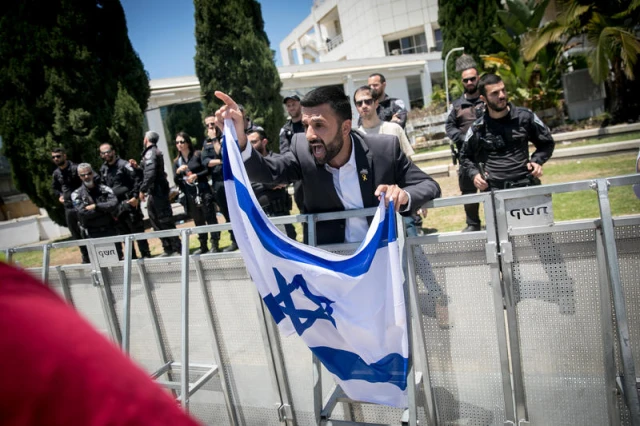
Arab‑Israeli journalist and pro‑Israel activist Yoseph Haddad is emerging as a potential political force ahead of Israel’s next Knesset elections. A new party under his leadership is projected to win four seats, according to a recent Midgam Institute survey, which suggests his support could cut across traditional divides among Jewish voters, with a smaller backing among Arab voters.
In response to the survey results, Israeli sources report that a representative for Haddad said he is “busy acting and fighting for the State of Israel in every arena in which he can influence,” but that “all options are on the table.”
Current Arab representation in the Knesset comprises a total of ten seats between the parties Ra’am and Hadash‑Ta’al. In January, Israel’s four Arab political parties signed an agreement to work toward restoring the Joint List, reviving the unified bloc that secured a record 15 mandates in 2020 before ultimately splitting in 2021.
In the last Knesset elections, voter turnout among Israel’s Arab citizens was low, around 53%. According to a November 2025 survey by the Konrad Adenauer Program for Jewish‑Arab Cooperation, the consolidation of the four main Arab parties under the Joint List would raise turnout in the Arab sector to about 61.8%, putting them on track for an estimated 15.5 Knesset seats.
Beyond representation, the same survey found that a large majority of Arab citizens – about 74% – view violence and crime within their communities as their most pressing concern. That concern reflects the murder wave of 2025, which saw a record-breaking 252 homicides. High levels of this violent crime, largely driven by ongoing feuds between criminal organizations within the Arab sector, have persisted into the first two months of 2026.
Addressing violent crime in the community is another factor expected to bring more Arabs to the ballot, though not necessarily to Haddad. According to the Midgam Institute survey, 73% of his support came from the Jewish sector, while only 12% came from the Arab sector. Remarkably, the Jewish turnout in his favor was comprised of voters from Likud, Jewish Power, and supporters of former Prime Minister Naftali Bennett, reflecting a broad base of support that spans traditionally opposing right-wing and centrist camps.
This surge in support is not a sudden development, as Haddad has been a target for Knesset parties for years. In a 2021 interview with ALL ISRAEL NEWS Editor-in-Chief Joel Rosenberg, Haddad revealed that he had declined multiple offers from major parties because they were not serious and had “no intention of really making a plan and campaign and budget for the Israeli Arabs.” He noted that if a genuine opportunity were to arise “whether it’s us or a Jewish political party that will be a place for us, [where] we will be able to do more than what we do as an NGO, I will definitely consider it.”
It remains unclear whether such an opportunity has materialized or whether Haddad will make the leap from activism to the Knesset. The next general election is currently scheduled for October 2026, unless Prime Minister Benjamin Netanyahu calls for early elections.
You might also like to read this: