As Lebanese Army fails to confront Hezbollah, IDF prepares for extended stay in southern Lebanon
Hezbollah shifting strategy to guerrilla warfare following significant losses in past 3 years





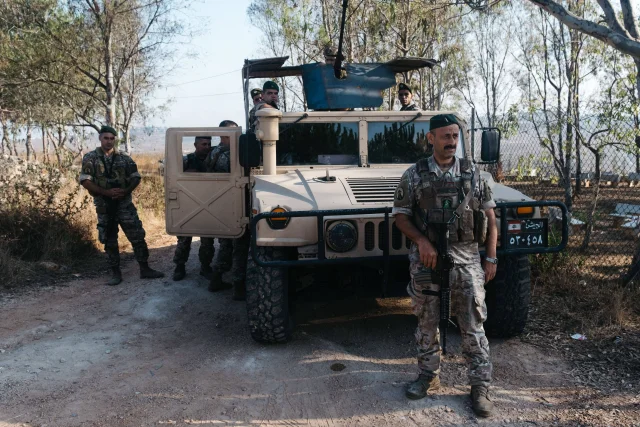
Israeli defense officials assess that the Lebanese Army (LAF) has no interest in confronting Hezbollah and has not done any work to dismantle Hezbollah installations in the pilot zones from which the IDF withdrew.
A report from Walla at the end of August claimed that the LAF has been operating a “military fig leaf” program, in which LAF soldiers enter the pilot zone, establish a visible military presence, but then allow civilian and medical groups to enter the area, despite their affiliation with Hezbollah.
These organizations, such as the Islamic Health Organization and the Wata’awanu (Cooperate) civilian aid association, were documented by the Middle East Media Research Institute (MEMRI) in mid-August.
In the past, Hezbollah has frequently used such organizations and associations as a cover for military activity, as happened with the “Green Without Borders” organization, which used the excuse of planting trees near the border to conduct surveillance on IDF positions and install forward positions for Hezbollah militants.
The presence of such organizations in the pilot zones raises clear questions about the LAF’s commitment to the Lebanese government’s stated plan to disarm Hezbollah.
The failure to confront Hezbollah was documented by the Lebanese news outlet This is Beirut, which visited the town of Zawtar al-Gharbiyeh, the first town transferred to the LAF as part of the pilot zones from which the IDF withdrew earlier this year.
The outlet noted that security checkpoints at the town's entrances were not checking vehicles or passengers entering.
This is Beirut cited a LAF intelligence source who said the LAF considers pilot zones to be areas from which the Israeli military has withdrawn.
The LAF considers its primary role to be the disposal of unexploded ordnance, the removal of rubble, and assisting residents, rather than prioritizing the disarmament of Hezbollah, the source added.
A local source in Zawtar al-Gharbiyeh told This is Beirut that the LAF has not cleared any Hezbollah infrastructure in the town.
“There hasn’t yet been a case that we can point to in Zawtar al-Gharbiyeh, which has been cleared, where we can say that the Lebanese army is dismantling weapons depots or dismantling [Hezbollah] infrastructure,” the source said.
While in the town, the local identified a large number of military-aged men as “Hezbollah members.”
Under the U.S.-brokered June 26 Trilateral Framework, the LAF is supposed to clear the pilot zones of Hezbollah’s military assets and prevent the group’s return. That does not appear to be happening.
Israeli security officials told Walla that “The Lebanese Army is not destroying terror infrastructure based on the coordinates provided to it by the IDF, while at the same time it is requesting more coordinates, even though it is not doing anything about it.”
The Israeli military says that the LAF is refusing to enter private property or municipal buildings to search for terror infrastructure. Senior IDF officials reportedly assess that Lebanese Army Chief of Staff Rudolf Haykal continues to cooperate with Hezbollah due to a fear of open confrontation.
The Israeli assessment that a lack of will to confront Hezbollah is the main problem was supported by a recent statement from Deputy Prime Minister Tarek Mitri, who noted that many Lebanese support the organization.
Despite acknowledging that Hezbollah takes its orders from Iran, Deputy Prime Minister Tarek Mitri suggested that the Lebanese Army cannot risk a confrontation with the group, as its members are also Lebanese citizens and such a move could fuel internal divisions.
— Beirut Wire (@beirutwire) September 3, 2026
So how is the… pic.twitter.com/POxQduPWd8
“Hezbollah is a Lebanese party with significant Iranian influence, and perhaps the Iranians are involved in its military operations. This is widely known, and I'm neither here nor there to deny or confirm it, but it is a Lebanese and Iranian party, clearly,” Mitri said in a recent interview. “If Iran supports it, what does it mean that it's a Lebanese party supported by a large segment of the Lebanese population?”
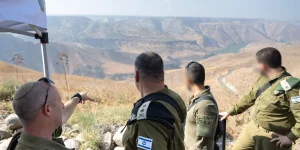
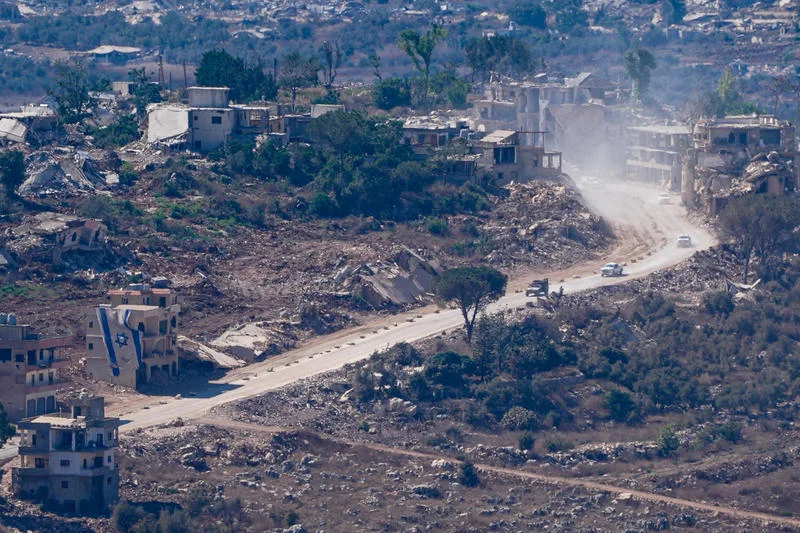
In the meantime, the IDF is in no hurry to leave southern Lebanon, as it continues to confront Hezbollah forces within the area.
The IDF is still operating in the Ali Taher ridge, where a group of Hezbollah fighters are reportedly still trapped in underground Hezbollah installations.
Hezbollah operatives in that area launched two explosive drones at IDF soldiers overnight on Tuesday. One drone was intercepted, and the other fell to the ground without endangering the soldiers, the IDF said in a statement on Thursday morning.
Hezbollah launched two explosive-laden drones at Israeli troops operating at the Ali Taher Ridge in southern Lebanon overnight, prompting strikes on the terror group's infrastructure in the area, the military says.
— Emanuel (Mannie) Fabian (@manniefabian) September 2, 2026
According to the IDF, one of the drones was shot down by the… pic.twitter.com/ERz2Y5LuMp
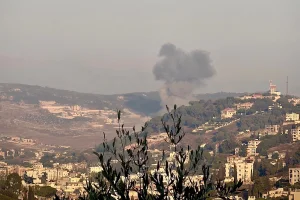
The IDF responded by striking Hezbollah targets in the Nabatieh area of southern Lebanon.
The military also announced the destruction of over 26 km (16 miles) of Hezbollah tunnels in southern Lebanon since the start of the most recent Lebanon ceasefire.
יותר מ-26 קילומטרים של תוואים נוטרלו על ידי כוחות החטיבה הצפונית ויהל"ם מתחילת הפסקת האש: צפו בתיעוד מהשמדת תוואי תת-קרקעי נוסף
— צבא ההגנה לישראל (@idfonline) September 2, 2026
לכל הפרטים>>https://t.co/iCsRURvwR9 pic.twitter.com/e2mm6EObgr
On Sunday, the Alma Research and Education Center in northern Israel released a report detailing Hezbollah’s transformation into a decentralized guerrilla fighting force after the losses it suffered at the hands of Israel in the past three years.
Alma assesses that Hezbollah has been forced to change strategies, focusing on “a prolonged, low-intensity war.”
It says the group has adopted a model based on “guerrilla warfare, small cells, localized infiltrations, explosive charges, drones, and dispersed rocket fire intended to preserve continuity of combat.”
In this model, small terror cells and FPV drones represent the core of Hezbollah’s confrontation strategy going forward.
The IDF, meanwhile, is employing a variety of counter measures against the drone threat, as it works on a long-term solution.
Support our independent, on-the-ground reporting from Israel. Become a $5/month Ally.

You might also like to read this: