Israel strikes Hezbollah after drone attacks, warns US that Lebanon ‘pilot’ is about to fail
No injuries among IDF after Hezbollah launches two explosive drones





Israel sees the pilot program in southern Lebanon, under which the Lebanese army would deploy in designated areas and clear them of any Hezbollah presence, as having failed, Walla News reported on Thursday.
The report came as the terror group launched drone attacks at Israeli forces overnight and the Israeli military responded with airstrikes throughout Thursday.
The pilot framework was agreed upon after months of negotiations between Jerusalem and Beirut under American mediation. The pilot zones were supposed to prove the Lebanese Armed Forces’ (LAF) ability to operate effectively against the terror group, as a first step toward a full Israeli withdrawal and the LAF’s deployment throughout all of southern Lebanon.
However, Israeli security officials warned that the “Lebanese Army is not destroying terror infrastructure based on the coordinates provided to it by the IDF, while at the same time requesting more coordinates, even though it is not doing anything about it,” according to Walla.
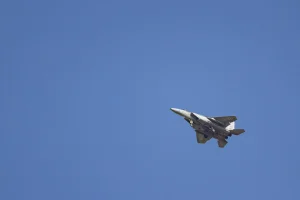
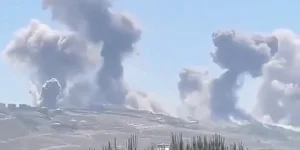
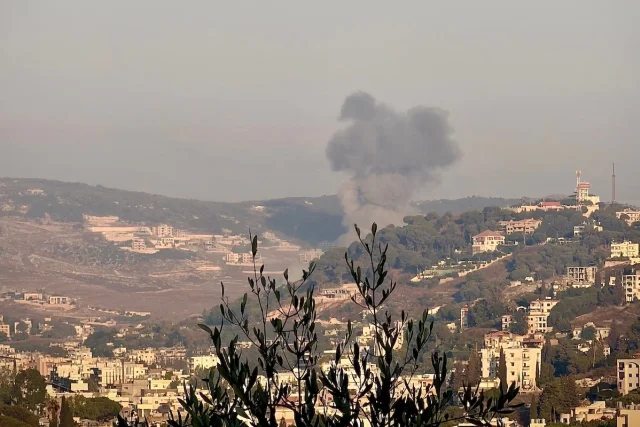
The IDF says it carried out a series of strikes on Hezbollah infrastructure in the Nabatieh area of southern Lebanon, following last night's drone attack by the terror group on troops.
— Emanuel (Mannie) Fabian (@manniefabian) August 27, 2026
The targets included sites used to store weapons that Hezbollah intended to use in attacks on… pic.twitter.com/VJqVhnPI6o
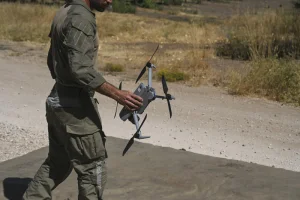
In addition, clashes between Hezbollah and the Israel Defense Forces (IDF) have broken out after weeks of relative quiet. On Thursday morning, the IDF reported that Hezbollah had launched two explosive drones at troops operating at the Ali al-Taher Ridge overnight.
The area has been a hotspot of friction in recent weeks, as the IDF estimates that up to several dozen Hezbollah operatives remain trapped in underground tunnels there. According to Al Arabiya, these also include dozens of Iranian officers.
The ceasefire has prevented the Israeli army from taking drastic action against them; however, clashes that broke out during attempts to flee from the underground fortress, or to resupply it, cost the lives of five IDF soldiers and wounded 20, while over 20 Hezbollah operatives were killed.
In the latest of these incidents, Hezbollah launched two explosive drones at the troops. “IDF soldiers opened fire and downed one of the drones, while contact was lost with the second drone. No IDF injuries were reported,” the Israeli military stated.
In response, the IDF “struck Hezbollah infrastructure in the Nabatiyeh area,” including “weapon storage facilities.”
Meanwhile, the United States has continued efforts to keep diplomatic relations between Beirut and Jerusalem alive, with Washington mediating talks aimed at preventing further escalation and advancing a longer-term security arrangement. On Thursday, U.S. Ambassador to Lebanon Michel Issa stated that the Lebanese people “are unanimous about Hezbollah's disarmament. Everyone might prefer a specific way to achieve this, but ultimately, it is essential that the group hand over its arms directly to the Lebanese state.”
Issa's comments came after a meeting with the spiritual head of the Druze community in Lebanon, Sheikh Sami Abi Al-Muna. “Thus, Hezbollah must hand over its arms to the state,” added Issa. “We want it to hand over its weapons – we ask for nothing more than that.”
However, according to statements by senior IDF officials to Walla, the LAF chief Rodolphe Haykal himself is hampering these efforts.
“The Lebanese army chief of staff is not going above and beyond. There is no real enforcement. The Lebanese Army is more focused on coordination,” an official said. “It is clear that Israel is not satisfied, and therefore it is not rushing to agree on additional pilot areas.”
“There is no real friction between the Lebanese Army and Hezbollah. Hezbollah would not want anyone to collect its weapons or destroy its infrastructure,” an official added. As an example, he revealed that at one point LAF troops “entered the underground opening a few meters, turned around and left. They did not dare to go inside. We assess that they will not deal with anything. Despite this, they insist on receiving more coordinates.”
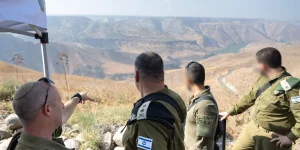
Also on Thursday, IDF Chief of Staff Lt.-Gen. Eyal Zamir affirmed that the IDF remains ready to address challenges on all fronts, including Lebanon.
“We are advancing operational procedures across all fronts, from Iran to Lebanon to Gaza, and remain on high alert in accordance with the sensitive multi-front situation…The IDF, across all of its arrays, will maintain full, multi-front readiness throughout the holiday period – there will be no reduction in operational forces,” Zamir asserted.
You might also like to read this: