Hezbollah chief rejects US-backed Israel-Lebanon deal, vows 'we will not surrender’





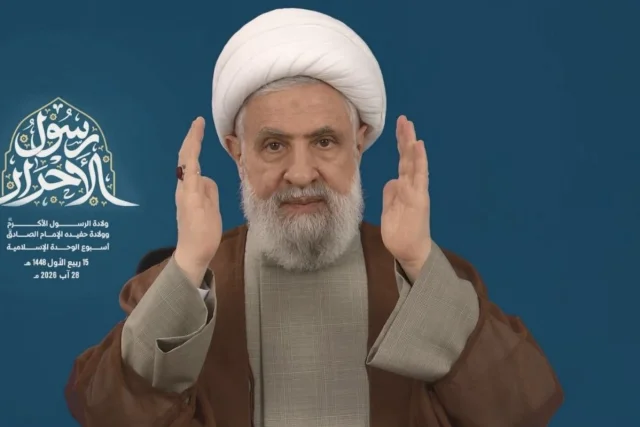
The head of the Iranian-backed Hezbollah terrorist group repeated on Friday his strong opposition to U.S. diplomatic efforts to reach a deal between Lebanon and Israel.
“We are against the framework agreement and call for its downfall,” Hezbollah chief Naim Qassem said during a televised address on the Al-Manar TV channel. “The framework agreement is illegitimate, unlawful, humiliating, destructive to Lebanese sovereignty.”
Qassem continued, “We do not agree to the ‘pilot zones’ or to what comes from them,” referring to a mechanism in the proposed agreement that links Lebanese sovereignty to the Lebanese Armed Forces' ability to take control of designated areas vacated by Israeli forces in coordination with the Trump administration.
“We will keep our heads high and we will not surrender,” Qassem vowed.
In June, Israel and Lebanon signed a U.S.-backed trilateral agreement linking the withdrawal of Israeli forces from southern Lebanon to the disarmament of Hezbollah. However, the terrorist group has refused to disarm.
Qassem reiterated on Friday that Hezbollah would not surrender, roughly six months after the group launched a new attack on Israel amid U.S.-Israeli military strikes against Iran. Tehran ordered the Hezbollah attack, which was allegedly opposed by the Lebanese government. In an unprecedented move, Beirut subsequently outlawed Hezbollah’s military activities in Lebanon and accused the group of dragging the country into a war against its will.
Hezbollah began attacking Israel on Oct. 8, 2023, a day after the Hamas massacre, and Israel launched a major offensive against the group in 2024, killing much of its leadership, including longtime leader Hassan Nasrallah. A U.S.-brokered ceasefire took effect in November 2024 but collapsed in March 2025 after Hezbollah resumed attacks.
Despite the latest diplomatic efforts, Hezbollah continues to reject the framework’s requirement that it surrender its weapons. Israel has maintained that its forces will remain in southern Lebanon until the group is disarmed and can no longer threaten Israeli communities along the northern border.
Last month, the Lebanese army deployed forces to the first pilot zone under the U.S.-backed agreement with Israel. However, the Lebanese government has so far been unable or unwilling to prevent Hezbollah operatives from launching attacks against Israel from Lebanese territory.
Following brief talks between Lebanese and Israeli officials in Rome, an unnamed Lebanese source told AFP that the two sides had agreed on a “shortlist” of countries that could potentially oversee implementation of the pilot-zone process and the disarmament of Hezbollah’s military capabilities.
You might also like to read this: