Israeli midwife brings postpartum care to moms at home through Bambeloo program



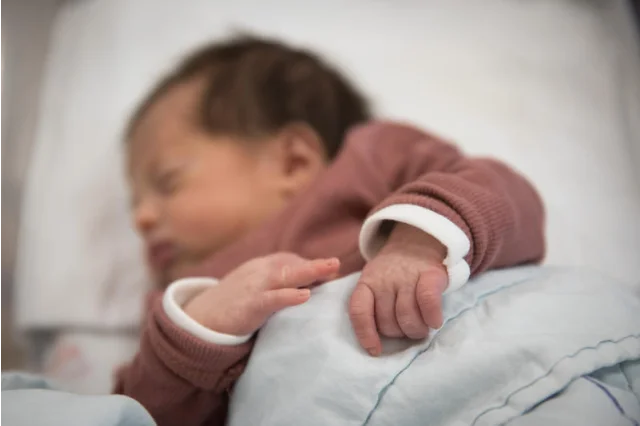
For many new mothers, leaving the hospital with a newborn marks the beginning of an exciting new chapter in life, but it can also be jarring when the hospital's intensive support suddenly stops. In Israel, that transition is especially difficult as the country continues to grapple with widespread trauma and heightened rates of post-traumatic stress disorder (PTSD).
Israeli believer and midwife Naomi Jones wants to change that.
After 17 years as a midwife at Hadassah Ein Kerem Hospital in Jerusalem, Jones launched Bambeloo, a postpartum support program that follows women from the delivery room into their homes shortly after discharge.
"I'm at their birth and then immediately coming to their home," Jones told ALL ISRAEL NEWS.
A typical package includes two to three home visits – the first taking place soon after the mother returns home – along with Zoom consultations, ongoing access to Jones via WhatsApp, and a week's worth of meals delivered to the door.
The idea for Bambeloo grew out of her years teaching childbirth classes and her familiarity with postpartum care in the Netherlands, where her parents are from.
"In the Netherlands, the woman gets support after birth," she said, explaining why she wanted a similar model in Israel. "No one prepared us for what it's like after you give birth."
Jones is deputy head nurse of the delivery room at Hadassah Ein Kerem in Jerusalem, where more than 1,000 deliveries take place each month across a team of some 130 midwives – a different setup than American labor and delivery nurses are used to; Israeli midwives typically manage two or three laboring women at once and doctors are only brought in for surgeries and emergency situations.
Still, Jones wanted to extend that care beyond the hospital walls. "There's no perfect timing," she said, describing the challenge of launching a new initiative on top of her hospital workload.
She pitched the idea to Israel Firstfruits Center for Economic Development (IFC), a non-governmental organization that serves believers in Israel – Messianic Jews, Arab Christians and Gentiles – who feel called to the marketplace, particularly business leaders and entrepreneurs. After attending the IFC business course and entering the annual business competition in 2021, she won first prize. From there, and with support from the organization, she began developing Bambeloo. The program has since reached at least 50 women.
Following the Hamas attack in southern Israel on Oct. 7, 2023, one of Jones’ initial goals was to support families affected by the war, particularly women whose husbands were away serving in the Israeli army. "I want to do my part for those families whose husbands are away during the war," she said.
Jones has since partnered with the International Christian Embassy Jerusalem (ICEJ), which subsidized the program for four to five war-affected couples a month for six months. Jones is now evaluating how to continue that support and even expand it.
"The WhatsApp support has been priceless," she said. "I like being there when they need me the most."
She has also used Zoom to provide remote support and guidance. In one case, Jones spent two hours on a video call helping a mother whose newborn was having difficulty latching. “That was enough to provide the mother with confidence and reassurance that she was doing the right thing for her baby," Jones said.
In another case, an ambulance was called by an anxious mother after her newborn's breathing seemed irregular – it turned out to be normal. Jones believes that a home visit or a video call to provide education on normal breathing patterns for babies could have spared the family an unnecessary trip to the emergency room.
Supporting mothers through trauma
Jones sees Bambeloo as more than a postpartum follow-up service. She wants the home visits to provide an additional layer of emotional support for women who have experienced trauma – a focus shaped in part by classes she is currently taking in "Birth Oriented Thinking," which covers birth processing and trauma-oriented care.
This has become especially important during the war. Jones described one young woman who had lost her brother in Gaza and had also been exposed to Hamas-released footage from the Oct. 7 attack – experiences that continued to affect her after giving birth.
Another woman told Jones that trauma had left her physically and emotionally “locked up.”
"Her jaw locked from post-trauma. Because I'm so locked up from trauma, just knowing you were there is what I needed." Her experience was positive enough that she later reached out on behalf of her sister, then 17 weeks pregnant: "When can she call you?"
These encounters, Jones said, demonstrate why postpartum care should not stop after checking mother and baby for physical problems before sending them home.
Asked about premature births and early water breaking, Jones said the NICU is consistently full. She's also seen a sharp rise in SSRI (antidepressant medicine) and anti-anxiety medication use among new mothers – about one in three women are on one or both, she said. This has even reshaped hospital critical-care protocol for monitoring newborn breathing, as newborns would traditionally receive close observation and evaluation following delivery.
"Now it's so common, it would be nearly every birth needing a 24-hour observation protocol in the NICU, so we had to change things," she said.
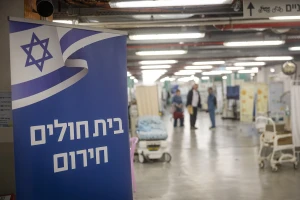
The war has also changed the environment in which women give birth. At Hadassah Ein Kerem, Jones described hearing air raid sirens mid-delivery while continuing to care for the women amid the threat of missile attacks.
"You would hear the alarm in the middle of a cesarean section, and we just continued with the surgery. With the Iran war, initially we went into the hallway, and women were laboring and pushing there." Reinforced walls have since changed that. "There's now special thick heavy metal completely protecting the outer walls, so it doesn't change anything for us. We can stay where we are," she explained.
In Beit Shemesh, she recalled a direct hit on a home that triggered a premature birth after shock waves caused the placenta to separate from the uterine wall.
Jones has also attended deliveries for Nova Festival survivors. "I had 2 deliveries of Nova survivors," she said. "One of them didn't do so well – she really struggled mentally and emotionally. Her partner left her and she was all alone. The meal delivery really helped her, so I requested a second round for her."
The meals, she noted, are healthy and formulated for postpartum moms, 10 main meals and 10 side dishes. "The other one is doing well from the emotional support she received through the government."
Jones' vision for Bambeloo extends far beyond Jerusalem. "I want it to be a nationwide network, subsidized by the state, for whoever wants, and to build up a brand so that the women can get help." She believes there's a significant gap in resources for Israeli women, noting, somewhat surprisingly, that "there's nothing in Hebrew available with all this information."
She also sees it as a way to address low salaries among public health professionals: "Public health salaries are so low, and this would help to subsidize and boost incomes. Only doctors get to do private health care in Israel."
For now, Jones continues to build her business while working full-time at Hadassah hospital.
Twelve years ago, Jones delivered a baby whose mother felt such a strong connection to her that she named her newborn daughter Naomi. The mother later decided to become a midwife herself.
Two weeks before this interview, that woman returned to the hospital to help a friend deliver her baby, and Jones was there; she invited her to join Bambeloo's postpartum visits.
"She's become one of my biggest supporters of this initiative, and she's spreading the word and helping with posting on Instagram. She’s become a very close friend," she explained.
Jones says she doesn't know exactly where the initiative will lead, but she is passionate about new mothers receiving the care they need at such a critical time in their recovery: "I'm letting God open the doors and lead the way."
Donations to support Jones’ work through Bambeloo can be made here via the ICEJ with a memo indicating the funds are for that initiative.
You might also like to read this: