$12 billion and counting: US Congress grapples with the rising cost of the Iran War


When it comes to military operations against the Iranian Regime, the U.S. Congress is getting closer to allocating more money for the conflict. The conversation on Capitol Hill is not just about debating strategy. It’s now about beginning to grapple with what it could cost.
Behind the scenes, discussions are quietly ramping up around a potential supplemental funding package tied to the ongoing conflict involving Iran. Nothing formal has been introduced yet, but early framework conversations are happening among leadership and key committee members.
“It’s likely that this will be part of a reconciliation package that Congress tries to get across the finish line sometime between now and this summer, Congressman Michael Guest told ALL ISRAEL NEWS. “As leadership is meeting, they're trying to put together those pieces.”
“I'm hearing figures that are all over the place,” Guest continued. “Until we actually get some good information from the administration or the Pentagon can give us good numbers on what they need going forward, we're kind of just going to be shooting in the dark.”
The tone, for now, is measured. Lawmakers in both parties are choosing their words carefully, aware that even talking about more funding can signal a deeper level of commitment. No one is eager to get ahead of the facts on the ground – but no one wants to be unprepared either.
Senator Roger Wicker, the top Republican on the Senate Armed Services Committee, struck that balance recently, saying, “We’re not writing a blank check, but we also can’t ignore the reality of what’s unfolding.”
Democrats are inching their way forward as well, but more cautiously. Senator Jack Reed, the committee’s Democratic chairman, has emphasized that any additional funding must come with clear parameters, saying Congress needs “a defined mission and an understanding of the limits of engagement.”
The reality is that when it comes to money and sweat equity, Iraq and Afghanistan still loom large over any discussion of new military funding. Lawmakers know the political and public appetite for prolonged overseas involvement is far more limited than it once was.
That reality is shaping how members talk about the potential scope of any funding package. You’re hearing phrases like “targeted,” “temporary,” and “mission-specific.” Senator Rand Paul put it bluntly: “There’s no appetite in this country for another endless war, and Congress shouldn’t pretend otherwise.”
Still, money for the war effort will likely continue to dwindle if operations expand. Pentagon officials have begun signaling that additional resources could be needed if the pace or scope of military activity increases. And that’s where supplemental funding comes into play.
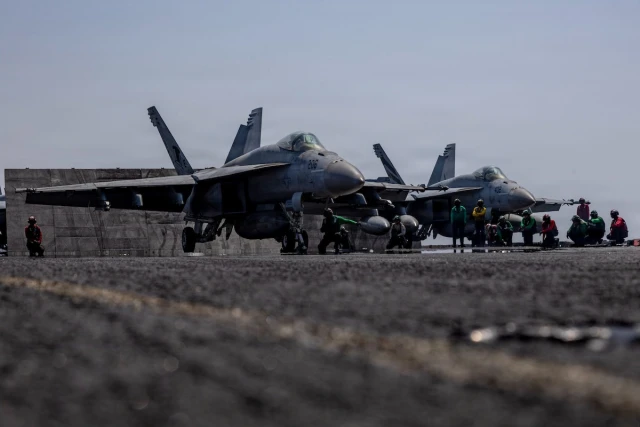
The latest estimates show that the U.S. has already spent roughly $8 to $12 billion on military operations tied to the Iran conflict, including naval deployments, precision strikes, air defense systems, and intelligence support across the region. That number is expected to climb quickly if operations continue at the current tempo.
Congress will be looking to make sure transparency is a top priority if and when more money is spent. “If we’re going to spend more, the American people deserve to know exactly what it’s going toward,” said Democratic Senator Chris Murphy.
Of course, the most politically sensitive pressure point is coming from within the Republican Party itself – specifically from lawmakers aligned with the MAGA movement. They’re very cautious about supplemental funding and are getting pressure to resist from former MAGA members of Congress.
“The American people do not want another foreign war,” says former Congresswoman Marjorie Taylor Greene, who has been one of the most outspoken voices warning against deeper involvement and additional spending.
Former MAGA star and congressman Matt Gaetz is echoing that same sentiment. “Congress needs to stop writing blank checks for foreign conflicts,” Gaetz said. “We need to focus on America first.”
There’s also a strategic question about timing. Does Congress wait for a formal request from the administration, or begin shaping the contours of a package now? Traditionally, the White House takes the lead on these supplemental requests – but lawmakers seem interested in being more proactive this time around.
House Speaker Mike Johnson has signaled that the House is watching closely, saying recently that Congress must be “ready to act if circumstances require it.” It’s not a commitment – but rather an indication that leadership is thinking ahead.
Right now, though, there’s a lot of uncertainty. No one knows exactly how the situation with Iran will evolve. And that makes it difficult to define what a funding package should look like, or how large it should be.
For the time being, these discussions are being played out more in private rather than in public. There's no signature legislation yet or any floor debate dominating headlines. But the groundwork is being laid in committee rooms and leadership offices.
When a supplemental funding bill does emerge, it’s likely to move quickly. But at this point, lawmakers are far more interested in gauging what voters in their district have to say at home and what military leaders have to say to them in classified briefings.
At some point, though, the central question will be as follows: if the conflict with Iran continues or expands, how far is Congress willing to go – not just in words, but in dollars?
You might also like to read this: