Western nations largely express ‘concern’ but offer only lukewarm support for US-Israeli strikes in Iran; surprising backing from Australia & Canada
Israel's FM Sa'ar holds 'marathon of calls with foreign ministers around the world'



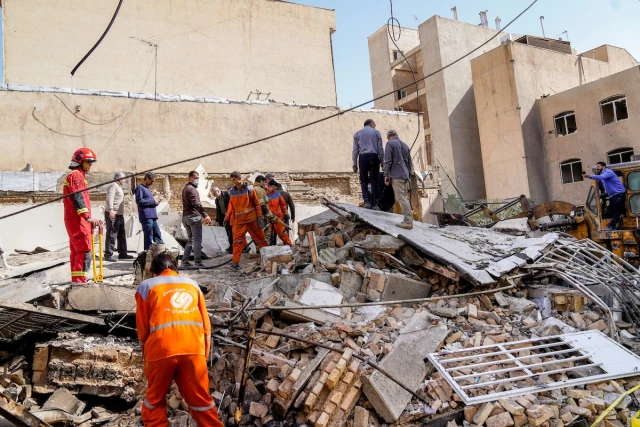
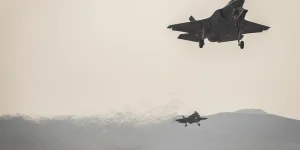
Diplomatic reactions to the joint U.S.-Israeli strikes against the Iranian regime on Saturday largely met expectations, with Western nations expressing lukewarm support while urging all parties to adhere to international law.
Meanwhile, America's rival powers, China and Russia – as well as several left-wing governments – strongly condemned the strikes.
Notably, the Arab nations in the region, most of which came under Iranian missile fire and suffered significant hits on Saturday, condemned the “Iranian aggression clearly and unequivocally,” according to ALL ISRAEL NEWS Editor-in-Chief Joel Rosenberg.
Here follows an overview of the responses by various nations to the historic events on Saturday:
Iran
Foreign Minister Abbas Araghchi wrote on 𝕏 : “Netanyahu and Trump's war on Iran is wholly unprovoked, illegal, and illegitimate. Trump has turned 'America First' into 'Israel First' – which always means 'America Last.' Our Powerful Armed Forces are prepared for this day and will teach the aggressors the lesson they deserve.”
Israel
Foreign Minister Gideon Sa’ar’s office said he was conducting “a marathon of calls with foreign ministers around the world to brief them on the security cabinet’s decision and the objectives of the military operation.”
Sa’ar held phone calls with the foreign ministers of Germany, India, Italy, Hungary, the Czech Republic, Latvia, the European Union, France, Canada, and Australia, as well as Greece, Ethiopia, Singapore, and North Macedonia, his office said.
In a statement, Sa’ar praised the strikes as “the only correct decision for Israel's security and the future of our people,” noting, “Refraining from action would have been immeasurably more dangerous than the decision to act, the risks involved in which must not be taken lightly.”
United Nations
Secretary-General António Guterres condemned the “military escalation in the Middle East,” claiming that “the use of force by the United States & Israel against Iran, and the subsequent retaliation by Iran across the region, undermine international peace & security.”
He added that the UN Charter “clearly prohibits ‘the threat of the use of force against the territorial integrity or political independence of any state,’” calling for “an immediate cessation of hostilities & de-escalation.”
Volker Turk, UN High Commissioner for Human Rights and, like Guterres, a vociferous critic of Israel, said he “deplored” the U.S.-Israeli strikes and “the subsequent retaliatory strikes by Iran.”
“As always, in any armed conflict, it is civilians who end up paying the ultimate price,” he added.
UK, France and Germany
The E3 nations said in a joint statement that they “have consistently urged the Iranian regime to end Iran’s nuclear program, curb its ballistic missile program, refrain from its destabilizing activity in the region and our homelands, and to cease the appalling violence and repression against its own people.”
They noted that they “did not participate in these strikes, but are in close contact with our international partners, including the United States, Israel, and partners in the region… We condemn Iranian attacks on countries in the region in the strongest terms. Iran must refrain from indiscriminate military strikes. We call for a resumption of negotiations and urge the Iranian leadership to seek a negotiated solution. Ultimately, the Iranian people must be allowed to determine their future.”
Australia and Canada
In a somewhat surprising twist, the governments of Australia and Canada, which have been critical of the Trump administration and Israel, published statements supporting the U.S. strikes.
“We support the United States acting to prevent Iran from obtaining a nuclear weapon and to prevent Iran continuing to threaten international peace and security,” said Australian Prime Minister Anthony Albanese.
“Australia stands with the brave people of Iran in their struggle against oppression. For decades, the Iranian regime has been a destabilising force, through its ballistic missile and nuclear programs, support for armed proxies, and brutal acts of violence and intimidation,” he added, noting, “Iran directed at least two attacks on Australian soil in 2024.”
Canadian Prime Minister Mark Carney stated his government is clear that Iran “is the principal source of instability and terror throughout the Middle East, has one of the world’s worst human rights records, and must never be allowed to obtain or develop nuclear weapons.”
“Canada reaffirms Israel’s right to defend itself and to ensure the security of its people. Canada supports the United States acting to prevent Iran from obtaining a nuclear weapon and to prevent its regime from further threatening international peace and security.”
Spain
Among the first to criticize the strikes was Spain’s prime minister, Pedro Sanchez, the foremost critic of Israel in Europe over the past few years.
“We reject the unilateral military action by the United States and Israel, which represents an escalation and contributes to a more uncertain and hostile international order,” he said, adding that Spain “likewise reject(s) the actions of the Iranian regime and the Revolutionary Guard… We demand immediate de-escalation and full respect for international law.”
China
The People’s Republic, which is among Iran’s most important trade partners, said it was “highly concerned over the military strikes against Iran launched by the U.S. and Israel,” adding that its “sovereignty, security and territorial integrity should be respected. China calls for an immediate stop of the military actions, no further escalation of the tense situation, resumption of dialogue and negotiation, and efforts to uphold peace and stability in the Middle East.”
Russia
Russia’s Foreign Ministry criticized the “reckless step” by the U.S. and Israeli forces, calling it a “deliberate, premeditated, and unprovoked act of armed aggression against a sovereign and independent UN member state, in direct violation of the fundamental principles and norms of international law.”
“Washington and Tel Aviv have once again embarked on a perilous course that is swiftly pushing the region toward a humanitarian, economic, and potentially even radiological disaster,” the statement added, claiming they intended to “dismantle the constitutional order and remove the leadership of a state they deem undesirable because it has refused to yield to the dictates of force and hegemonic pressure.”
Several other states criticized the U.S. and Israel, including Cuba and Colombia.
Strong support for Israel came from Albania, whose prime minister, Edi Rama, visited the Jewish state earlier this year. Albania “stand(s) firm with Israel” and “support(s) the United States” in their actions, he said, adding, “We fully endorse every decisive effort to prevent once and for all the murderers in Tehran from acquiring nuclear or any other military capacity to harm Israel or any other peace-loving nation in the Middle East.”
You might also like to read this: