The legacy of Nobel-winning scientist Ada Yonath, a byword for genius in Israel




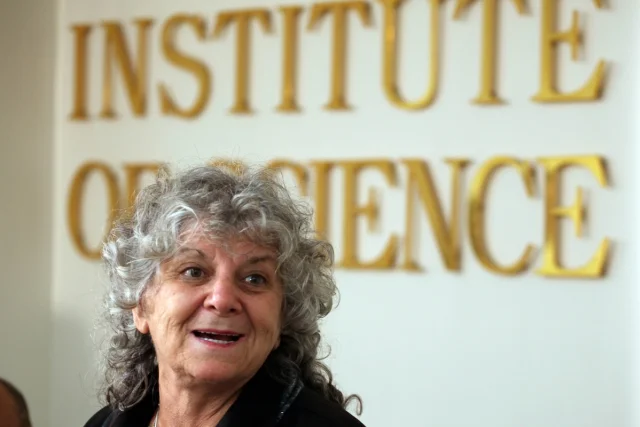
In Israel, the name Ada Yonath is similar to invoking Einstein. Prof. Yonath was awarded the Nobel Prize in Chemistry in 2009, the first woman to do so in 45 years. She became a household name, inspiring a generation of girls to aspire to greatness before her death at the age of 87 two days ago.
Yonath was a pioneering researcher in the field of ribosomes, microscopic particles within cells that help produce proteins. Her innovative work and new techniques helped advance the science of antibiotics, opening possibilities many considered inconceivable.
Like many girls, Yonath was inspired by the work of Marie Curie, whose research on radioactivity opened the field of cancer treatment and led to her becoming the first woman to win a Nobel Prize in 1903. Though she specified that Curie was not her role model as such, Yonath said she was both fascinated and inspired by reading Curie’s biography for the first time.
Born in Jerusalem in 1939 before the State of Israel was established, Yonath grew up in Geula, now an ultra-Orthodox neighborhood just north of the Old City. Her father was a rabbi and her family ran a grocery store, but after her father died when she was just 11 years old, they struggled to make ends meet.
Unable to afford school, she began offering math tuition to raise funds to continue studying.
She went on to study chemistry at Hebrew University and graduated in 1962 before pursuing a master’s degree in biochemistry two years later, followed by a doctorate in 1968 from the Weizmann Institute of Science, where she would later become an institute professor.
Yonath’s career took her to prestigious institutions, including MIT in the United States and others in Germany, before she returned to Israel and established the country’s first and only protein crystallography laboratory.
It was there she carried out her groundbreaking research, once again succeeding despite considerable odds.
The scientific journal Vigyan 2047 highlighted her significant accomplishments in an article focused on women in the Nobel Prize, commending her overcoming spirit.
“It is the courage to pursue an idea that the entire scientific establishment considers impossible, to work year after year in the face of ridicule and skepticism, and to remain absolutely convinced that you are right when virtually everyone else is equally convinced that you are wrong.”
There are typically thousands of ribosomes in each cell, described in Encyclopedia Britannica as “the sites at which information carried in the genetic code is converted into protein molecules.”
In 1980, Yonath became the first person to discover the three-dimensional atomic arrangement of a large ribosomal subunit.
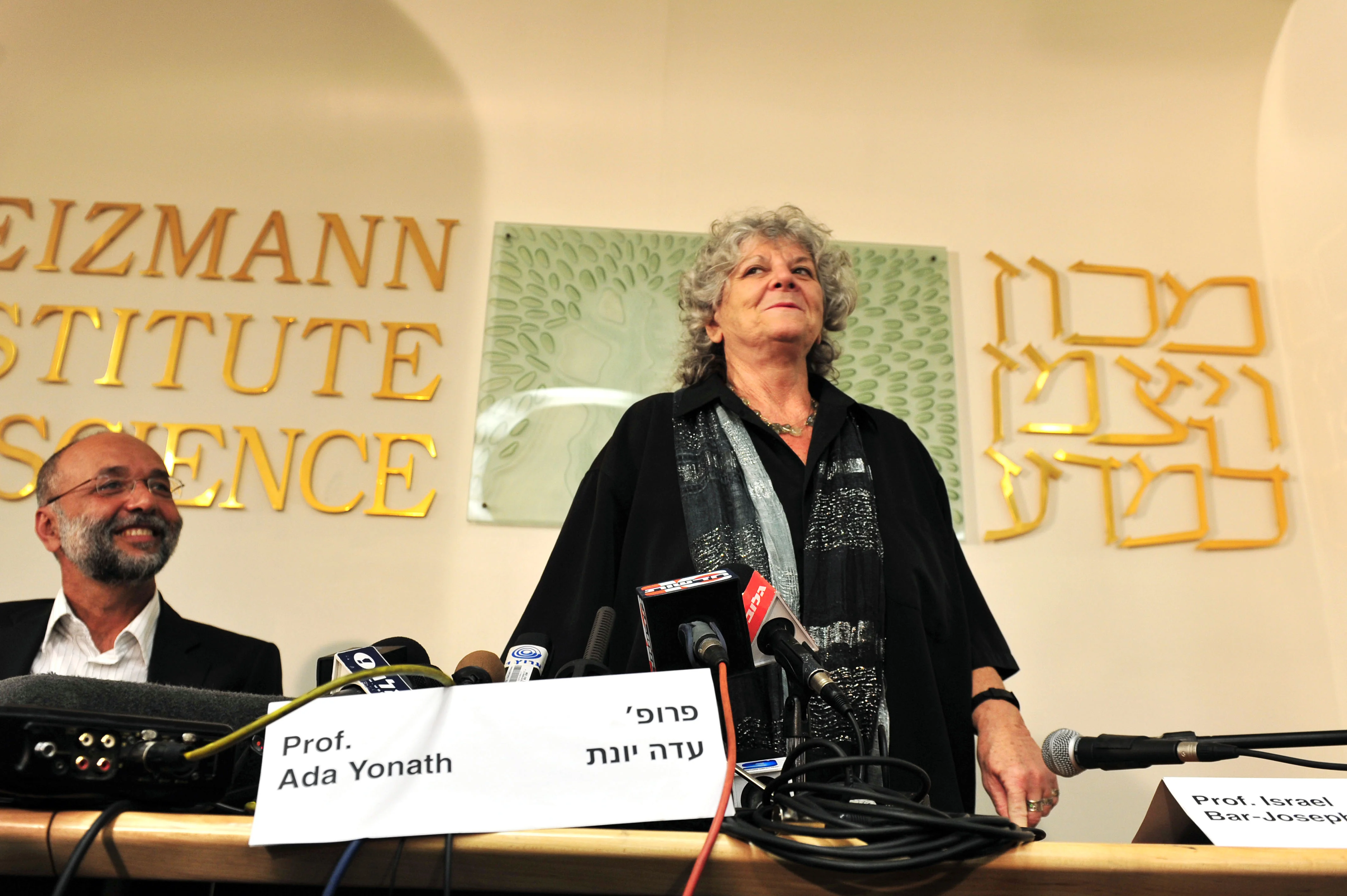
In addition to the Nobel Prize, Yonath received many other awards throughout her life, such as the Israel Prize for Chemistry in 2002, the Louisa Gross Horwitz Prize for Biology or Biochemistry in 2005, and the Albert Einstein World Award of Science in 2008, to name a few.
Her colleagues at the Weizmann Institute paid tribute to her life and work with the following statement: “Professor Yonath is an example and a role model for how scientific vision, courage in choosing a great scientific question, and dedication to a goal can lead to tremendous success and expand the boundaries of knowledge for the future of all humanity. May her memory be a blessing.”
The President of the Institute, Prof. Alon Chen, added his own words: "Ada was an exceptional scientist who never hesitated to choose a path that others considered impossible and to pursue it for decades with determination, curiosity and courage. Her breakthrough in the study of the ribosome transformed our understanding of one of life’s most fundamental processes and opened up new possibilities for combating antibiotic resistance."
Not only was Yonath the first Israeli woman to win the Nobel Prize among Israel's 10 Nobel laureates, but she was also the first woman from the entire Middle East to win a Nobel Prize in the sciences.
"Ada’s legacy extends far beyond her scientific achievements. She showed generations of scientists what can be accomplished when one dares to ask big questions and persists in the search for answers,” Prof. Chen continued.
“Ada was an Institute Professor – the highest title the Weizmann Institute bestows on a select group of outstanding scientists – and she continued to conduct research and publish papers, run an active laboratory and maintain scientific collaborations until the very last days of her life."
Support our independent, on-the-ground reporting from Israel. Become a $5/month Ally.

You might also like to read this: