








The gypsies of Jerusalem: Who are the Domari people?
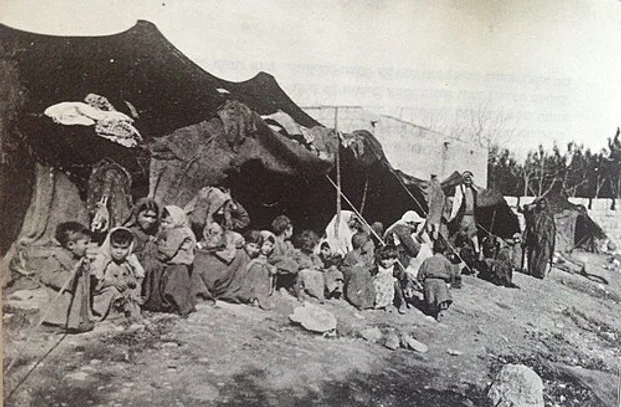
When you think of gypsies, not many will think of India and fewer still would think of Jerusalem, yet Domari gypsies originate from India and have been living here for centuries. How did they end up in Israel?
While the Roma people left India around 400 years ago, heading to Europe and beyond, the Domari left around a hundred years prior to that and settled in the Middle East. Today there are well over two million Domari gypsies living in the region, with some 10,000 in Israel and Judea and Samaria (internationally known as the West Bank), according to the Joshua Project.
Unlike the Romani people who are a distinct yet related people group, the Domari of the Middle East are more than happy to claim the name “gypsies.” The term can have negative connotations which the Roma are generally eager to avoid, but the Domari wear the label with pride.
Perhaps it is fitting since the origin of the word “gypsy” originally stems from the word “Egyptian,” and there might be more connection to the Middle East than is first apparent.
The name Domari comes from a Sanskrit word डोम (Doma), which refers to a sub-group of the Dalit caste of India. The Dom people were historically known as traveling singers and dancers and were largely able to make a living from these arts. q
However, like their European counterparts, the Domaris have often ended up as victims of social exclusion, which regrettably remains the case in Jerusalem today.
Being neither Jewish nor Palestinian, Domaris are not enthusiastically embraced by either, and the community in Jerusalem has been marginalized, leading to poverty and disadvantage on several scales of measurement.
Yet sometimes ostracization can lead to interesting places. The Gitani gypsies who settled in Spain found themselves banding together with Sephardic Jews and Moorish Muslims who were also experiencing oppression at the hands of the church in Catholic Andalucia. The rich cultural mix led to exciting fusions of cuisine, music and dancing, with flamenco being a direct result of the combination.
Some believe that gypsies may even be descended from one of the lost tribes of Israel, as they set themselves apart even as they experienced societal rejection in Indian society. To this day gypsies have a strict hygiene code similar to the Levitical concept of ritual cleanliness, and describe other people groups as “gorja,” possibly with roots back to the Hebrew word “goy” for a Gentile nation.
During the Holocaust, Hitler lumped gypsies together with Jews for extermination, and like the people of Israel, gypsies have always been castigated as wanderers.
Additionally, it seems Jews were also often mistaken for Egyptians. This can be seen in Josephus, Antiquities of the Jews II, Ch VII,4, where the historian goes to great lengths to explain that their origins were from Mesopotamia, refuting suggestions of Egyptian heritage:
“I think it necessary to mention those names; that I may disprove such as believe that we came originally not out of Mesopotamia, but are Egyptians,” he insisted.
However, the true origins of the Domari are hard to pin down as their history has not been documented and mostly relies upon folklore and conjecture.
Muhammad Deeb Sleem, the mukhtar, or head of the Jerusalem Gypsy community, relayed their origin stories to researcher Jennifer Peterson, author of The Last Migration? Jerusalem’s Gypsy Community.
In one of their folktales, the king of Iran heard of the Domari people and asked the ruler of northern India to send a few families of these gypsies who loved to dance and sing. However, despite the king’s best efforts to educate them in agriculture, the Domari were reluctant to leave their lives of singing and dancing.
The failed experiment frustrated the king, and he expelled them from Iran, pushing them towards the Levant where they live today.
“This particular legend has a well-established oral and written tradition, being recorded first by the tenth-century Persian historian Hamza Isfahani,” she documented.
A second story describes Domaris as “Arabs who fled to India in the wake of a blood feud between the two Dom tribes,” according to Peterson.
“This story then merges with the above legend, when Sleem says the Gypsies later returned to Arab lands with Salah Al Din’s [Saladin] army. While there seems to be very little historical truth to this tale, the story indicates a need to reconcile the Indian origin of the Gypsies with their long-established Arab identity,” she explains.
Today the Domari live in close quarters with both Jews and Arabs in Jerusalem, although for most of their time in Israel they have preserved their own culture, language and traditions, keeping themselves somewhat separate as other gypsy communities tend to do elsewhere in the world.
Over the years, most of the Domari converted to Islam and a few to Christianity, although zealous adherents of those faiths would barely recognize the Domari versions, which include a lot of folk legends and beliefs.
While the community is spread across East Jerusalem, the Domari Center is found just north of Jerusalem near Pisgat Zev, beyond the Green Line. The cultural center exists to help preserve their heritage and culture, providing supplementary education, work opportunities and community activities.
Amoun Sleem, who runs the center, told ALL ISRAEL NEWS that their initiatives focus on women and children in particular, to improve their situation. Speaking while in the middle of a summer camp for the children, Amoun explained that the Domari community is “the most discriminated society — from both sides.”
“We are the last people who they will care about, and give attention, and give support,” she said, frustrated about the lack of opportunities available for her community.
While most Domari speak Arabic, older generations still speak the Domari language, though it is at risk of disappearing as the years pass. Many still hear the language at home and can understand it, but fluency is another thing.
“Actually, we made a booklet. It's not printed yet, but maybe in the future, we are able to teach it,” Sleem said, speaking of how to keep their dialect alive.
“We have the smallest community compared with all the other countries [in the Middle East]. Jordan has the biggest number of the Domari,” she explained. “They live as communities, close to each other, not like here, so many in the new generations speak fluently.”
A young boy from the children’s camp jumped up, kissed her head as she talked, then ran back to his activities.
“We always care about our neighbors; we offer hospitality, but the kindness that we usually give to others, we wish that we could receive back 1% of it, you know? For many, many years, for centuries, we are not treated kindly and fairly like other communities,” she said.
Popular article:
interview Easter message of resurrection hope amid war at Jerusalem's Garden Tomb
biblical commentary Let my people go: a Passover message for today

4 IDF soldiers killed, 2 wounded in fighting in southern Lebanon, as Israel eliminates dozens of Hezbollah terrorists

Receive latest news & updates
A message from All Israel News
Help us educate Christians on a daily basis about what is happening in Israel & the Middle East and why it matters.
For as little as $10, you can support ALL ISRAEL NEWS, a non-profit media organization that is supported by readers like you.
Latest articles:

North American Jewish organizations to recruit 100 professionals to combat antisemitism

‘No need’ for pre-election Iran strike, IDF chief says as gov’t, opposition trade blame for potential escalation – report

terror attack 2 Israeli soldiers killed, 2 terrorists eliminated in Hebron shooting; IDF says much larger attack was prevented

analysis A people dwelling securely? Israel’s strategic standing, 3 years after Oct 7

Hamas on wheels: What I found in Dearborn reveals a troubling history and a battle over Israel