all israel edu The breathtaking caves of Beit Guvrin in central Israel and their remarkable history
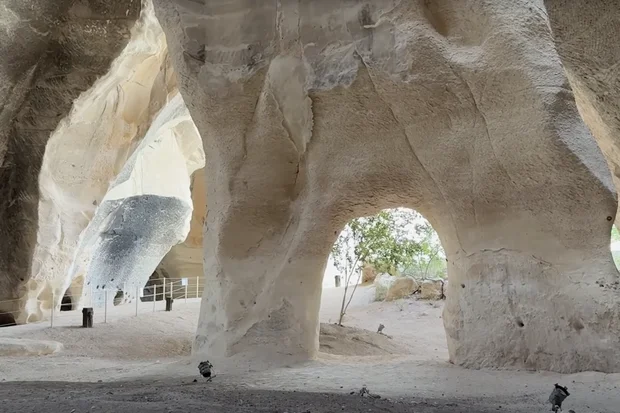
One of the most visually striking sites in Israel can be found at Beit Guvrin-Maresha National Park, also known as the “City of Caves.” The enormous bell-shaped formations carved back in the Iron Age stir wonder among visitors and locals alike, but no less fascinating is the history of the unusual site.
Beit Guvrin, also known by the name Maresha, is about half way between Jerusalem and Gaza City, about 30 miles southwest of Israel’s capital in the Judean lowlands. Today it is a UNESCO World Heritage Site – a carefully preserved underground wonderland of more than 800 bell-shaped caves.
Over 2,000 years ago, the caves were carved out of soft chalk rock that hardens when exposed to air, resulting in a stable, cool environment that is able to house entire communities.
In addition to being a personal name – for example, the father of Hebron from the tribe of Judah (1 Chronicles 2:3, 42) – the name “Maresha” or “Marissa” is also mentioned several times in the Bible in reference to the cave complex in the Judean lowlands.
In Joshua 15:44, Maresha is mentioned as one of the places allotted to the tribe of Judah, and it also appears multiple times in 2 Chronicles as one of the cities fortified by King Rehoboam around 1000 B.C., since it lies in a vulnerable geographic spot militarily.
Later in Micah 1, the prophet warns that God will bring destruction and exile upon the towns and villages of Israel, including Maresha, reminding the people that human defenses are no substitute for seeking refuge in God’s protection.
The name Mareshah comes from the Hebrew root word “rosh” meaning “head.” It can mean “crest of the hill,” possibly referring to the dome shapes at the top of the huge caves. The word can also be defined as the first, highest, or most important – a place of significance and value.
The alternate name “Beit Guvrin” means house of the mighty men, giving insight into some of the history of the place. The caves became a thriving city in the time of Greek rule in the 3rd century B.C., but Jewish rebels, led by Judah the Maccabee, conquered it during the reign of Antiochus IV.
According to Josephus: “But Judas and his brethren did not leave off fighting with the Idumeans, but pressed upon them on all sides, and took from them the city of Hebron, and demolished all its fortifications, and set all its towers on fire, and burnt the country of the foreigners, and the city Marissa [Mareshah]. They came also to Ashdod, and took it, and laid it waste, and took away a great deal of the spoils and prey that were in it, and returned to Judea” (Antiq. xii. 8, 6).
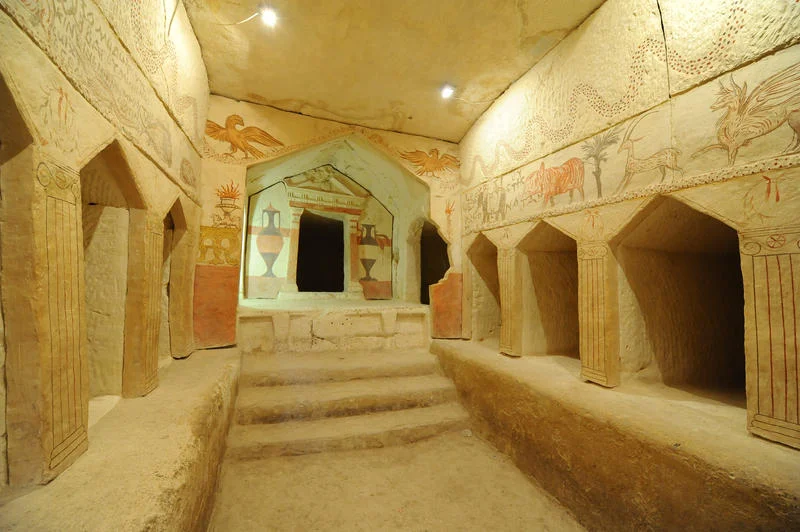
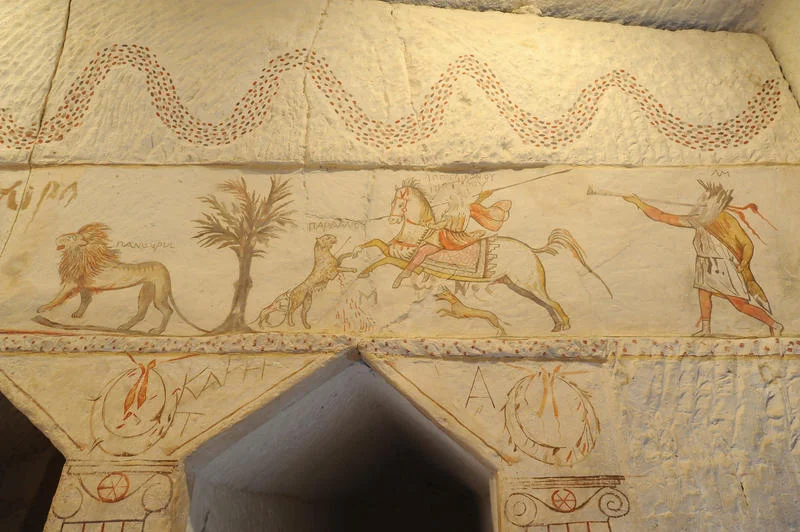
However, even though Beit Guvrin has seen plenty of war, destruction and conquest, the walls also tell a story of remarkable coexistence between peoples. When Israel was able to begin excavating after 1948, archaeologists found evidence of periods when Edomites, Phoenicians, Greeks, and Jews lived harmoniously in the underground city. Inscriptions have been found in Greek, Aramaic, and Hebrew, together with artifacts such as oil presses and burial chambers with intricate frescoes, along with ostraca bearing Aramaic and Greek names.
Later, the Romans expanded the already impressive complex, adding magnificent structures above ground while the underground city continued to develop below, renaming it Eleutheropolis – or “City of the Free.” The complex became the administrative center for the Roman province of Judea, and in Byzantine times, monks and hermits lived in the caves leaving Christian symbols and crosses carved into the walls.
Following the Muslim conquest of the land in the seventh century, the site was renamed Bet Jibrin, but had become all but forgotten by the time of the Crusades.
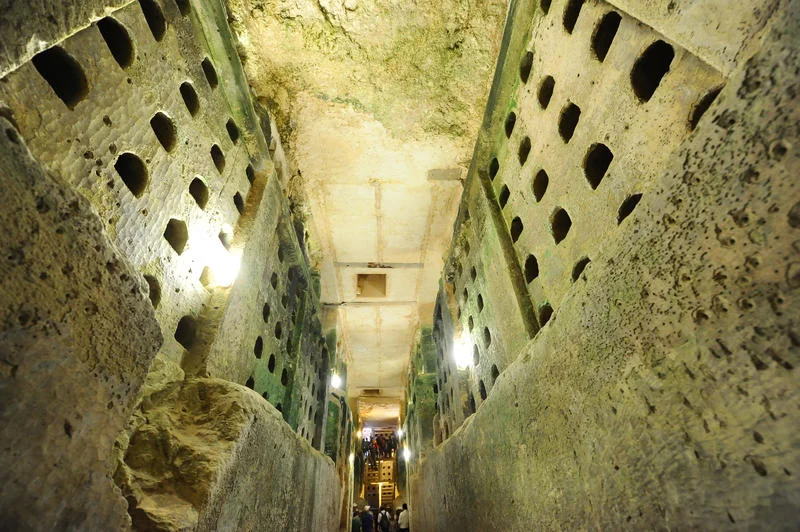
ALL ISRAEL NEWS correspondent Oriel Moran discovered that, today, the site has been restored and transformed into a wonderful experience for visitors. If the dramatic caves themselves are not enough, ancient oil presses and dovecotes are among the relics that have been carefully preserved and presented to the public, along with beautiful wall paintings which give a sense of daily life thousands of years ago.
The education center at the site provides visitors with insight into the ancient technologies, agricultural methods, and sophisticated engineering that allowed people to thrive in the desert caves. The center also includes the opportunity to “Dig for a Day” as part of the ongoing excavations, alongside professional archaeologists.
As part of a wider initiative being rolled out across many of Israel’s key tourist spots, such as the Tower of David and the Davidson Center, new video and high-tech displays demonstrate Israel’s historic multiculturalism and desire to live in harmony with other faiths and cultures. Beit Guvrin's high-tech displays highlight Israel’s historic multiculturalism, and the new exhibits showcase Israel’s hope for a more peaceful future.
Click here to visit the Beit Guvrin-Maresha National Park website for more information.
Is All Israel News’ faith-based reporting important to you? Be part of it – help us continue by becoming a $5/month supporting partner.
Popular article:

interview Easter message of resurrection hope amid war at Jerusalem's Garden Tomb

biblical commentary Let my people go: a Passover message for today

4 IDF soldiers killed, 2 wounded in fighting in southern Lebanon, as Israel eliminates dozens of Hezbollah terrorists

Receive latest news & updates
A message from All Israel News
Help us educate Christians on a daily basis about what is happening in Israel & the Middle East and why it matters.
For as little as $10, you can support ALL ISRAEL NEWS, a non-profit media organization that is supported by readers like you.
Latest articles:

all israel edu North American Jewish organizations to recruit 100 professionals to combat antisemitism

all israel edu ‘No need’ for pre-election Iran strike, IDF chief says as gov’t, opposition trade blame for potential escalation – report

terror attack 2 Israeli soldiers killed, 2 terrorists eliminated in Hebron shooting; IDF says much larger attack was prevented

analysis A people dwelling securely? Israel’s strategic standing, 3 years after Oct 7

all israel edu Hamas on wheels: What I found in Dearborn reveals a troubling history and a battle over Israel