Suspected Iranian-linked terrorists wanted to do ‘big damage’ to US airbase in UK, Trump says
Israeli journalist warns: Advanced fighter jets can be destroyed with simple means



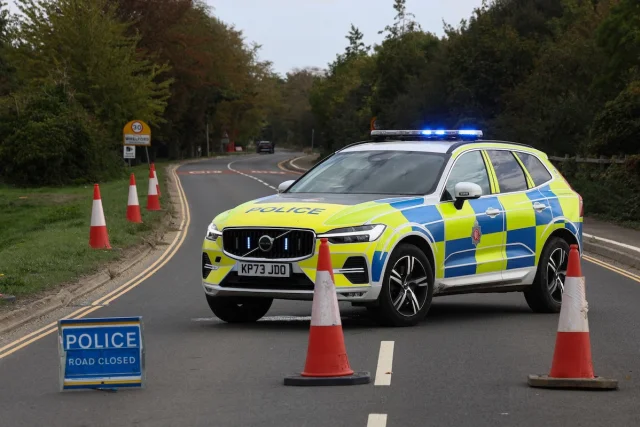
British police arrested five men suspected of attempting to carry out an explosive attack on RAF Fairford airbase in Gloucestershire, western England, which the U.S. military has used to launch airstrikes against the Iranian regime, British media outlets reported on Sunday.
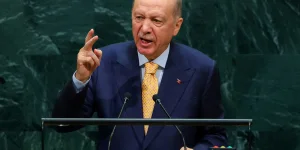
When asked about the report, U.S. President Donald Trump affirmed that suspects, who are reportedly linked to the Iranian regime, were attempting to harm U.S. military personnel.
“We had them under investigation. They were looking to do big damage to our fort and working with the British worked out great ... We had them under view for a long time, and we got them," Trump said, praising British authorities for doing “an amazing job.”
🚨 BREAKING: Donald Trump responds to the suspected bomb plot at RAF Fairford
— Politics UK (@PolitlcsUK) September 27, 2026
"Working with Britain, it was an amazing job. We had them under investigation. They were looking to do big damage to our fort, and working with the British worked out great and we got them" pic.twitter.com/PlChiTQlSx
According to The Daily Telegraph, several possible motives for the attempted attack are being examined. Sources cited by the newspaper said an Iran-linked motive is considered the most likely. They also said that if Iran was involved in the attack, it would likely have used its own operatives rather than relying on criminal proxies, as it had done in the past.
The incident has also raised concerns about the security of airbases in Israel, where the regime has reportedly attempted to recruit dozens of agents to carry out acts of sabotage in recent years.
Channel 14 News Diplomatic Correspondent Tamir Morag wrote on 𝕏: “This should also serve as a massive warning sign for the Israeli Air Force: you don't need an F-22 [fighter jet] to destroy an F-35. A Toyota with a few Arabs in it, or a drone you can buy online, will do.”
Early on Sunday morning, police were alerted after three suspicious vehicles were seen heading toward the airbase. A farmer told the Telegraph she called the police after seeing suspicious men and vehicles.
“I saw a group of Middle Eastern-looking young guys running off through the trees. Some of them had masks or balaclavas on, and they all scattered ahead of us as we drove back past. Some of them ran into the fields, and some of them turned to run towards the air base ... I mean, you don’t see masked men running around at half one in the morning in the countryside near a secure air base and not have concerns.”
According to BBC, the five men arrested near RAF Fairford over suspicion of offenses under the UK's Explosives Act in the have been additionally charged with “plotting to commit a terrorist act.” This comes following a press conference by police. No state or non-state actor… pic.twitter.com/R0Jea1forU
— OSINTdefender (@sentdefender) September 27, 2026
Following the arrests, a 400-meter cordon was established around the base, and 85 homes in a nearby village were evacuated while a bomb disposal unit, including a bomb disposal robot, examined the vehicles.
A local councilor told Reuters that surveillance had previously been raised at Fairford six weeks ago, after the Islamic Revolutionary Guard Corps (IRGC) issued a specific threat against the base. At the time, the IRGC said that “any base used for aggression against Iranian territory is a legitimate target for us”, and claimed the United States had begun “resorting to using B-1 aircraft flying from Fairford airbase in England” because it had no missiles left.
The Telegraph reported in June that IRGC Unit 700 had been smuggling “Islamic revolutionary agents” into the United Kingdom and positioning them across London, with one regime official saying, “We do not need a missile to target London.”
The Telegraph is reporting #Iran's regime is the likely culprit behind the thwarted terror plot today against RAF Fairford which houses American personnel. This comes as Abbas Araghchi is still in New York giving more propaganda interviews with American media, dangling worthless… pic.twitter.com/77GQsVmhdx
— Jason Brodsky (@JasonMBrodsky) September 27, 2026
Jason Brodsky, policy director at the think tank United Against Nuclear Iran (UANI), noted that the attempted attack “comes as [Iranian Foreign Minister] Abbas Araghchi is still in New York giving more propaganda interviews with American media, dangling worthless diplomatic offers, and wasting time as always.”
Writing on 𝕏, Brodsky said Araghchi “speaks of ‘confidence building measures’ while the Islamic Republic's security services plot terror. Araghchi's visa should be rescinded and he should be put on the next plane to Tehran.”
In another post, Brodsky noted that the incident took place just days after the UK foreign secretary met with Araghchi in New York during the UN General Assembly (UNGA) and warned him that the UK would not tolerate intimidation, threats or hostile activity on British soil.
“With the regime in Tehran a likely suspect, unsurprisingly, these diplomatic engagements are like talking to a wall,” he wrote.
Earlier on Sunday, Araghchi told NBC News that the regime prefers diplomacy, but added, “We are fully prepared for the war to be resumed. We stand firm in the face of any new aggression, even if it comes to a doomsday war.”
“At the same time, we stand ready for diplomacy. It is up to President Trump to choose,” he continued. His statement came in response to President Trump’s rejection of the latest Iranian offer for an agreement earlier in the day, although Trump had also said that further negotiations would take place this week.
“They want to make a deal, but it is not the deal that I want to make. It is what we would have maybe agreed to a year ago. They overplayed their hand,“ Trump said, adding that he is "always thinking about” resuming airstrikes in Iran.
U.S. Ambassador to the UN Mike Waltz told “Meet the Press” on Sunday that the Iranian proposal was rejected for “a number of reasons,” noting that Washington could not allow Iran to receive “access to billions in frozen funds.”
“I think this was a pretty cynical attempt to put something on the table that they knew was unacceptable, to ask for the release of the blockade, the sanctions, international sanctions, and access to billions in assets.”
You might also like to read this: