‘Like a treasure map’ – IDF locates grave of Jewish soldier killed in Cyprus in 1948



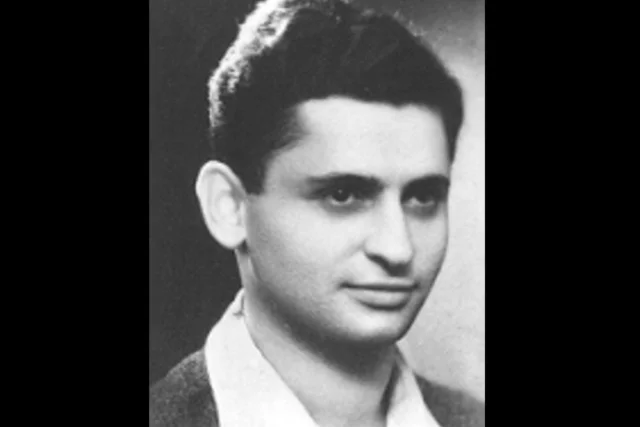
For 78 years, the burial place of Jewish soldier Shlomo Haimson remained unknown. Now, after a four-year investigation involving the IDF’s Missing Persons Branch, the Military Rabbinate and the Ministry of Defense, Israeli investigators have located his grave.
Haimson was killed by British guards in Cyprus in 1948 while attempting to escape a British detention camp for Jewish detainees. He was killed just days after the birth of his daughter.
The breakthrough did not come from a DNA test or a newly discovered document. Instead, investigators pieced together fragments of an old cemetery map and a sequence of seven names to determine where Haimson had been buried.
“It really is like a treasure map in the movies,” said IDF Colonel Y., who is in charge of coordinating investigations about unknown burial places of fallen soldiers.
He told Ynet News, “Some of the clues exist and some don’t, and you try to connect what you have into an unequivocal finding. And that certainty is extremely important.”
Y. also noted that the fallen Jewish soldier’s burial place was further complicated by the fact that it was located in a different country.
“Because he was killed in Cyprus, Haimson wasn’t on the lists at all,” Y. explained, saying the investigation began only after the cemetery, which had once been located in Cyprus, was transferred to Israel. “I learned that they had brought an entire cemetery from Cyprus to Israel and that it was in Haifa. That interested me very much,” he added.
Intrigued, Y. decided to contact the Cyprus Detainees Association, which was responsible for the burial plot.
“Somehow they told me they had 136 graves, and 120 of them were unidentified,” he recalled. Among the documents connected to those graves, investigators found Haimson’s name, turning the search into a military investigation.
The investigators then turned to the Margo cemetery map, hoping to determine where Haimson had originally been buried in Cyprus in 1970 and, from there, identify the corresponding section of the cemetery after the graves were transferred to Israel. The map, however, had been preserved only in five separate fragments gathered from different archives. The military investigation team eventually began connecting the dots in the map fragments, using surviving grave inscriptions and other landmarks as reference points.
“We found the cemetery gate and then understood the directions,” Y. explained.
“On some of the graves, the writing survived, so that gave us anchors. Then you start, like a puzzle, placing names according to the anchors you have,” he explained.
He said surviving inscriptions on some of the graves provided reference points that allowed investigators to reconstruct the cemetery’s layout and place the remaining names accordingly.
Y. stressed that the process of connecting the fragments had to be done with great precision, describing it as “a very clumsy puzzle.”
Once the burial site was identified, the Defense Ministry informed the IDF attaché in Brazil, who contacted Haimson’s family.
“You see the sparkle in their eyes and the tremendous emotion. They understand that they have a heroic father in this case.”
You might also like to read this: