Israel’s window to becoming a regional trade hub




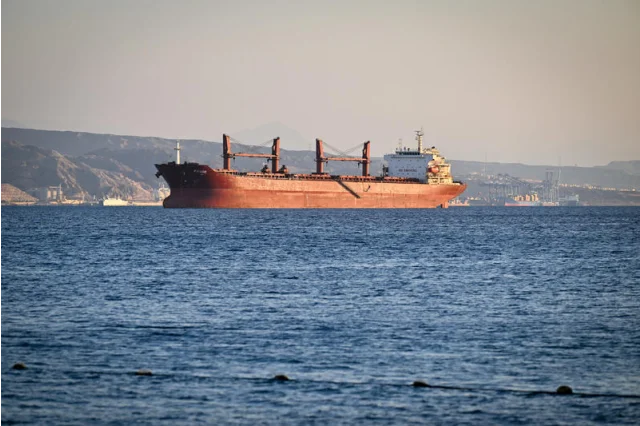
Israel appears well positioned to benefit from the Gulf’s search for alternatives to the Strait of Hormuz. It has access to the Red Sea through Eilat, a Mediterranean coastline, existing energy infrastructure linking the country’s south and west, and ports that could connect Middle Eastern trade with European markets. On a map, Israel looks like a natural bridge between Asia and Europe.
Maps, however, are deceptively simple. Turning Israel into a serious regional transit corridor would require political agreements, large infrastructure investments and security guarantees that do not yet exist.
Israel’s most obvious asset is the Eilat-Ashkelon pipeline. Built originally to transport Iranian oil to the Mediterranean before the 1979 Islamic Revolution, the infrastructure links an oil terminal near Eilat with Ashkelon. It can operate in both directions, allowing crude unloaded from Red Sea tankers to be transported overland to the Mediterranean rather than passing through the Suez Canal.
The concept is commercially attractive. A Gulf exporter could theoretically send oil to a Red Sea terminal, transfer it through Israel and reload it at Ashkelon for delivery to Europe. This would avoid Hormuz, the Bab el-Mandeb Strait and the Suez Canal, depending on where the oil entered the system.
Israel’s State Comptroller has said the Eilat-Ashkelon pipeline infrastructure was authorized to transport approximately 40 million metric tons of fuel annually. That is substantial by Israeli standards, although actual operational capacity, available spare capacity and the investment required for sustained international transit are less clear.
The pipeline’s potential briefly attracted greater attention after Israel normalized relations with the United Arab Emirates in 2020. The Europe Asia Pipeline Company subsequently explored an agreement under which Emirati oil could be shipped to Eilat and transported to Ashkelon. Yet the proposal encountered strong environmental opposition and regulatory resistance.
That opposition cannot be dismissed as political obstruction. The Gulf of Eilat contains an ecologically sensitive coral ecosystem, while the city’s economy depends heavily on tourism. A major spill in the narrow gulf could cause damage far beyond the immediate cost of lost cargo. Israel’s State Comptroller has previously warned that pollution could harm the coral reserve, tourism and relations with neighboring Jordan and Egypt.
This creates a basic trade-off. Eilat can become a more important energy gateway only by accepting greater environmental and operational risk. Expanding tanker traffic without stronger spill-prevention systems, emergency capacity and regulatory oversight would be reckless.
Security is an even harder constraint. Replacing Hormuz with the Red Sea does not eliminate exposure to hostile actors. It moves that exposure westward.
Vessels approaching Eilat must navigate waters affected by instability around Yemen and the Bab el-Mandeb Strait. Recent attacks and threats have caused ships to change course, increased war-risk insurance premiums and reinforced carriers’ reluctance to return fully to Red Sea routes. As a result, some voyages have been diverted around the Cape of Good Hope, adding time and substantial fuel costs.
Eilat has also been directly affected by the collapse in Red Sea trade. That weakens the case for presenting the port as an immediately reliable alternative to Hormuz. A corridor is only as secure as its most vulnerable section.
Nor could Israel realistically replace the scale of maritime traffic passing through Hormuz. The strait carried an average of 20 million barrels of oil and petroleum products per day during the first half of 2025. Existing Saudi and Emirati pipelines together offered about 4.7 million barrels per day of bypass capacity – evidence of how difficult it is even for large producers to reproduce the capacity of open sea lanes.
Israel’s opportunity is therefore not to become a substitute for Hormuz. That would be economic nonsense. Its realistic role is as one component in a wider network of alternative routes.
The more important prize may lie in containerized trade rather than crude oil. The proposed India-Middle East-Europe Economic Corridor envisages goods traveling from India by sea to the Arabian Peninsula, then by rail across the Middle East before continuing to Europe. Israel’s Mediterranean ports could provide the western maritime outlet for such an alternative.
This would give Israel a position in a trade corridor linking Indian manufacturing, Gulf capital and European consumers. It could also create demand for rail infrastructure, storage, customs services, data networks and logistics centers rather than merely generating fees from passing oil.
Yet Israel should not assume that its participation is guaranteed. Gulf states have viable alternatives. Saudi Arabia can develop routes through its own Red Sea ports. The UAE can expand Fujairah and deepen links with Oman. Egypt offers the Suez Canal and the Sumed pipeline, which can transport oil between the Red Sea and Mediterranean. Turkey is positioning itself as a connection between Iraq, the Gulf and Europe.
Saudi Arabia has also demonstrated that cargo can be shifted through Egypt’s Ain Sukhna-Sidi Kerir route when Red Sea conditions deteriorate. The Sumed pipeline can handle up to about 2.5 million barrels per day, giving it scale and an established commercial role that Israel cannot simply wish away.
Finally, politics may be Israel’s greatest obstacle. Regional infrastructure has a life measured in decades. Governments and private investors will not commit billions of dollars to corridors that can be interrupted whenever diplomatic relations deteriorate.
For Israel to become a central part of Gulf trade planning, normalization with Saudi Arabia would be far more important than another terminal at Eilat. Saudi participation could connect Israel with the largest economy and most extensive pipeline system in the Gulf. Without it, Israeli infrastructure risks remaining an isolated national asset rather than part of a regional network.
Israel would also need to improve the land connection between Eilat and its Mediterranean ports. The pipeline serves oil, but a broader logistics corridor requires reliable rail freight, cargo-handling capacity and coordination between ports. Unless those links are strengthened, Israel's geographic advantage risks becoming an underutilized asset rather than a competitive one.
The economics must also stand up to scrutiny. Transshipment involves unloading, storage, pipeline or rail transport and reloading. Each step adds cost, delay and insurance exposure. Israel’s route would need to offer either lower costs, shorter delivery times, or greater reliability than established alternatives. Strategic significance does not automatically produce commercial viability.
Nonetheless, the structural shift away from exclusive dependence on Hormuz strengthens the strategic case for Israel. Gulf governments are no longer asking which single route is cheapest in normal conditions. They are asking which combination of routes can keep exports and imports moving during a crisis.
Israel is well placed to contribute to that strategy. Eilat, the Eilat-Ashkelon pipeline, Mediterranean ports and, eventually, improved overland transport links could form part of a more diversified regional logistics network. Israel could also offer expertise in port security, cargo tracking, water management and the protection of critical infrastructure.
Whether that potential is realised, however, will depend less on geography than on diplomacy. A normalization agreement with Saudi Arabia would not only unlock the prospect of integrating Israeli infrastructure into Gulf transport and energy networks, but could also encourage broader regional normalization given Riyadh's unique political and religious influence. That would make projects centred on Eilat, Ashkelon and future overland trade corridors commercially and politically far more viable. Without such a breakthrough, Israel risks watching alternative routes develop around it despite occupying one of the region's most strategically advantageous locations.
You might also like to read this: