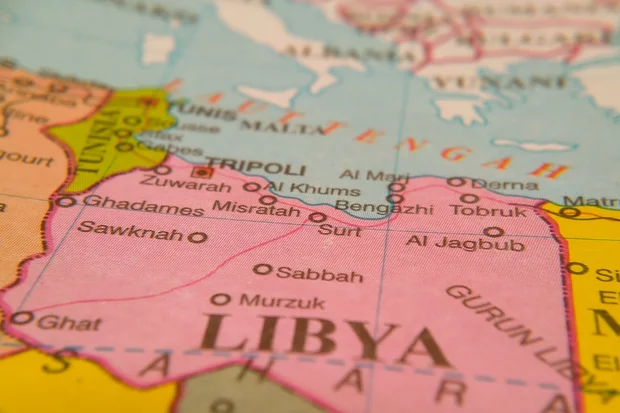









ANALYSIS Gulf's search beyond Hormuz could recast Israel's strategic value
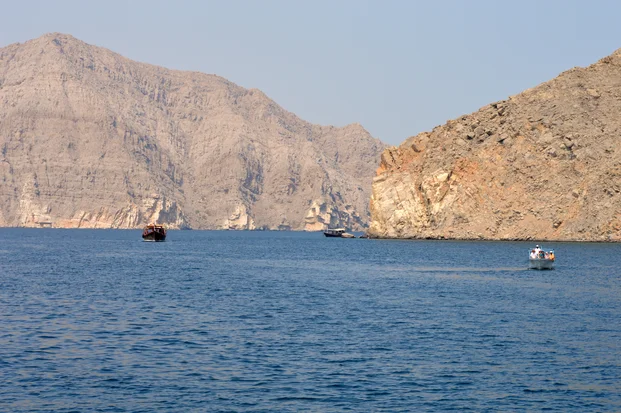
For decades, the Strait of Hormuz has been the indispensable gateway of the global energy market. Nearly one-fifth of the world's oil consumption and around one-fifth of global liquefied natural gas supplies pass through the narrow waterway separating Iran from Oman and the United Arab Emirates. Any disruption has immediate consequences for oil prices, shipping costs and global inflation. Yet the most significant change taking place today is not the periodic threat of closure itself. It is that Gulf states increasingly appear to be planning for a future in which Hormuz can no longer be relied upon as their primary gateway to world markets.
That shift could have profound implications for Israel. As Gulf governments invest billions of dollars in pipelines, ports and logistics corridors designed to reduce their dependence on Hormuz, Israel's unique geography between the Red Sea and the Mediterranean suddenly becomes more strategically relevant. The opportunity, however, should not be overstated. Geography provides an advantage, not a business model. Whether Israel ultimately benefits will depend on diplomacy, infrastructure, security and its ability to integrate into emerging regional trade networks before alternative routes become firmly established.
The vulnerability of Hormuz has never been a secret. The strait is only about 29 nautical miles wide at its narrowest point, with designated shipping lanes just two miles wide in each direction. According to the International Energy Agency, approximately 20 million barrels of crude oil and petroleum products passed through the waterway each day during 2025, representing around 25% of global seaborne oil trade. In addition, the agency estimates that roughly one-fifth of global LNG exports also transit the strait, with Qatar alone sending 93% of its liquefied natural gas through the route.
For years, markets treated this concentration of energy flows as a manageable geopolitical risk. Despite repeated confrontations involving Iran, commercial shipping continued to move. Energy companies had little incentive to invest billions of dollars in costly alternatives when the existing route remained both efficient and relatively inexpensive.
That status quo is now changing.
The ongoing war with Iran, attacks on commercial shipping in the Red Sea and repeated threats to maritime traffic have highlighted the cost of relying on a single chokepoint. Even where shipping continues uninterrupted, uncertainty itself carries an economic price. Insurance premiums rise, freight rates increase, delivery schedules become less predictable and energy importers are forced to build larger strategic inventories.
The result is a gradual but important shift in thinking. Rather than assuming Hormuz will always remain open, Gulf governments are investing in alternative routes. The objective is not necessarily to replace the strait entirely – something that would be practically impossible in the foreseeable future – but to ensure that a meaningful share of exports can continue even during periods of severe disruption.
The United Arab Emirates has become one of the clearest examples of this strategy. Abu Dhabi already operates the Habshan-Fujairah pipeline, which transports crude oil directly to the Gulf of Oman, bypassing Hormuz altogether. The line currently provides export capacity of around 1.8 million barrels per day, and authorities have announced projects to expand both pipeline capacity and port infrastructure at Fujairah. DP World is also investing in additional terminals on the emirate's eastern coast, strengthening its position outside the Persian Gulf while preserving Jebel Ali as its principal commercial hub.
Saudi Arabia has pursued a similar approach through its East-West Pipeline, which links oil fields in the Eastern Province with the Red Sea port of Yanbu. Originally built during the Iran-Iraq War, the pipeline has taken on renewed strategic importance as Riyadh seeks greater flexibility in its export routes. According to Reuters, Saudi officials are now considering further expansion to enable up to 2 million barrels of crude oil per day to reach the Red Sea without entering Hormuz.
Oman is positioning itself differently. Rather than becoming a major oil bypass, it is developing logistics infrastructure that could serve as an alternative gateway for regional trade. The expansion of Sohar Port, including significant investment by Asyad Group and CMA CGM, reflects growing demand for supply chains that can operate outside the Persian Gulf while maintaining access to Gulf markets.
Iraq is also revisiting long-discussed pipeline projects toward the Mediterranean through Syria and Turkey. Although many of these proposals face substantial political and financial hurdles, their renewed momentum illustrates a broader regional trend. Governments are no longer asking whether diversification is worth the cost. They increasingly view stable access to the final consumer as a strategic asset.
For some Gulf states, however, diversification remains far more difficult. Kuwait, Bahrain and Qatar remain heavily dependent on Hormuz. Qatar exports almost all of its LNG through the strait, while Kuwait and Bahrain possess no independent maritime access to global markets outside the Gulf. Kuwait has already discussed the possibility of expanding pipeline cooperation with Saudi Arabia to gain access to the Red Sea, recognizing that complete reliance on Hormuz has become an uncomfortable strategic position.
Taken together, these projects reveal something larger than individual infrastructure investments. They represent the gradual emergence of a new logistics map for the Middle East.
Historically, the region's energy architecture revolved around the Persian Gulf. Today it is evolving into a network stretching across the Gulf of Oman, the Red Sea and, increasingly, the eastern Mediterranean. Rather than relying on a single export corridor, producers are creating multiple routes that improve resilience even if each one individually is less efficient than Hormuz itself.
The significance extends well beyond the current conflict. Oil prices will continue to fluctuate with geopolitical events, but pipelines, ports and railways are long-term assets. Once governments commit billions of dollars to new corridors, those investments shape commercial decisions for decades rather than months.
It is within this broader restructuring that Israel's position deserves closer attention. The country cannot replace Hormuz, nor should it attempt to compete directly with Saudi Arabia's pipeline network or the UAE's expanding port system. Its comparative advantage lies elsewhere. Israel is one of the very few countries in the region with direct access to both the Red Sea and the Mediterranean, existing energy infrastructure connecting the two, advanced logistics capabilities and growing economic ties with several Gulf states following the Abraham Accords.
The question is no longer whether alternative routes to Hormuz will emerge. They already are. The more important question is whether Israel can secure a place within this evolving network before regional trade patterns solidify without it.
Popular article:

interview Easter message of resurrection hope amid war at Jerusalem's Garden Tomb

biblical commentary Let my people go: a Passover message for today
4 IDF soldiers killed, 2 wounded in fighting in southern Lebanon, as Israel eliminates dozens of Hezbollah terrorists

Receive latest news & updates
A message from All Israel News
Help us educate Christians on a daily basis about what is happening in Israel & the Middle East and why it matters.
For as little as $10, you can support ALL ISRAEL NEWS, a non-profit media organization that is supported by readers like you.
Latest articles:
ANALYSIS North American Jewish organizations to recruit 100 professionals to combat antisemitism

ANALYSIS ‘No need’ for pre-election Iran strike, IDF chief says as gov’t, opposition trade blame for potential escalation – report
terror attack 2 Israeli soldiers killed, 2 terrorists eliminated in Hebron shooting; IDF says much larger attack was prevented
analysis A people dwelling securely? Israel’s strategic standing, 3 years after Oct 7

ANALYSIS Hamas on wheels: What I found in Dearborn reveals a troubling history and a battle over Israel