Israeli gov't re-establishes Homesh settlement in northern Samaria after 20 years




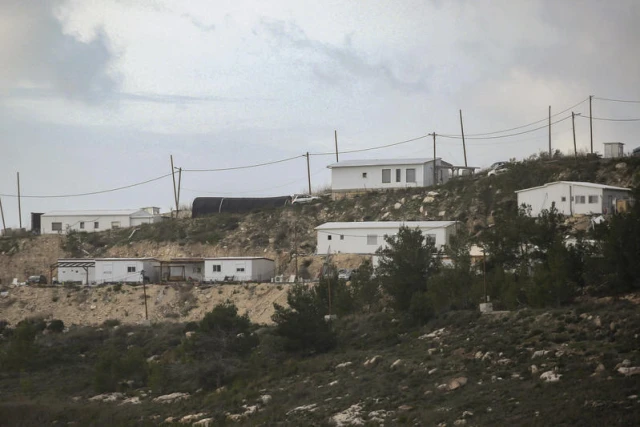
On Thursday, ten families officially moved into the Homesh settlement in northern Samaria, internationally known as the West Bank, completing a prolonged effort to restore and legitimize the community that had been dismantled in 2005 during Israel's withdrawal from Gaza.
Nearly two decades ago, Homesh was among four settlements in northern Samaria – including Sa Nur, Ganim, and Kadim – that were dismantled under then-Prime Minister Ariel Sharon's administration as part of his controversial "disengagement plan." This unilateral withdrawal saw Israel evacuate all settlements from Gaza and these four particular communities, relocating approximately 8,500 settlers. Sharon, a former champion of the settlement movement, argued that the move would improve Israel's security and international standing while creating territorial continuity for Palestinians in the area.
The families' return to Homesh was commemorated with a formal ceremony featuring several prominent figures, including Minister of Settlements and National Missions Orit Strock, Likud Member of Knesset Yuli Edelstein, Samaria Regional Council Chairman Yossi Dagan, Amana settlement organization leader, Ze'ev Hever, and additional advocates.
During the ceremony, Strock framed the resettlement in historical and ideological terms, stating that Homesh would serve as "the arrowhead to lead the rectification for all the sins of the disengagement, the sins of Oslo and the betrayal of the Land of Israel," alluding to the Oslo Accords.
The Oslo Accords, signed in the 1990s between Israel and the Palestine Liberation Organization, established the framework for Palestinian self-governance in parts of the West Bank and Gaza and were intended to lead to a comprehensive peace agreement. However, it ultimately failed amid ongoing violence and disagreements over final status issues.
The destruction and abandonment of these communities had remained a source of deep frustration within the settler movement for years. This grievance was addressed in 2023, when the current government, with Edelstein taking a leading role, overturned the laws that had originally authorized the dismantlement of the settlements.
This resettlement represents the culmination of an extended legal and administrative process to re-establish the community that had been vacant for nearly twenty years.
Posting on 𝕏 on Thursday, Edelstein declared he had been "dreaming of this day" for two decades, promising that "Homesh will be just the beginning."
Thursday’s resettlement ceremony represents the final step in efforts to re-establish Homesh, though at a slightly different site. The move was strongly promoted by pro-settlement factions within the current government. Over the years, far-right activists repeatedly attempted to rebuild parts of the outpost without authorization before it was eventually legalized.
According to The Times of Israel, a yeshiva building was set up at the location in May 2023, and since then, students and families have been residing in its dormitories. In August 2023, the High Court dismissed a petition seeking the removal of the structures, ruling that relocating the site away from privately owned Palestinian land addressed the demands of local Palestinian landowners to regain access to their property.
In May 2025, the cabinet officially approved the legalization of the settlement, along with Sa-Nur, although Sa-Nur has not yet been resettled.
Under the current government, 69 new settlements have been established or legalized, and around 120 settlement outposts have been built during its tenure.
In September last year, a kindergarten opened in Homesh. Education Minister Yoav Kisch described it as “planting new roots of education and the future” in Homesh, while Finance Minister Bezalel Smotrich called it “not just an educational event but a symbol of rebirth and renewed life in the heart of Samaria.”
The expansion of settlements and the government’s growing control over the West Bank have drawn strong criticism from the EU and other countries, including various U.S. government representatives.
However, U.S. Ambassador to Israel Mike Huckabee has been a vocal supporter of Israeli settlements in the biblical regions of Judea and Samaria, maintaining that the land was given by God to the Jewish people as their homeland.
At the same time, amid a recent uptick in settler violence against Palestinians in the West Bank, Huckabee has taken a hard stance against such attacks, even describing them as acts of “terrorism,” while emphasizing that they are carried out by a small group of radicalized Jewish youth, whom he called “thugs.”
You might also like to read this: