








Israeli Cabinet approves entry of International Stabilization Force into Gaza, security concerns remain
Board of Peace welcomes move as a step toward Gaza reconstruction, implementation of the proposed '20-point Plan'
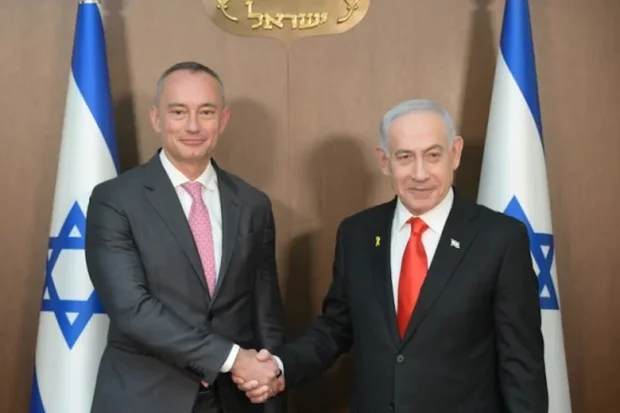
The Israeli Cabinet on Sunday approved measures aimed at easing the entry of International Stabilization Force (ISF) troops into the Gaza Strip.
Among the measures approved was the granting of immunity to members of the ISF and the Board of Peace to enter Gaza under Israel’s “Immunities of International Organizations Law.”
According to an Israeli official, the entry of ISF troops will still be subject to specific approval by Prime Minister Benjamin Netanyahu, Defense Minister Israel Katz and Foreign Minister Gideon Sa’ar.
“The Cabinet today approved the granting of immunity by virtue of the 'Immunities for International Organizations' law to the ISF, which will operate in full coordination with the IDF in areas beyond the Yellow Line in territory not under the control of the IDF,” the official told reporters.
“The Cabinet determined that Israel would be the one to approve which countries could send troops here – these are only countries with which we have a peace treaty and they are not acting against the State of Israel or its senior officials in the international arena,” the official added.
The decision appeared aimed at preventing countries such as Indonesia and Turkey from contributing troops to the ISF. The United States has supported the potential involvement of both countries, while Israel has opposed their participation.
Countries including Uganda and Morocco, which maintain agreements with Israel, have committed to contributing troops to the ISF.
Nickolay Mladenov, the Board of Peace's top Gaza envoy, welcomed Israel's decision.
“I welcome steps by Israel that enable the deployment of the International Stabilization Force in Gaza, in accordance with UN Security Council Resolution 2803,” Mladenov wrote on 𝕏.
I welcome steps by Israel that enable the deployment of the International Stabilization Force in Gaza, in accordance with UN Security Council Resolution 2803. It is a critical part of the agreed framework for stabilizing Gaza, supporting demilitarization, and enabling the…
— Nickolay E. MLADENOV (@nmladenov) July 26, 2026
Mladenov said the move is “a critical part of the agreed framework for stabilizing Gaza, supporting demilitarization, and enabling the transition to effective Palestinian transitional administration under the NCAG (National Committee for the Administration of Gaza).”
The focus should now be on moving ahead “with the 20-point Plan for Gaza,” he added.
That plan calls for the disarmament of Hamas, a move the terror group has repeatedly rejected.
A political source told Ynet News, “The State of Israel stands by the principle that the IDF will continue to hold the Yellow Line and there will be no withdrawal whatsoever as long as Hamas is not completely disarmed and the Strip is not fully demobilized.”
The source said Israel was not waiting for Hamas to agree, adding that “there is a demand on the table for complete demobilization, which could be gradual. Hamas should accept the demand. We want to create pilot areas that are not in places under Hamas control.”
Israel is concerned with establishing an area in Rafah, according to the source, free from Hamas interference, where more adequate shelters could be constructed ahead of the upcoming winter season.
“We want to create an area in the winter that will provide better shelter,” the source explained. “As soon as Hamas agrees to disarm, everything will go faster.”
The Cabinet reportedly views ISF's role as serving as the primary security force in Hamas-free zones, preventing armed elements from entering those areas and allowing the IDF to step back from policing the civilian population there.
While Israel has been reluctant to move forward with the Gaza Peace Plan, including the entry of the ISF, the Trump administration has been pressuring Israel to move forward despite Hamas’ refusal to disarm.
Defense officials are concerned that this could limit the IDF’s offensive freedom of action, weaken its ability to act against terror organizations, and ultimately strengthen Hamas.
They believe the IDF will no longer be able to carry out the near-daily strikes it has used to eliminate remaining Hamas commanders and terrorists involved in the Oct. 7, 2023, massacre in southern Israel.
The cabinet decision was reportedly opposed by Israeli National Security Minister Itamar Ben Gvir of the Jewish Power party. Settlement Minister Orit Strook of the Religious Zionism party voiced reservations but did not vote against it. Religious Zionism party leader, Finance Minister Bezalel Smotrich, also did not oppose the measure.

Please take a moment and join others who are praying for Israel at this very moment by adding your light on the live prayer map with a simple click at prayforisrael.live.
Popular article:

interview Easter message of resurrection hope amid war at Jerusalem's Garden Tomb

biblical commentary Let my people go: a Passover message for today
4 IDF soldiers killed, 2 wounded in fighting in southern Lebanon, as Israel eliminates dozens of Hezbollah terrorists

Receive latest news & updates
A message from All Israel News
Help us educate Christians on a daily basis about what is happening in Israel & the Middle East and why it matters.
For as little as $10, you can support ALL ISRAEL NEWS, a non-profit media organization that is supported by readers like you.
Latest articles:
North American Jewish organizations to recruit 100 professionals to combat antisemitism

‘No need’ for pre-election Iran strike, IDF chief says as gov’t, opposition trade blame for potential escalation – report
terror attack 2 Israeli soldiers killed, 2 terrorists eliminated in Hebron shooting; IDF says much larger attack was prevented
analysis A people dwelling securely? Israel’s strategic standing, 3 years after Oct 7
Hamas on wheels: What I found in Dearborn reveals a troubling history and a battle over Israel