Israel likely to skip climate summit in Turkey over security concerns

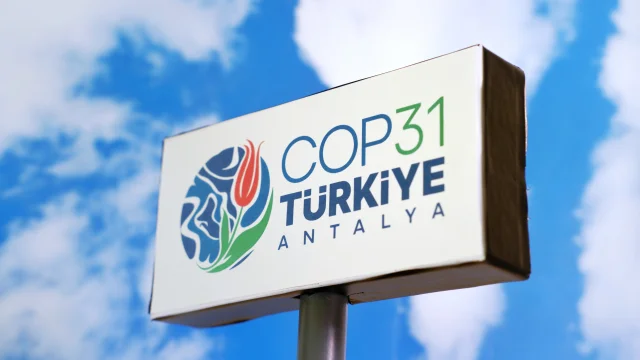
Israel will likely skip the United Nations climate summit in Turkey next month due to security concerns and deteriorating diplomatic relations, raising concerns among Israeli climate experts that the country could lose opportunities for international cooperation, investment and influence.
Although Israel’s participation remains under review, environmental activists and researchers warn that the absence of an official delegation could undermine the country’s national interests and its ability to contribute to international climate policy.
"At this stage, approval for the joint delegation's departure has not yet been granted. However, the matter is currently being reconsidered, and no final decision has been made," the Israeli Ministry of Environmental Protection stated.
Professor Colin Price, head of Tel Aviv University’s Climate Initiative, said the summit is important not only for climate policy but also for Israel’s diplomatic engagement, even if its influence on international decisions is limited.
"It's more of a political conference, which is why it's important for us to be there, just as we participate in the United Nations even though we don't have much influence. But being there matters. This year, the situation is apparently different. The fact that the conference is being held in Turkey is preventing many people from attending,” Price explained.
Price also argued that the Israeli government has shown insufficient interest in climate issues, compounding the security and diplomatic challenges surrounding participation:
“The Ministry of Environmental Protection barely functions these days, so there's less interest. It's a combination of security concerns and a lack of interest on the government's part. So we won't be there, although there may be private-sector representatives.”
Despite the political tensions, Price said he has not observed a broad boycott of Israeli researchers or a breakdown in international scientific cooperation.
"Scientists working and conducting research in the climate field don't feel that there's any boycott or that the current situation is affecting international cooperation, including conferences," he added. "I think there's much less politics at the scientific level. I served as a reviewer for one of the chapters of an Intergovernmental Panel on Climate Change (IPCC) report."
Price nevertheless warned that Israel’s absence could have economic consequences, particularly for its climate technology sector, which depends partly on international investment and professional connections:
"There's no exposure, no networking and no investment. Four years ago, there were far more foreign investors in companies. I'm involved in a startup, and over the past year or two, investors have stopped responding. They simply don't answer our emails. There's much less foreign investment in climate tech [innovative technologies designed to address climate change]. If we don't attend the summit, we miss out on those connections and meetings."
Udi Avni, co-country director of Greenpeace Israel, also warned that Israel’s absence could harm the country’s interests and limit its participation in decisions affecting its economy, security and environmental policies.
"Against the backdrop of extreme climate events around the world, Israel's participation in the summit is essential," he argued.
"The absence of official representation harms the national interest and the Israeli public. If this were Eurovision, things would look and sound very different. The government should be doing everything in its power to demand that the host country guarantee the Israeli delegation's safety or ask the United Nations to relocate the summit. Turkey was chosen as the host nearly a year ago,” he assessed.
Avni emphasized that the summit has practical implications beyond international diplomacy, including decisions on energy, environmental regulations and funding for climate technologies.
"Unlike Eurovision, the climate summit produces technical but important decisions on issues such as renewable energy transition targets, environmental regulations and funding for green technologies. These decisions directly affect the quality of life of all Israelis, the cost of living and the economy, national security and our ability to cope with the consequences of the climate crisis, including wildfires and drought," Avni explained.
Dr. Avner Gross, head of the Climate Change Research Laboratory at Ben-Gurion University of the Negev, likewise warned that Israel’s absence could weaken its position in international scientific and economic discussions.
"The climate crisis is one of the greatest challenges facing humanity, and it will be with us from now on. To address it, we need the entire global community, including Israel. One way to have an impact and be part of the effort is to participate in the international climate summit, which nearly every country in the world attends. Israel's absence would signal a further withdrawal from the global dialogue, potentially harming the country academically and economically," Gross warned.
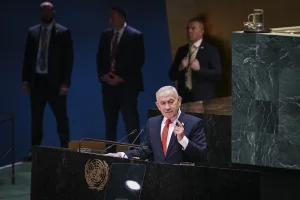
Israel’s likely absence comes as relations between Jerusalem and Ankara have deteriorated sharply since the Oct. 7, 2023, Hamas-led attack on Israel. Turkish President Tayyip Erdogan has repeatedly criticized Israel’s military campaign in Gaza, compared Israeli Prime Minister Benjamin Netanyahu with Nazi leader Adolf Hitler and accused Israel of “genocide” while supporting Hamas. Erdogan has also refused to condemn the Hamas massacres of Israeli civilians.
Israel maintains that it has a legitimate right to defend itself against Hamas following the terrorist organization’s Oct. 7 invasion and the massacre of approximately 1,200 people, alongside the kidnapping of 251 others.
The Israeli government has rejected accusations of “genocide” and “war crimes,” saying it seeks to minimize civilian casualties while accusing Hamas of using civilians in Gaza as human shields in violation of international law.
In August, Turkey called for an international arrest warrant for Netanyahu, renewing its “genocide” allegations against Israel. Netanyahu responded by condemning Turkey and calling Erdogan an “antisemitic dictator.”
You might also like to read this: