British PM Burnham rules out partnership with Green Party over ‘Zionism is racism’ motion



British Prime Minister Andy Burnham condemned the Green Party’s “Zionism is racism” motion in the House of Commons on Wednesday, calling it “wrong” and “antisemitic” and ruling out political cooperation with the party.
“This side of the House will have nothing to do with it,” Burnham said, adding that he would not cooperate or collaborate politically with the Greens following their “descent into the most abhorrent antisemitism.”
“We will always take the right response when it comes to any partnerships we have with other parties,” added Burnham. “We cannot support a partnership with a party that holds the position that has recently been adopted.”
Burnham’s strong condemnation surprised some political observers in the UK and Israel, given his history of sharply criticizing Israel and his government’s boycott of Israeli settlement goods and services imposed in early September.
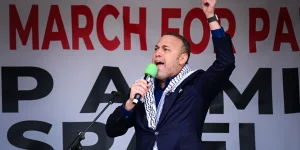
The Green Party motion declared that “Zionism is Racism” and called for the creation of “a single democratic Palestinian state across all of historic Palestine.”
The position has drawn criticism across Britain’s political spectrum, including from Green parliamentarians, and has raised questions about the party’s appeal to centrist voters.
Green Party leader Zach Polanski, who is Jewish, was also barred from entering Israel. Last week, he lost an election to Labour for a vacant parliamentary seat.
Israel’s Foreign Ministry has called on British political parties and civil society groups to issue statements explicitly rejecting the motion. The ministry said the motion “legitimizes armed struggle, calls for a Palestinian state ‘from the river to the sea’ – meaning the destruction of the State of Israel – and labels as ‘racist’ the aspiration of the Jewish people for self-determination.”
UK-Israel relations have been strained in recent years, despite continued efforts to maintain economic ties. The two countries have expressed a desire for stronger economic relations, even as diplomatic tensions have escalated.
The countries have also maintained defense, security and intelligence ties, which officials in both countries have expressed a desire to preserve.
Meanwhile, public opinion and civil society in the UK have become increasingly critical of Israel, as reflected in frequent anti-Israel demonstrations and a significant rise in antisemitic incidents. The issue has also generated debate within British religious institutions, including the Anglican Church.
CMJ UK, an arm of the Anglican Church that has been active in the Holy Land for more than 200 years, recently sent a letter to the Archbishop of Canterbury outlining concerns about how the Church addresses Israel, Zionism and the Jewish people.
It declared, among other things, that “Many Anglicans affirm God's continuing purposes for the Jewish people while equally supporting justice, dignity and security for Palestinians. That diversity deserves fair representation within the Church's theological deliberations."
"Zionism is a contentious term, but for the vast majority of Jews it is not about Jewish supremacy or unconditional support for all actions of the state of Israel, but instead the hope that a Jewish state could exist as a safe harbour in times of rising antisemitism, very much like the one we find ourselves in," the letter concluded.
You might also like to read this: