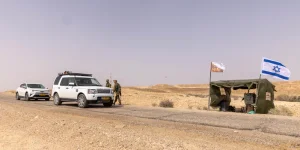
Hamas still controls Gaza population, despite Israeli hold on 64% of Gaza Strip
IDF maintains policy of targeted assassinations against Oct 7 attackers and Hamas leaders in Gaza





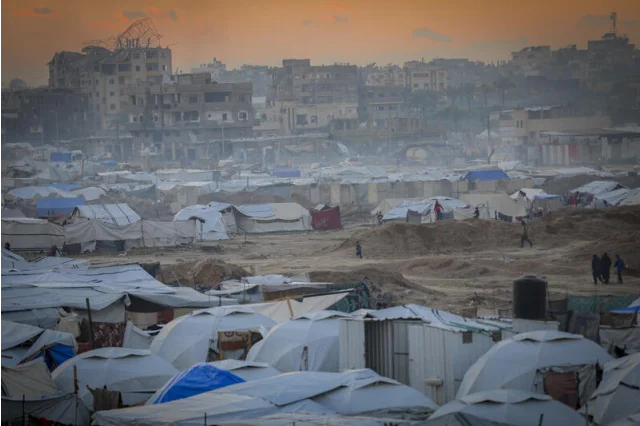
After three years of fighting, the Hamas terror organization has not been decisively defeated in Gaza despite IDF control over approximately 64% of the Gaza Strip.
Hamas still controls daily life in the populated areas of the Gaza Strip, and despite verbally agreeing to disarm, its leadership has delayed any concrete moves to implement the agreement.
According to security officials who spoke with Ynet News, the lack of a clear political pathway for disarming the terror group and handing over power to a viable alternative has allowed Hamas to remain the de facto regime in the enclave.
The group retains control over aid distribution in the Strip, seizing humanitarian supplies to fund its operations.
“Everything entering Gaza today passes through Kerem Shalom, where we have some of the best scanners in the world for detecting prohibited items,” a security official told Ynet. “Food, fuel and gas enter, but then Hamas takes control of it.”
According to the IDF’s office of Coordination of Government Activities in the Territories (COGAT), 600 trucks carrying humanitarian supplies enter the Gaza Strip every day, carrying a mix of food aid and medical supplies, in addition to sanitation aid to help with pest control and garbage disposal.
Humanitarian aid continues to enter Gaza daily, including sufficient food, medical, and WASH supplies to support the civilian population. COGAT presents an updated humanitarian overview of the Gaza Strip, offering an up-to-date assessment of the humanitarian situation. https://t.co/fntUyCCHEb
— COGAT (@cogatonline) September 29, 2026
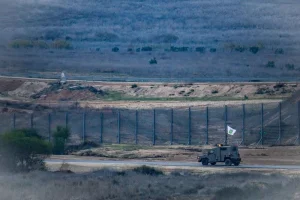
However, the IDF does not oversee the distribution of aid after it enters the Hamas-controlled area beyond the Yellow Line.
As it did during the Oct. 7 Gaza War, Hamas seizes much of the humanitarian aid, reselling it through Hamas approved merchants, who give a portion of the profits to the terror group as “taxes.”
“The trucks enter, Hamas takes control of them and transfers the goods to merchants,” security officials told Ynet. “It collects taxes and receives money. That is how it keeps its people going, and that is how it has weapons.”
While the funds received in this way do not amount to a sufficient source of money for large-scale rehabilitation, it has allowed the group to engage in some recruitment efforts, particularly among younger Gazans, frustrated with the situation in the Strip.
Still, according to security officials, Hamas is incapable of engaging in significant training of the new recruits, for fear of triggering an Israeli strike.
Despite the ceasefire negotiated by the United States in October 2025, the Israeli military has continued to carry out strikes against what it calls “imminent threats” posed by the terror organization, as allowed under the terms of the ceasefire.
The IDF considers any training by Hamas operatives, who are supposed to be disarming according to the agreement, to be an imminent threat.
A security official told Ynet that this hampers Hamas’ ability to both recruit and train new recruits.
“It cannot recruit everyone it wants simply because it does not have weapons to give them,” the official said, while noting that training is very limited.
“They do a lot of theoretical lessons, but there is no real training, so their operational capability has been damaged," the official said. "Hamas is mainly on the defensive.”
At the same time, the military is doubtful of Hamas’ commitment to disarm, despite verbally agreeing to do so in discussions with negotiators from the Board of Peace.
A senior security official told Ynet that progress on the Gaza Peace Plan is dependent on Hamas’ disarmament.
“Everything depends on Hamas being demilitarized,” he said, while expressing doubts it would do so. “I am skeptical that the organization will truly give up its weapons. It will put on shows, but we are not going to give up.”
He also said that Hamas understands that giving up its weapons means ceasing to exist in the enclave.
“We have a rough idea of how many weapons it has, and in Gaza you have no chance without weapons,” he explained. “For Hamas, giving up its weapons means ceasing to exist.”
The commander of the Gaza Division, Brig. Gen. Liron Batito, who served as commander of the Givati Brigade on Oct. 7, expressed optimism regarding the military's ability to confront Hamas again, if the need arises.
"The Gaza Division is in a situation where we control 63% of the territory," Batito said in an interview with the IDF podcast. "We have established almost 40 new outposts, and in fact this gives us a very significant advantage. The defense is frontal defense – the communities are in the rear, and first of all, the IDF fighters are in the front."
Brig. Gen. Batito also noted that the IDF continues to locate and destroy underground Hamas infrastructure inside of the Yellow Line, as allowed in the ceasefire agreement.
Meanwhile, the IDF continues its program of targeted killings of terrorists directly involved in the events of Oct. 7, 2023, as well as senior leadership of terror organization in Gaza.
Over the weekend, the IDF maintained its previous pace of around one targeted killing per day, a rate set after the arrest of a senior Hamas intelligence official in early September.
On Friday, the military killed a Hamas sniper it claimed was planning “to carry out terror attacks against IDF forces.”
On Saturday, the IDF and Shin Bet carried out a strike intended to eliminate Ali Ahmed Al-Amoudi, the deputy chairman of Hamas’ political bureau in Gaza, and former right-hand man to Yahya Sinwar. At time of publication, Palestinian reports claimed that Al-Amoudi survived the assassination attempt.
On Sunday, the IDF announced the killing of Saqr Nabil Musa Qaisi, a Hamas Nukhba force terrorist who also served in a Turkish humanitarian aid organization.
🔴TERRORIST POSING AS HUMANITARIAN AID WORKER ELIMINATED: Saqr Nabil Musa Qaisi, a Nukhba terrorist in Hamas. The terrorist infiltrated Israel during the October 7 Massacre. He also served as the director of the Turkish organization Deniz Feneri, which presents itself as a humanitarian aid organization but in practice maintains ties with senior figures in Hamas’ leadership and with elements within the Turkish leadership. Recently, and throughout the war, the terrorist advanced terrorist activities against Israeli civilians & IDF troops and worked to restore Hamas’ capabilities, in systematic violation of the ceasefire. The terrorist was eliminated in order to remove the threat he posed.
— Israel Defense Forces (@IDF) October 4, 2026
Additionally, the military announced the killing of two other Hamas terrorists, said to be working to carry out terror attacks against IDF troops along the Yellow Line.
The military indicated that until instructed otherwise by the political echelon, it will continue to conduct such targeted strikes to prevent Hamas from rehabilitating or carrying out terror attacks against its soldiers stationed in the Strip.
You might also like to read this: