Hamas continues entrenching itself along Gaza’s Yellow Line despite ceasefire



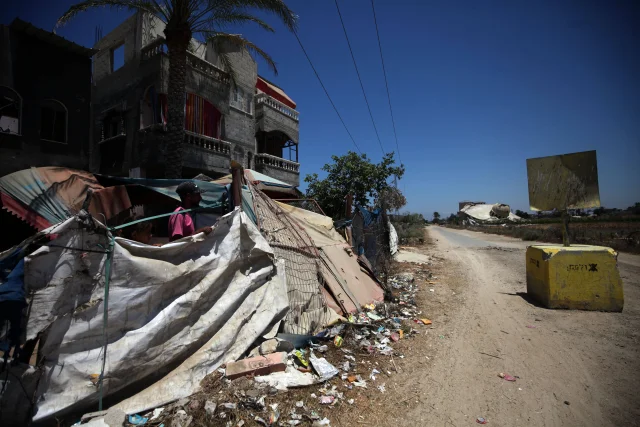
Hamas terrorists continue to entrench themselves near the Yellow Line in Gaza, with Israeli forces reporting that terrorists are moving among the ruins, digging and working to restore military infrastructure despite efforts by the U.S.-backed Board of Peace (BoP) to advance a ceasefire and reconstruction plan.
Israeli troops currently deployed along the Yellow Line say they are closely monitoring Hamas activity and working to prevent operatives from infiltrating Israeli-controlled areas. The Yellow Line divides the Gaza Strip between the larger area under Israeli control and the roughly 30% of the enclave that remains under Hamas control. In some locations, IDF positions are only about 150 meters (492 feet) from populated tent compounds on the Hamas-controlled side.
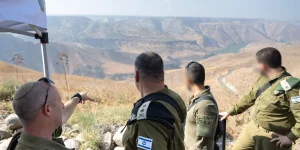
IDF Lt.-Col. G., commander of the Paratroopers’ 202nd Battalion, told Ynet News that his soldiers are serving as a buffer between Hamas terrorists and Israeli civilian communities near the Gaza border.
“We are in ‘Meteor’ opposite Gaza City, two kilometers from the city itself and another two kilometers from the residents in Israel, and in effect we are creating a buffer between the civilian and the enemy,” the IDF commander explained.
Although the IDF has degraded much of Hamas’ offensive capabilities, Israeli forces remain concerned that the group is attempting to rebuild its military infrastructure and test Israeli defenses along the Yellow Line.
“The story here is to prevent enemy infiltration. To prevent the enemy from entrenching itself on the yellow line, to finish the work in everything related to the above-ground and underground effort. We are systematically destroying infrastructure. Every day we drill to locate tunnels,” Lt.-Col. G. said. “We know the enemy has underground infrastructure in Gaza City, in Shejaiya. There are areas we have not destroyed. Hostages were held here in some of the places.”
Before the war, the Gaza City neighborhood of Shejaiya was a major Hamas stronghold and the site of multiple intense battles between IDF soldiers and Hamas.
“If it were up to me as a commander in the military, my aspiration is that we will succeed in reaching them someday. We entered, operated and disengaged backward. You will not see people here walking around armed, weapons, pickup trucks. We are gathering information with drones all day,” Lt-Col. G. added.
While agreeing to largely hold fire for now, Prime Minister Benjamin Netanyahu told his cabinet on Sunday that Israel rejects the BoP's 15-point plan for Gaza’s reconstruction. He stressed that Israel will not withdraw from Gaza before Hamas is disarmed and the enclave is demilitarized.
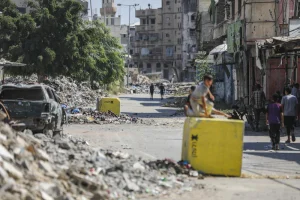
On the ground in Gaza, Israeli forces say they continue to observe Hamas operatives moving through the ruins and working to rebuild their positions.
“Yesterday we saw the enemy with our own eyes, moving between buildings, walking among the ruins. When they come close, we often see them digging in the ground, coming out of buildings with sacks, walking around with bags, which means they are hiding weapons inside. So you create a kind of warning for them: ‘Come see that there is a drone above you – don’t be here. Move away.’ But they are entrenching themselves. You have not dismantled them yet. They are still working,” Lt.-Col. G. explained.
While Hamas is severely weakened, the IDF commander warned that the terror group is still attempting to rebuild some of its military capabilities.
“They take duds from air force bombs, handle them, restore them – and place an explosive charge on the route,” Lt.-Col. G said.
“They don’t have things like they had before, I don’t know, diving gear. That’s not there. The recovery is mainly recruiting people, the fact [is] that they use the ground and raw materials and produce things,” he added.
The IDF is concerned that Hamas is trying to develop drone capabilities similar to Hezbollah in Lebanon.
“It could be that one day we wake up in the morning and there is the drone threat here, explosive drones. The centers of gravity, as far as Hamas is concerned, are elsewhere: the population and the underground,” the IDF commander assessed, adding, “Once we take the underground and know how to separate the population and move them away from essential assets such as the underground, the situation will change.”
The IDF commander warned that Hamas remains motivated to carry out attacks and is testing Israeli defenses along the Yellow Line.
“The command is complacent and thinks Hamas is deterred, but we see the organizing and know that the crossings of the yellow line are part of a system for testing our deployment. The enemy has intent, means and the ability to carry out significant offensive moves,” he warned.
Lt.-Col. G. said the Israeli forces are ultimately focused on protecting communities near the Gaza border from Hamas infiltration.
“We are protecting the civilians, not the Yellow Line, and we will do everything in our power to prevent infiltration,” Lt.-Col. G said.
“What the soldiers are doing here is creating defense. The next thing is offensive actions. We are constantly moving very dynamically toward the area of the yellow line and preventing the enemy from reaching our direction,” he said.
You might also like to read this: